
 Unfortunately for Adrian, his team would lose 17-10 to the Cardinals.
]]>
Unfortunately for Adrian, his team would lose 17-10 to the Cardinals.
]]>SEE ALSO: Butterfly Sets: 3 Sets for Dominating the 100m Butterfly
2005 – 249,182 swimmers (7% increase)
2009 – 286,147 swimmers (11% increase)
2013 – 340,000 swimmers (13% increase)
There will never be another Phelps. There will instead be Lochtes, Franklins, and a host of other swimmers who will develop to dominate on the international stage. And those classes of swimmers, who will in turn inspire another set of young talent, will be the greatest legacy that Michael Phelps could hope for.]]>
Unfortunately for Adrian, his team would lose 17-10 to the Cardinals.
]]> (Glasgow, Scotland / December 22, 2013) The European All-Stars and Team USA capped off a fast weekend of racing at the Mutual of Omaha Duel in the Pool by swimming a tie-breaking mixed medley race to decide the winner.
The Americans, down by 23 points at one point in the competition held at the Tollcross International Swim Centre in Glasgow, Scotland, came back to tie up the score at 131 points after 30 events.
FRONT END SPEED NETS AMERICANS THE WIN
The American squad of Eugene Godsoe, Kevin Cordes, Claire Donohue, and up-and-coming sprint star Simone Manuel beat the world record cruising to a WR of 1:31.17, edging the Europeans by two tenths of a second.
The comback was made possible by several American records set by Michael McBroom in the 800 freestyle (7:33.69), while Tom Shields from Cal-Berkeley unleashed his signature stellar underwater fly kick to dominate the 200m butterfly in a time of 1:50.61, while Tucson Ford's Cordes continued his warpath on the US breaststroke records winning the 100m breast in a time of 56.88.
North Baltimore Aquatic Club's Conor Dwyer was instrumental in the US comeback as well, winning the 200 freestyle (1:41.68), 200 IM (1:53.51), as well as the 400metre IM.
EUROPEANS DOMINATE 800 FREE TO TAKE LEAD
Heading into Saturday's session the Europeans led by a score of 77-54, they extended their lead with a sweep of the 800 metre freestyle, with winner Mireia Belmonte (ESP) touching first in 8:07.90. (Interestingly, Katie Ledecky, who has been absolutely dominating the distance events in the world this year, did not swim this event.)
ABOUT THE MUTUAL OF OMAHA DUEL IN THE POOL
A made-for-television production, this was the sixth time that the Duel in the Pool event has been held, with it being put on every two years dating back to 2003. The meet, held in short course meters, is designed to broaden the appeal of swimming by showcasing some of the fastest swimmers in the world going head-to-head in a team point format. The Americans are now 6-0.
For complete results of the Duel in the Pool click here.]]>
(Glasgow, Scotland / December 22, 2013) The European All-Stars and Team USA capped off a fast weekend of racing at the Mutual of Omaha Duel in the Pool by swimming a tie-breaking mixed medley race to decide the winner.
The Americans, down by 23 points at one point in the competition held at the Tollcross International Swim Centre in Glasgow, Scotland, came back to tie up the score at 131 points after 30 events.
FRONT END SPEED NETS AMERICANS THE WIN
The American squad of Eugene Godsoe, Kevin Cordes, Claire Donohue, and up-and-coming sprint star Simone Manuel beat the world record cruising to a WR of 1:31.17, edging the Europeans by two tenths of a second.
The comback was made possible by several American records set by Michael McBroom in the 800 freestyle (7:33.69), while Tom Shields from Cal-Berkeley unleashed his signature stellar underwater fly kick to dominate the 200m butterfly in a time of 1:50.61, while Tucson Ford's Cordes continued his warpath on the US breaststroke records winning the 100m breast in a time of 56.88.
North Baltimore Aquatic Club's Conor Dwyer was instrumental in the US comeback as well, winning the 200 freestyle (1:41.68), 200 IM (1:53.51), as well as the 400metre IM.
EUROPEANS DOMINATE 800 FREE TO TAKE LEAD
Heading into Saturday's session the Europeans led by a score of 77-54, they extended their lead with a sweep of the 800 metre freestyle, with winner Mireia Belmonte (ESP) touching first in 8:07.90. (Interestingly, Katie Ledecky, who has been absolutely dominating the distance events in the world this year, did not swim this event.)
ABOUT THE MUTUAL OF OMAHA DUEL IN THE POOL
A made-for-television production, this was the sixth time that the Duel in the Pool event has been held, with it being put on every two years dating back to 2003. The meet, held in short course meters, is designed to broaden the appeal of swimming by showcasing some of the fastest swimmers in the world going head-to-head in a team point format. The Americans are now 6-0.
For complete results of the Duel in the Pool click here.]]> ]]>
]]> YourSwimBook is a log book and goal setting guide designed specifically for competitive swimmers. It includes a ten month log book, comprehensive goal setting section, monthly evaluations to be filled out with your coach, and more.
Learn 8 more reasons why this tool kicks butt now.
Join the YourSwimBook weekly newsletter and get motivational tips and more straight to your inbox. Sign up for free here.]]>
YourSwimBook is a log book and goal setting guide designed specifically for competitive swimmers. It includes a ten month log book, comprehensive goal setting section, monthly evaluations to be filled out with your coach, and more.
Learn 8 more reasons why this tool kicks butt now.
Join the YourSwimBook weekly newsletter and get motivational tips and more straight to your inbox. Sign up for free here.]]>
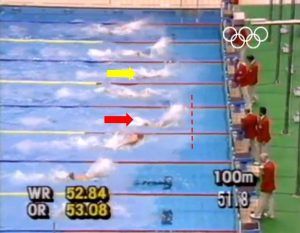 Biondi -- Red Arrow, Nesty -- Yellow[/caption]
Biondi was heavily favoured to win the 100m butterfly in Seoul.
As he approached the finish he had a comfortable lead on the field, about a quarter of a body length, including Surinam’s Anthony Nesty, and Michael Gross.
Closing in on gold, Biondi found himself in a bit of a quandry. He hadn’t timed his last stroke correctly, so he was forced to glide in or finish on half a stroke. He glided in from the hash mark noted below in the picture, which even for the 6’7” Biondi is a long distance to cover. Two lanes above you can Nesty (yellow arrow), who closed hard and fast, and on a full stroke.
Biondi -- Red Arrow, Nesty -- Yellow[/caption]
Biondi was heavily favoured to win the 100m butterfly in Seoul.
As he approached the finish he had a comfortable lead on the field, about a quarter of a body length, including Surinam’s Anthony Nesty, and Michael Gross.
Closing in on gold, Biondi found himself in a bit of a quandry. He hadn’t timed his last stroke correctly, so he was forced to glide in or finish on half a stroke. He glided in from the hash mark noted below in the picture, which even for the 6’7” Biondi is a long distance to cover. Two lanes above you can Nesty (yellow arrow), who closed hard and fast, and on a full stroke.
 KAZAN, RUSSIA -- Close but no cigar was the theme of the evening for the Canadians as they placed just outside of the medals four times on the last night of finals. The final day of swimming competition at the World University Games saw Katerine Savard, Alex Page and Brittany MacLean all come just outside of the medals. The 4x100 medley relay on the women’s side also incurred a 4th place fate.
Pont-Rouge, Quebec’s Savard, who has already won gold in the 100m butterfly and a Canadian record breaking silver medal in the 50m butterfly earlier in the competition, had a long night with the 200 and then the relay.
She led for much of the 200, but on the final 50 metres was tracked won by Japan’s Kona Fujita, who touched first in 2:09.66. Yana Martnova of host Russia touched just under half a second ahead of Savard to secure the bronze medal. Also in the final was fellow Canadian Stephanie Horner, clocking 2:17.00 placing 8th.
KAZAN, RUSSIA -- Close but no cigar was the theme of the evening for the Canadians as they placed just outside of the medals four times on the last night of finals. The final day of swimming competition at the World University Games saw Katerine Savard, Alex Page and Brittany MacLean all come just outside of the medals. The 4x100 medley relay on the women’s side also incurred a 4th place fate.
Pont-Rouge, Quebec’s Savard, who has already won gold in the 100m butterfly and a Canadian record breaking silver medal in the 50m butterfly earlier in the competition, had a long night with the 200 and then the relay.
She led for much of the 200, but on the final 50 metres was tracked won by Japan’s Kona Fujita, who touched first in 2:09.66. Yana Martnova of host Russia touched just under half a second ahead of Savard to secure the bronze medal. Also in the final was fellow Canadian Stephanie Horner, clocking 2:17.00 placing 8th.
 USA Swimming has never suffered from a lack of depth, and emerging talent such as Caleb Dressel, Chase Karlisz, and Jack Conger have put to rest any worries of the future of USA Swimming post-Phelps.
Conger, who has committed to the University of Texas this fall, now has the fourth fastest time in the world in the 200 metre backstroke with a 1:55.40 in winning the event at the WUG. Most notable was Conger’s explosive last 50 metres, where he took a 1.5 second lead splitting a 28.91. Japan’s Yuki Shirai placed second in 1:56.95, with American teammate Jacob Pebley placing third.
Even though Conger hasn’t attended a single day of university yet, he was eligible to compete in Kazan because he is enrolled for next year.
Put on every two years, the WUG are a multi-sport international games put on by the International Sports Federation. Open water events continue this week, while swimming in the pool has now to come to a close.]]>
USA Swimming has never suffered from a lack of depth, and emerging talent such as Caleb Dressel, Chase Karlisz, and Jack Conger have put to rest any worries of the future of USA Swimming post-Phelps.
Conger, who has committed to the University of Texas this fall, now has the fourth fastest time in the world in the 200 metre backstroke with a 1:55.40 in winning the event at the WUG. Most notable was Conger’s explosive last 50 metres, where he took a 1.5 second lead splitting a 28.91. Japan’s Yuki Shirai placed second in 1:56.95, with American teammate Jacob Pebley placing third.
Even though Conger hasn’t attended a single day of university yet, he was eligible to compete in Kazan because he is enrolled for next year.
Put on every two years, the WUG are a multi-sport international games put on by the International Sports Federation. Open water events continue this week, while swimming in the pool has now to come to a close.]]>SEE ALSO: 8 Reasons to Keep a Swim Log
Here are three quick factors to keep in mind when using your swimming log:* The results. Make note of some of the times you put down on the main sets. If you can remember them note your stroke counts, and heart rate as well. * How you were feeling in the water that day. Were you gliding along, or were you really struggling to get a hold of your stroke? * The effort that you gave during the main set(s). Did you give it your all, or did you leave some in the tank? * Your level of focus. Were you “in the zone” or was your mind bouncing with thoughts of outside matters such as school or relationships? * Your levels of stress. Were you feeling overly stressed that day? Or not at all? * Your diet for the day. Did you fall prey to convenience food or did you stick to your diet plan? * Your recent sleeping habits. Have you been getting a solid 8 hours, or have you been having poor sleeps? * Any other factors that may have any effect on the performance you give.
 3. Do Something Today.


 ]]>YourSwimBook is a log book and goal setting guide designed specifically for competitive swimmers. It includes a ten month log book, comprehensive goal setting section, monthly evaluations to be filled out with your coach, and more.
Learn 8 more reasons why this tool kicks butt now.
Join the YourSwimBook weekly newsletter group and get motivational tips and more straight to your inbox. Sign up for free here.]]>
]]>YourSwimBook is a log book and goal setting guide designed specifically for competitive swimmers. It includes a ten month log book, comprehensive goal setting section, monthly evaluations to be filled out with your coach, and more.
Learn 8 more reasons why this tool kicks butt now.
Join the YourSwimBook weekly newsletter group and get motivational tips and more straight to your inbox. Sign up for free here.]]> Unfortunately for Adrian, his team would lose 17-10 to the Cardinals.
]]>
Unfortunately for Adrian, his team would lose 17-10 to the Cardinals.
]]>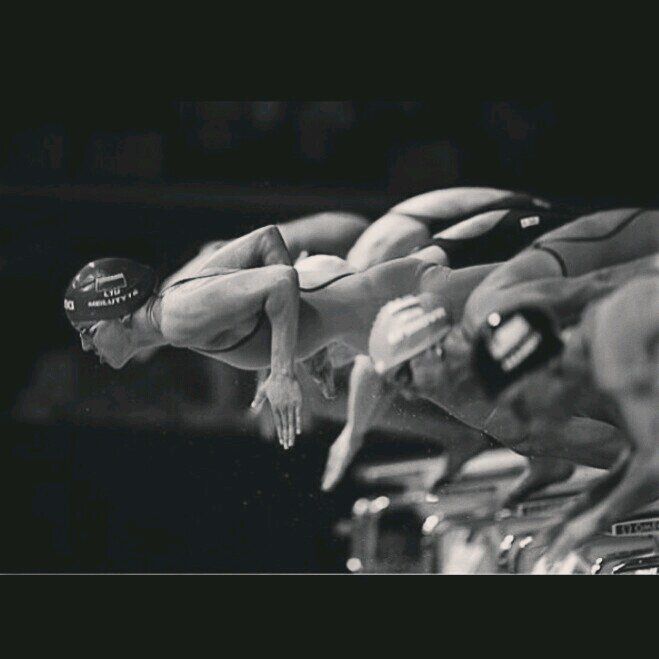 Rudd makes no secret of having her train starts (something many coaches don't do for a variety of reasons -- from lack of time, lack of equipment, to wanting to spare athletes of injury), and her work ethic is becoming the stuff of legend.
 Here is another shot of her start, this one from the London Olympics. Meilutyte is in the green cap, fourth up from the bottom, clear off the blocks while many swimmers are just starting to roll forwards--
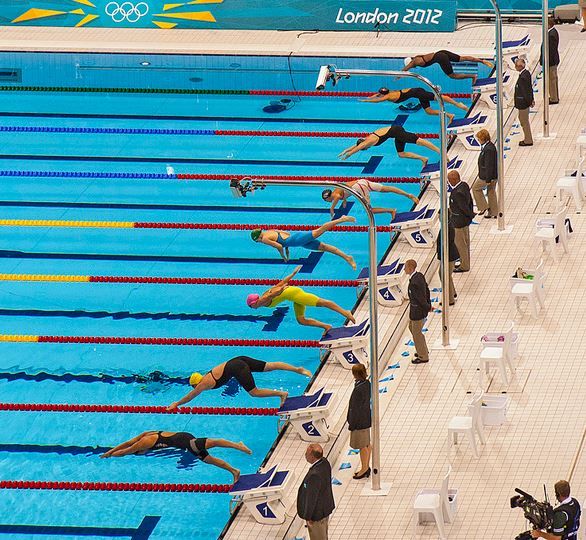 In races where hundredths or tenths of a second means the difference between gold and not medaling at all, Meilutyte's phenomenal start proves that it pays to work on them.
]]>
In races where hundredths or tenths of a second means the difference between gold and not medaling at all, Meilutyte's phenomenal start proves that it pays to work on them.
]]>“I feel like I’m in a really blessed position,” said Adrian. “With that position, I’ve always felt a need and a desire to give back to people who haven’t been given the ability to live their dreams.”The basis of the cap design and the resulting artist they were paired up with was rooted in the personal history of each of the athletes. Here is the promotional video that Speedo produced outlining the history behind the artwork that was chosen for Nathan Adrian's cap: http://www.youtube.com/watch?v=9Vcy4t2UqmM]]>
YourSwimBook is a log book and goal setting guide designed specifically for competitive swimmers. It includes a ten month log book, comprehensive goal setting section, monthly evaluations to be filled out with your coach, and more.
Learn 8 more reasons why this tool kicks butt now.
Join the YourSwimBook weekly newsletter group and get motivational tips and more straight to your inbox. Sign up for free here.]]>Our boycott of the 1980 Olympic Games did not contribute to a successful resolution of the underlying conflict. It did, however, deprive hundreds of American athletes, all whom had completely dedicated themselves to representing our nation at the Olympic Games, of the opportunity of a lifetime.The United States boycotted the 1980 Moscow Games in response to Russia’s invasion of Afghanistan. Four years later it was the Russians turn to boycott, as they forewent the Los Angeles Games in 1984. Both boycotts cost a generation of athletes their opportunity to perform under the Olympic banner. House Speaker John Boehner was asked about such a move, and was just as dismissive as Sandusky, saying that Graham was “dead wrong.” White House spokesman said that while he would not speculate on Graham’s statement, he did add that the U.S. agrees with Russian President Vladimir Putin that the Edward Snowden dilemma doesn’t need to harm US-Russian cooperation on countless other issues. It should be noted that simply because Graham would support such a move certainly doesn't mean that there is any push to make one happen, particularly with the memories of missed opportunities of Moscow and Los Angeles so fresh.]]>
SEE ALSO: Butterfly Sets: 3 Sets for Dominating the 100m Butterfly
Here is how Phelps breaks down by the numbers: Wingspan: The wingspan of most people is supposed to be the same width as the overall height of their body. Phelps wingspan of 6’7” surpasses his height of 6;4” by athree inches. Flippers and Paddles: While Phelps foot size doesn’t match Ian Thorpe’s ridiculous 17 inch soles, they do come in at a bigger-than-average size 14. Along with hands that are bigger than average, Phelps is equipped with paddles and flippers to help propel him through the water. Enhanced range of motion: Phelps has a double-jointed knees, ankles, and upper body, which means that he can extend his range of motion. Hyperextension and flexion in his knees and ankles in particular allow him a greater whip with his kick, securing more propulsion. Michael Phelps resting heart rate: The average human being has a resting heart rate of approximately 70 beats per minute. Miguel Indurain has one of the most legendary heart rates of all time, with a reported 28 bpm, with most endurance athletes clocking in around 40bpm. Michael Phelps’ resting heart rate was a steady 38bpm, meaning that his heart was more efficient at pumping blood to his muscles than his competitors. Lactace capacity: Perhaps most impressive about Phelps is his body’s ability to recycle lactic acid. In 2003 stats were leaked that showed after his world record swim in the 100m fly the lactate levels in his blood were at a paltry 5.6 millimoles, a figure that was just over half of other elite swimmers, never mind the rest of the general population.SEE ALSO: Michael Phelps By the Numbers
Which all makes it harder to imagine the two of them as pals. LOCHTE’S EMERGENCE AS A FOIL TO PHELPS DOMINATION In the mid-2000’s Phelps appeared unbeatable. After his appearance in the 200m butterfly at the Sydney Games, he quick took over the event, the shorter distance, and soon the Ims and the freestyle events. His legend was growing quickly, and in perspective, it hadn’t even come close to hitting its zenith, which would come in 2008 at the Beijing Games. The media made a frenzy of Lochte beating Phelps in the 200IM at Winter Nationals in Atlanta in November 2007. The story was silly, of course, the race was short course, off-season, but that didn’t mean the swimming community wasn’t looking for a David to Goliath. Were Phelps days numbered? Despite Phelps not swimming up to others expectations of him in the year leading up to Beijing, when it came down to crunch time he did not disappoint. He cleaned house, winning 8 gold medals, while Lochte fell behind in the medley events, placing 3rd behind Phelps and Hungarian Lazslo Cseh in both the 200 and 400. He did, however, win the 200 backstroke in world record time. LOCHTE’S ASCENSION IN LONDON There is no doubt that they pushed each other to new limits. Lochte had the greatest swimmer in the history of the sport as a teammate and competitor, to chase day-in and day-out, while Phelps had a hungry, talented swimmer who was itching the get to the top of the podium and taste some of the overwhelming success Phelps had been enjoying. Lochte had the good fortune of being the underdog, the spoiler, until it came time for him to be the headliner, which happened for him in London. With Phelps having been uncharacteristically unfocused and unmotivated in the run-up to London, many were expecting that Phelps would finally fall to the not-so-new newcomer. And the predictors were right. Lochte would run away with the 400IM while Phelps would be shut out of the medals. Lochte was tactical in his comments leading up to and after the race. He acknowledged Phelps greatness, and his undeniable track record is the best of all time, while also asserting that he was now the top dog. In the end Lochte wasn’t able to come close to Phelps’ Beijing haul, placing 4th in the 200 free, 2nd in the 4x100 free relay, gold in the 4x200 free relay, bronze in the 200 back, and silver behind Phelps in the 200 IM. THE FUTURE: MEET AT THE 100’S? Lochte has committed to swimming through until Rio. One gets the sense that he wants to fully unshackle himself from Phelps shadow, knowing that his career to date is of that of “the other guy.” Phelps, meanwhile, has left the door open for a return to the sport after insisting at the London Games that they would be his last. As of May 2013 he was reentered in the drug testing pool, and if comments by his coach are to believed (so far both coach Bob Bowman and athlete have been remarkably coy about intentions – even though they both have known since at least last May that he was still in the drug-testing pool) he is in pretty rough shape right now, and has a long ways to go to sniff at his past form. There is no doubt, however, that with Lochte’s plans to focus on shorter events, and Phelps’ limited base and training that if both of these men are going to be meeting at the pool again, it will be in the shorter events, to write yet another chapter in their storied friendship and rivalry. Image: InCase]]>SEE ALSO: Michael Phelps & Ryan Lochte: The Friendship & the Rivalry
This time Lochte would win the 200m backstroke, while also taking the 200m IM. He deferred the 400IM, an event that he would have been favored to win and repeat from the Olympics, but he did pick up another gold medal in the 4x200 freestyle relay, and a silver from swimming the preliminaries in the 4x100 freestyle relay. Per FINA, the swimmers of the year are decided by a total of nearly 700 voters, comprising of members of countries’ respective FINA federations, various FINA committees, members of the swimming media, partners and experts in the swimming community. The world governing body for swimming also recognized competitors in other aquatic disciplines, including diving, water polo and synchronized swimming. The full list of recipients can be seen here.]]>SEE ALSO: Michael Phelps By the Numbers
Phelps understood that excellence at the peak of the sport was more mental than anything else. He knew that he would have to be zeroed in on his swim and tune out the distractions; whether it was the competition, the media, or even his own expectations. [blockquote]If you want to be the best you have to do things others are not willing to do.[/blockquote] Phelps had a work-horse ethic when it came to putting in work. He trained 7 days a week because that extra day (most swimmers typically train 6 days per week) would give him the edge he needed. [blockquote]I won’t predict anything historic but nothing is impossible.[/blockquote] This mindset is precisely what set Phelps apart from the competition. An unwillingness to accept the status quo, a refusal to allow others expectations of him (and ultimately of themselves) to dictate what he was capable of. [blockquote]Things won’t go perfect. It’s all about how you adapt from those things and learn from mistakes.[/blockquote] While Phelps’ career was storied, it was far from perfect. There was the goggle fill-up in his 200m butterfly at the Beijing Olympics. His two brushes with the law. A lack of motivation and focus following the high of winning 8 golds in 2008. In each case he bounced back better then ever. [blockquote]I feel most at home in the water. I disappear. That’s where I belong.[/blockquote] Swimmers know this feeling. The silence, the aloneness, with nothing but your thoughts. Slipping into the water is rebirth, its zen, it’s quality time spent with yourself. [blockquote]If you’re not on your game every day you’re gonna get smoked.[/blockquote] Phelps knew that his success was in large part due to his consistency. He showed up every day to the pool ready to work, and it should be the same with you. Be willing to put in the work every single day. Success isn’t a part-time gig, nor is it something you stumble upon. It is a task you devote yourself to every single day. [blockquote]The more you dream, the further you get.[/blockquote] Something awful happens when our goals don’t pan out. We begin to buy into the doubts, the nagging self-doubt that tells us that we aren’t as good as we think we are, we aren’t that talented, that we don’t deserve success. Your plans will go awry at times. It is specifically then that you must dare to continue to dream. [blockquote]Goals should never be easy.[/blockquote] Phelps knew this better than most. To stretch your concepts of what you are capable requires setting hard goals. Some with smaller imaginations will try and knock you for dreaming big. Don’t give them the privilege. [blockquote]Once I retired, I’m retiring. I’m done.[/blockquote] We’ll see.]]>YourSwimBook is a log book and goal setting guide designed specifically for competitive swimmers. It includes a ten month log book, comprehensive goal setting section, monthly evaluations to be filled out with your coach, and more.
Learn 8 more reasons why this tool kicks butt now.
Join the YourSwimBook weekly newsletter group and get motivational tips and more straight to your inbox. Sign up for free here.]]>Pick and choose your battles.
It’s hard to express yourself as a swimmer. You’re pretty much staring at a black line for hours on end.
I hate to lose. I like winning.
The big picture is Olympic Trials and the Olympics. I just have to keep focused on that and keep moving forward.
Abraham Lincoln is my favorite president. He pulls off that top hat pretty well.
I just go with the flow. Whatever happens, happens.
I love working out. I’ve been doing it every day for about 20 years.
I have a lot of endurance and I have a good background right now in my training and it’s time to get ready.
I surround myself with people understand and love me. I think that’s the best thing I can do.
I hope for the best in every situation and want to see the good in people.
I wasn’t happy with the way the 2008 Olympics turned out. I wanted to change some things.
I am very competitive. I remember being 4 years old trying to out-chug my dad in a milk-chugging contest. It’s in my blood.
I’m going to keep living my life the way I’ve been living my life, and nothing is going to change that even if the Olympics are coming up.
I’m always living life to the fullest.
Go big or go home.
My philosophy is if you’re a man at night, you gotta be a man in the morning.
I try not to read the negative comments. When I do, I let them roll off my back. I remind myself that there will always be haters as long as you are in the public eye.
No matter what I’m doing, I’m training. It’s just something that I love to do.
Have fun, because that is what life is all about.
]]> ]]>
]]>NOTE: Check out our "I Only Fear Not Trying" poster. It's organic, rad, and 102% legit.









 [divider type="thin"]
YourSwimBook is a log book and goal setting guide designed specifically for competitive swimmers. It includes a ten month log book, comprehensive goal setting section, monthly evaluations to be filled out with your coach, and more.
Learn 8 more reasons why this tool kicks butt now.
Join the YourSwimBook weekly newsletter group and get motivational tips and more straight to your inbox. Sign up for free here.]]>
[divider type="thin"]
YourSwimBook is a log book and goal setting guide designed specifically for competitive swimmers. It includes a ten month log book, comprehensive goal setting section, monthly evaluations to be filled out with your coach, and more.
Learn 8 more reasons why this tool kicks butt now.
Join the YourSwimBook weekly newsletter group and get motivational tips and more straight to your inbox. Sign up for free here.]]>SEE ALSO: FINA's Rules for Swimming Breaststroke
SEE ALSO: FINA's Rules on Swimming Breaststroke
SEE ALSO: FINA's Breakdown of the Rules for Swimming Breaststroke
For both sexes the short course world records for the 200 breast have been tracked and ratified as far back as March of 1991.YourSwimBook is a log book and goal setting guide designed specifically for competitive swimmers. It includes a ten month log book, comprehensive goal setting section, monthly evaluations to be filled out with your coach, and more. Learn 8 more reasons why this tool kicks butt.
Note: We now have motivational swimming posters. Five of ’em, actually.
Join the YourSwimBook weekly newsletter group and get motivational tips and more straight to your inbox. Sign up for free here.]]>| USA | 3:08.24 |
| Michael Phelps | 47.51 |
| Garrett Weber-Gale | 47.02 |
| Cullen Jones | 47.65 |
| Jason Lezak | 46.06 |
| USA | 3:03.30 |
| Nathan Adrian | 45.08 |
| Matt Grevers | 44.68 |
| Garrett Weber-Gale | 47.43 |
| Michael Phelps | 46.11 |
| Netherlands | 3:31.72 |
| Inge Dekker | 53.61 |
| Ranomi Kromowidjojo | 52.30 |
| Femke Heemskerk | 53.03 |
| Marleen Veldhuis | 52.78 |
| Netherlands | 3:28.22 |
| Hinkelien Schreuder | 52.88 |
| Inge Dekker | 52.24 |
| Ranomi Kromowidjojo | 52.12 |
| Marleen Veldhuis | 50.98 |
| USA | 6:58.55 |
| Michael Phelps | 1:44.49 |
| Ricky Berens | 1:44.13 |
| David Walters | 1:45.47 |
| Ryan Lochte | 1:44.46 |
| Russia | 6:49.04 |
| Nikita Lobintsev | 1:42.10 |
| Danila Izotov | 1:42.15 |
| Yevgeny Lagunov | 1:42.32 |
| Alex Sukhorukov | 1:42.47 |
| China | 7:42.08 |
| Yang Yu | 1:55.47 |
| Zhu Qian Wei | 1:55.79 |
| Liu Jing | 1:56.09 |
| Pang Jiaying | 1:54.73 |
| China | 7:35.94 |
| Chen Qian | 1:54.73 |
| Tang Yi | 1:53.54 |
| Liu Jing | 1:53.59 |
| Zhu Qianwei | 1:54.08 |
| USA | 3:27.28 |
| Aaron Piersol | 52.19 |
| Eric Shanteau | 58.57 |
| Michael Phelps | 49.72 |
| David Walters | 46.80 |
| Russia | 3:19.16 |
| Stanislav Donets | 49.63 |
| Sergey Geybel | 56.43 |
| Yevgeny Korotyshkin | 48.35 |
| Danila Izotov | 44.75 |
| USA | 3:52.05 |
| Missy Franklin | 58.50 |
| Rebecca Soni | 1:04.82 |
| Dana Vollmer | 55.48 |
| Allison Schmitt | 53.25 |
| USA | 3:45.56 |
| Natalia Coughlin | 55.97 |
| Rebecca Soni | 1:02.91 |
| Dana Vollmer | 55.36 |
| Missy Franklin | 51.32 |
YourSwimBook is a log book and goal setting guide designed specifically for competitive swimmers. It includes a ten month log book, comprehensive goal setting section, monthly evaluations to be filled out with your coach, and more. Learn 8 more reasons why this tool kicks butt.
Note: We now have motivational swimming posters. Five of ’em, actually.
Join the YourSwimBook weekly newsletter group and get motivational tips and more straight to your inbox. Sign up for free here.]]>#suits at the moment... #gameofthrones and #sportscenter "@ericmacdonald1: @MichaelPhelps What is your favorite tv show?"
— Michael Phelps (@MichaelPhelps) August 10, 2013
Phelps plays himself as a client that hot-shot lawyer Harvey Spector (played by Gabrial Macht) could never land. Starring Macht, Patrick J. Adams and Rick Hoffman, the show returns on March 6th for its fourth season. The superstar swimmer plays himself in the cameo. Here is a screenshot of the swimmer in action with Macht (right) and Abigail Spencer (left), who plays Macht’s love interest—
Michael Phelps will appear on "Suits" on March 6. Here's a screenshot ... pic.twitter.com/HJrw6688El
— Nick Zaccardi (@nzaccardi) January 21, 2014
This isn’t the first time that Phelps has done guest spot work. He also played himself in an episode of popular HBO show Entourage, while also hosting NBC’s Saturday Night Live, and on the Golf Channel show, “The Haney Project: Michael Phelps.”
Since the 2012 London Games there has been a rash of Olympians appearing on various cable shows, including swmimers Missy Franklin who appeared on Pretty Little Liars (as well as a cut scene from the Vince Vaughn and Owen Wilson vehicle “The Internship”), and Ryan Lochte who appeared on 90210.]]>SEE ALSO: How to Get Recruited for College Swimming
For those of you who are in the midst of the recruiting process, or simply just want to get a peek at the lavish lifestyle that is being a collegiate swimmer (yes, I'm being sarcastic) Freyman's video is a great representation of the college swimming experience. Enjoy: [divider type="thin"]YourSwimBook is a log book and goal setting guide designed specifically for competitive swimmers. It includes a ten month log book, comprehensive goal setting section, monthly evaluations to be filled out with your coach, and more. Learn 8 more reasons why this tool kicks butt.
Note: We now have motivational swimming posters. Five of ’em, actually.
Join the YourSwimBook weekly newsletter group and get motivational tips and more straight to your inbox. Sign up for free here.]]>SEE ALSO: How to Get Recruited for College Swimming
Each conversation with prospective coaches will be different. As the speed with which the recruitment process varies from school to school, the questions you ask will rely on what stage of the process you are at. At the end of the day, however, each of the following questions are designed to help you build a clearer picture of whether or not the university program is a good fit for you. Here goes: 1. Does the team have a year-round program? If you’re looking at taking your swimming beyond NCAA’s and beyond, will the program support these goals? 2. What’s the team culture like? Is the team more about having fun, or is it a competitive environment? 3. What is the team’s goal for the season? How high is the program aiming? Is it going to be a rebuilding year for the school or are they charging ahead with a specific goal in mind? 4. Does the coach personalize training or is it a one-size-fits-all approach? You should get a feel for how the coaching staff works with their swimmers in practice; is the team broken up by stroke and discipline during main sets, or is it a one-size-fits-all approach? Certainly something you want to know before you decide to head to swim for a coach for four years. 5. What is the average GPA of the team? If you are into the whole scholastic thing this one is pretty key! This stat will also give you an indication of how much the program is focused on creating well-rounded student athletes, as opposed to just elite swimmers. A good follow-up to this would be to inquire if the team has a full-time academic advisor. 6. How long have you coached here for? Sure, this information will be made available on the bio for the team. But asking also implies interest in knowing whether or not they will be there for the duration of your college swimming career. If the coach has only been there for a season or two, you will need to delve into their previous coaching experience, and if they have been there for an extended period of time, inquire whether they plan on retiring in the next few years (tactfully, obviously). 7. How recent are the fastest times on the top 10 list? Looking at the all-time fastest results is a fantastic way of gauging how well the program is performing under current leadership. Are most of the times from the early 2000’s or 1990’s? While the top 10 doesn’t need to be a straight line of 2013’s, there should be some recent times in there. 8. What is your coaching philosophy? This question is great as it will produce a wide variety of answers. 9. What is the training schedule like? Another obvious question that frequently gets overlooked. When you swim for the same program for years and years you begin to assume that other teams and programs do it the same way. This is not always the case. Asking for a copy of the training schedule can help you get an idea of what your time commitments will be like. 10. What percentage of swimmers graduate from the school in four years? This rate is an indication of how the academic requirements balance with the activities as an athlete. Yes, you want to go to a program where you can swim to the fullest of your potential. But you also want to live up to your potential academically as well. [divider type="thin"]YourSwimBook is a log book and goal setting guide designed specifically for competitive swimmers. It includes a ten month log book, comprehensive goal setting section, monthly evaluations to be filled out with your coach, and more. Learn 8 more reasons why this tool kicks butt.
Note: We now have motivational swimming posters. Five of ’em, actually.
Join the YourSwimBook weekly newsletter group and get motivational tips and more straight to your inbox. Sign up for free here.
]]>SEE ALSO: 10 First-Time Questions to Ask a College Swim Coach
At the end of the day, it’s on you to market yourself in the best manner possible to colleges and universities in order to get that scholarship. 2. Your swimming performance will over-shadow any academic shortcomings. This is the most dangerous of the college swimming recruiting myths. Unless you are the next Michael Phelps – at which point you’re better off going pro anyways – a high GPA is critical to getting into the school of your dreams, if only for the fact that a less than stellar GPA can make you ineligible for some scholarships. If you’re grades are continually faltering you’ll soon find that interest from college programs will fade quickly. Think of it from their point-of-view – nobody wants to have to try and motivate or babysit a student that is not interested in maintaining academic eligibility. College programs want a student that is going to rep for four years – not flunk out spectacularly after one semester. (Another key point that will become even more clear towards the end of the article is that there is much more money available in terms of academic scholarship than for strictly athletics.) 3. You should only hit up the dream schools on your list. Visiting with numerous programs is not only a good personal experience, but you will get a better idea of what you want in a college atmosphere. Whether it is an official or an unofficial visit, get out there and see what the various programs have to offer. It can be easy to dismiss a school on paper, but you will never really know how good of a fit it can be for you until you get there and see it for yourself. 4. You need to produce a 45 minute highlight film. Relieve yourself of the need of showing the same race in different speeds, of showing slo-mo sequences, and of over-producing the video. If the video is posted up on YouTube or Vimeo, the coach can rewind, slo-mo and freeze-frame as much as they like. Avoid embracing your inner James Horner and ditch the soundtrack. Keep it short and succinct.SEE ALSO: How to Get Recruited for College Swimming
5. You can wait until your senior year to start looking. The recruitment process usually takes over a year, so it’s in your best interest to start looking around and showing intent before your senior year gets started. Putting together a list of prospective schools in your freshman and sophomore years is not uncommon, and having a sizable list allows for options in the event coaches and/or programs drastically change. While there are some limitations on how much contact college coaches can have with recruits, it is best to get the process started no later than during the junior year. 6. Athletic scholarships will cover everything. Big no-no here. Outside of the major funded sports (football and basketball in particular) there is a very finite amount of scholarship dollars available. Many coaches will try to stretch that money out across as many athletes as possible, meaning that there will be out-of-pocket costs at some point. And even if you do get a full ride to the institution of your dreams, there will inevitably be costs and expenses that you'll incur, not limited to extra travel, spending money, and leisure time expenses. (No, Jagermiester isn't covered within a stereotypical Div 1 scholarship.) According to these stats from CollegeSwimming.com, here is a breakdown of how many scholarships are out there—YourSwimBook is a log book and goal setting guide designed specifically for competitive swimmers. It includes a ten month log book, comprehensive goal setting section, monthly evaluations to be filled out with your coach, and more. Learn 8 more reasons why this tool kicks butt.
Note: We now have motivational swimming posters. Five of ’em, actually.
Join the YourSwimBook weekly newsletter group and get motivational tips and more straight to your inbox. Sign up for free here.]]> In numerous interviews since then Phelps has refuted the calorie bonanza as a myth, as a story that was overblown. In an interview with Ryan Seacrest before the London Games Phelps chuckled at the supposed fact, telling Seacrest –
[blockquote]“I never ate that much. It’s all a myth. I’ve never eaten that many calories. I wish! It’s just too much though. It would be impossible.”[/blockquote]
Seacrest’s reply is typical of what many people probably felt upon reading the smorgasbord that Phelps allegedly stuffed himself with on a daily basis, while also managing to keep the swimmer figure – six pack and all –
[blockquote source="Ryan Seacrest"]“Good, because I was starting to really loathe you, that you could eat all of this.”[/blockquote]
His actual diet may have included a lot of pizza and carb-heavy foods in the past, but during his prep for London, where he wasn’t training as much (“only” six days per week) his nutrition improved.
Now his day tends to look more along the lines of this:
In numerous interviews since then Phelps has refuted the calorie bonanza as a myth, as a story that was overblown. In an interview with Ryan Seacrest before the London Games Phelps chuckled at the supposed fact, telling Seacrest –
[blockquote]“I never ate that much. It’s all a myth. I’ve never eaten that many calories. I wish! It’s just too much though. It would be impossible.”[/blockquote]
Seacrest’s reply is typical of what many people probably felt upon reading the smorgasbord that Phelps allegedly stuffed himself with on a daily basis, while also managing to keep the swimmer figure – six pack and all –
[blockquote source="Ryan Seacrest"]“Good, because I was starting to really loathe you, that you could eat all of this.”[/blockquote]
His actual diet may have included a lot of pizza and carb-heavy foods in the past, but during his prep for London, where he wasn’t training as much (“only” six days per week) his nutrition improved.
Now his day tends to look more along the lines of this:
 ]]>
]]>SEE ALSO: Kieren Perkins & the 1994 Commonwealth Games
The 1500m free heat swim that summer in Atlanta was painful, both physically and mentally. Perkins struggled mightily, fighting off stomach cramps that made turning a gut-wrenching experience. Mentally he would later admit that he was ready to give it all up. In an interview with the Herald Sun since then, he would explain the mental struggle that took place in the course of the 15 minutes that morning in Georgia – [blockquote source="Kieren Perkins"]By the time I got midway through that heat I had decided I wasn't good enough, if I couldn't win the heat I wasn't going to win the final, and if I couldn't win the final then better not to be there - just to disappear quietly into the sunset and pray people remembered the time before and not remember this one. I decided I didn't want to be in the final and while I didn't give up, I didn't push as hard as I otherwise would have. [/blockquote] Over the next 24 hours Perkins would go through an emotional roller coaster. Where there was once the steely reserve of a champion was now a crippling storm of self-doubt. Perkins was undergoing a crisis of self-confidence while on the biggest stage of his life. 8. Long term planning. The gap between the beginning of the season and championship season for swimmers can be anywhere from 6-11 months. That is a long time. To keep yourself motivated and jacked up to work hard in the pool 10 times a week takes some intelligent planning. Whether it is short term goal setting, focusing on cycle-specific goals, or best of all – taking things one day at a time, swimmers learn how to plan for the long haul.
9. Even though all we wear is a suit, cap and goggles, swimming is not a cheap sport. Travel, hotels, swim fees all add up, especially considering that swimming is not a 3-4 month season, it features 11 months of travel and competitions to help mom and dad’s pocket get a whole lot lighter in a hurry.
10. Pool deck space at meets is first-come, first-serve. Nothing like a 1500 person swim meet to be held at a tiny 25 yard pool to make you feel like you are apartment hunting in Hong Kong. It’s dog-eat-dog, and in order to find enough space place your bag and towel you need to get there nice and early. Late? Looks like you get to put your gear under the stands. Sweet.
11. The importance of laundry. Nothing wakes you completely quicker than putting on a wet suit the next morning. It’s understandable that after a long PM practice the last thing you want to do is empty the metric ton of swim gear in your bag (see #1, #21), but to be fair, no one should expect to make decisions that involve the future when in a state of sizable carb-deficit.
12. When your shoulders go numb and on auto-pilot. During those epically long sets, after the fifth 1000 yard rep, your arms and shoulders lose feeling, and yet you swim on, as though on auto-pilot.
13. Practice is the time where songs go from so-so to the top of your current playlist. If you walk into practice with a song in your head, by the end of practice you can’t wait to go home and download it. Nothing turns a song from lukewarm to “gotta-have’it!” more effectively than singing the chorus of said song a kajillion times over the course of a workout. Which goes to show, if you wanna maintain your hipster status, avoid the top 40 stations on the way into the pool.
14. The awesomeness that is training in your own lane. Oh, the glory to swim in the rarefied waters of your own lane.
15. On the one day of the week you are allowed to sleep in, you totally will… For about an extra 15 minutes. No matter how exhausted your body is, no matter how hard you trained, when that one morning completely off comes around you get an extra fifteen minutes, and not a minute more. Sigh.
16. The shelf-life on moping is very short. Having a bad swim happens to everyone. False starts, DQ, injuries all happen – but when you’re at a swim meet you don’t have time to dwell in negativity – there are more races to race.
17. You’re part of a huge, tight-knit community. You know how motorcyclists and joggers do that thing where they wave at each other when they pass one another? Well, we’re cooler than that. You can buy a motorcycle, or strap on a pair of running shoes and go for a run. Swimmers forge a bond over thousands and thousands of hours in the pool, of long trips in the back of the parents’ mini-van, of the shared triumph of winning a meet.
18. Choosing a lane to warm up in at a meet is an art. I was generally the last person out of the pool during meet warm-ups. The last 15 minutes and the first 15 minutes are almost always the quietest. It’s that middle, the white creamy part of the Oreo, that is a nightmare. Where every single swimmer at the meet is in the pool at the same time, all doing something completely different.
19. Learn a lot about yourself while staring at that black line for hours on end. Not having the constant distraction that slide over us like an avalanche over the course of the day means that we actually get a few minutes alone with our thoughts.
20. Anti-fog goggles? That’s cute. We understand that underwater music players don’t work for serious swimming, anti-fog goggles are a myth, and that messing with a swimmer’s taper is the quickest way to incur their wrath for life.
21. If you have anything to do after practice, you do it before sitting down. Because there is no chance you are moving for at least an hour soon as your butt hits that couch.
22. You’ll learn the rules of the road long before you ever take a road test. Circle swimming? Check. Passing while shoulder-checking and not bumping into the swimmer next to you? Yup. How about swimming in a lane that is reflective of your speed? You know it.
23. Nothing will get you training faster than knowing a cute member of the opposite is watching. “Is that lifeguard checking me out? Wonder if she knows that I’m holding 30’s on this set. Sick.”
24. You’re way tougher than you ever thought imaginable. Coaches can be cruel. They’ll give you a preview of the next day’s workout, which usually runs along the line of a distance fly or free set. That night you’ll lay in bed tossing and turning, visions of failing shoulders and missed intervals splashing around your brain until you wake up the next morning in a cold sweat, thinking of all the excuses you could use to duck out. Eventually you make it to practice, do the assigned warm-up and start the main set. Whether it was the time you did 10x200 fly, or a 5k for time, whatever it was… You did it. Sure, it hurt, you struggled, but you stuck with it and ultimately kicked that set’s butt.
[divider type="thin"]
YourSwimBook is a log book and goal setting guide designed specifically for competitive swimmers. It includes a ten month log book, comprehensive goal setting section, monthly evaluations to be filled out with your coach, and more.
Learn 8 more reasons why this tool kicks butt now.
Join the YourSwimBook weekly newsletter group and get motivational tips and more straight to your inbox. Sign up for free here.]]>
8. Long term planning. The gap between the beginning of the season and championship season for swimmers can be anywhere from 6-11 months. That is a long time. To keep yourself motivated and jacked up to work hard in the pool 10 times a week takes some intelligent planning. Whether it is short term goal setting, focusing on cycle-specific goals, or best of all – taking things one day at a time, swimmers learn how to plan for the long haul.
9. Even though all we wear is a suit, cap and goggles, swimming is not a cheap sport. Travel, hotels, swim fees all add up, especially considering that swimming is not a 3-4 month season, it features 11 months of travel and competitions to help mom and dad’s pocket get a whole lot lighter in a hurry.
10. Pool deck space at meets is first-come, first-serve. Nothing like a 1500 person swim meet to be held at a tiny 25 yard pool to make you feel like you are apartment hunting in Hong Kong. It’s dog-eat-dog, and in order to find enough space place your bag and towel you need to get there nice and early. Late? Looks like you get to put your gear under the stands. Sweet.
11. The importance of laundry. Nothing wakes you completely quicker than putting on a wet suit the next morning. It’s understandable that after a long PM practice the last thing you want to do is empty the metric ton of swim gear in your bag (see #1, #21), but to be fair, no one should expect to make decisions that involve the future when in a state of sizable carb-deficit.
12. When your shoulders go numb and on auto-pilot. During those epically long sets, after the fifth 1000 yard rep, your arms and shoulders lose feeling, and yet you swim on, as though on auto-pilot.
13. Practice is the time where songs go from so-so to the top of your current playlist. If you walk into practice with a song in your head, by the end of practice you can’t wait to go home and download it. Nothing turns a song from lukewarm to “gotta-have’it!” more effectively than singing the chorus of said song a kajillion times over the course of a workout. Which goes to show, if you wanna maintain your hipster status, avoid the top 40 stations on the way into the pool.
14. The awesomeness that is training in your own lane. Oh, the glory to swim in the rarefied waters of your own lane.
15. On the one day of the week you are allowed to sleep in, you totally will… For about an extra 15 minutes. No matter how exhausted your body is, no matter how hard you trained, when that one morning completely off comes around you get an extra fifteen minutes, and not a minute more. Sigh.
16. The shelf-life on moping is very short. Having a bad swim happens to everyone. False starts, DQ, injuries all happen – but when you’re at a swim meet you don’t have time to dwell in negativity – there are more races to race.
17. You’re part of a huge, tight-knit community. You know how motorcyclists and joggers do that thing where they wave at each other when they pass one another? Well, we’re cooler than that. You can buy a motorcycle, or strap on a pair of running shoes and go for a run. Swimmers forge a bond over thousands and thousands of hours in the pool, of long trips in the back of the parents’ mini-van, of the shared triumph of winning a meet.
18. Choosing a lane to warm up in at a meet is an art. I was generally the last person out of the pool during meet warm-ups. The last 15 minutes and the first 15 minutes are almost always the quietest. It’s that middle, the white creamy part of the Oreo, that is a nightmare. Where every single swimmer at the meet is in the pool at the same time, all doing something completely different.
19. Learn a lot about yourself while staring at that black line for hours on end. Not having the constant distraction that slide over us like an avalanche over the course of the day means that we actually get a few minutes alone with our thoughts.
20. Anti-fog goggles? That’s cute. We understand that underwater music players don’t work for serious swimming, anti-fog goggles are a myth, and that messing with a swimmer’s taper is the quickest way to incur their wrath for life.
21. If you have anything to do after practice, you do it before sitting down. Because there is no chance you are moving for at least an hour soon as your butt hits that couch.
22. You’ll learn the rules of the road long before you ever take a road test. Circle swimming? Check. Passing while shoulder-checking and not bumping into the swimmer next to you? Yup. How about swimming in a lane that is reflective of your speed? You know it.
23. Nothing will get you training faster than knowing a cute member of the opposite is watching. “Is that lifeguard checking me out? Wonder if she knows that I’m holding 30’s on this set. Sick.”
24. You’re way tougher than you ever thought imaginable. Coaches can be cruel. They’ll give you a preview of the next day’s workout, which usually runs along the line of a distance fly or free set. That night you’ll lay in bed tossing and turning, visions of failing shoulders and missed intervals splashing around your brain until you wake up the next morning in a cold sweat, thinking of all the excuses you could use to duck out. Eventually you make it to practice, do the assigned warm-up and start the main set. Whether it was the time you did 10x200 fly, or a 5k for time, whatever it was… You did it. Sure, it hurt, you struggled, but you stuck with it and ultimately kicked that set’s butt.
[divider type="thin"]
YourSwimBook is a log book and goal setting guide designed specifically for competitive swimmers. It includes a ten month log book, comprehensive goal setting section, monthly evaluations to be filled out with your coach, and more.
Learn 8 more reasons why this tool kicks butt now.
Join the YourSwimBook weekly newsletter group and get motivational tips and more straight to your inbox. Sign up for free here.]]>SEE ALSO: How to Get Recruited for College Swimming
4. Avoid sending out boilerplate letters. Writing “to whom it may concern” at the outset of the letter signifies that you couldn’t be bothered to look up the appropriate contact. Not a great first impression, wouldn’t you say? Almost every program has a website and staff listing, so there really isn’t any excuse to not be able to find the appropriate person to address the letter to. 5. Use spell-check – and then go over it yourself. (Bonus points if you have someone else read it as well.) Think of your college recruitment letter like a resume, or a cover letter. This letter is representative of you, and you are smart, well-spoken and punctual. Just make sure that your letter reflects this as well by going over the grammar and spelling.YourSwimBook is a log book and goal setting guide designed specifically for competitive swimmers. It includes a ten month log book, comprehensive goal setting section, monthly evaluations to be filled out with your coach, and more. Learn 8 more reasons why this tool kicks butt.
Note: We now have motivational swimming posters. Five of ’em, actually.
Join the YourSwimBook weekly newsletter group and get motivational tips and more straight to your inbox. Sign up for free here.]]>YourSwimBook is a log book and goal setting guide designed specifically for competitive swimmers. It includes a ten month log book, comprehensive goal setting section, monthly evaluations to be filled out with your coach, and more.
Learn 8 more reasons why this tool kicks butt now.
Join the YourSwimBook weekly newsletter and get motivational tips and more straight to your inbox. Sign up for free here.]]>YourSwimBook is a log book and goal setting guide designed specifically for competitive swimmers. It includes a ten month log book, comprehensive goal setting section, monthly evaluations to be filled out with your coach, and more. Learn 8 more reasons why this tool kicks butt.
Note: We now have motivational swimming posters. Five of ’em, actually.
Join the YourSwimBook weekly newsletter group and get motivational tips and more straight to your inbox. Sign up for free here.]]> Coach Groden has been the head coach at Boston College's swim program - which has both a women and men's squad - since he started the program upon his own graduation in 1972.
Since then he has become the most successful coach of any sport at Boston College, with over 600 wins and counting under his belt. He also is in sole possession of most wins by any NCAA swim coach in history.
Last month at the ACC Championships in Greensboro, North Carolina, the Eagles placed 11th on the strength of their relay teams which all scored. At that same meet Melissa Merwin would set an ACC conference meet record in the 50 yard breaststroke, swimming 30.71 in a time trial.
What are the biggest mistakes or assumptions student-athletes make during the recruiting process?
With me – it is that it is not all about times. We have no scholarship monies and absolutely no say on Financial Aid. We tell PSA’s that the most important part of the process is their demonstrated interest.
What surprises student-athletes most during their first year? What do you find they are least prepared for, or possibly, are most surprised to see/experience?
Often frosh get overwhelmed academically. For most it is the first time away from home and they let that “freedom” become a distraction.
What is the most important answer you look from a student-athlete when talking to them for the first time?
Not really looking for answers – I look for questions. I do not start the process with anyone. All kids I speak with have come to BC. I look for questions that indicate an interest in BC being where they spend their next four years – studying and swimming.
What are some “red flags” of prospective student-athletes?
Kids whose interest seems to be elsewhere. To many questions about non-swim/non-academic info like Boston, Junior Year abroad, social life, football, etc. Example Jr Yr Abroad. I have five kids this year that went abroad – all five chose programs that did not conflict with the swim season. Four went to New Zealand/Australia since it does not start until March and one chose an Italian semester that also did not start until March.
What makes your program and team culture unique from other swim teams?
I don’t like to think of it as a unique culture. All programs have requirements and commitments that vary. We run our program as we see fit. I answer all questions to let the interested PSA evaluate what we do – so they can see if it is what they wish to do.
What does your school offer that is unique or special from other institutions?
Boston College is a great school where you can get a great education in a safe setting with Boston available to you.
Unique/different about our program:
1. Five swim workouts a week (out of ten offered so Academics work with swimming)
2. Sunday night practice held in conjunction with a meeting.
3. Wednesdays and Saturdays off
4. Key word in the Off-Season is Off. No practices after ACC’s or during the summer.
5. Kids stay with the program – by choice. No scholarships so they return in the fall because they want to continue to swim for Boston College.
6. Kids improve as much here as they do anywhere. We broke over forty school records the last two seasons.
Outside of swimming and academic performance, what most impresses you about a new recruit?
That he or she came prepared. I have a very complete and comprehensive website. When that high school junior or senior visits and has an excellent list of questions – prepared to ask – that impresses me.
What is the best piece of advice you could give for someone about to go through the recruiting process?
I tell this to kids all the time. The Recruiting Process is for you – not for the coach or the school. Keep yourself as the key and understand that your swimming ability is a talent you possess and use it to help you find the right school for you where that talent helps you get admitted. Eighty-five percent of the kids on my teams would not be students at BC if they weren’t swimmers/divers. Despite that they are better students than the average BC student (by comparing the team GPA to the University’s GPA. They understand this and strive to succeed academically along with athletically.
]]>
Coach Groden has been the head coach at Boston College's swim program - which has both a women and men's squad - since he started the program upon his own graduation in 1972.
Since then he has become the most successful coach of any sport at Boston College, with over 600 wins and counting under his belt. He also is in sole possession of most wins by any NCAA swim coach in history.
Last month at the ACC Championships in Greensboro, North Carolina, the Eagles placed 11th on the strength of their relay teams which all scored. At that same meet Melissa Merwin would set an ACC conference meet record in the 50 yard breaststroke, swimming 30.71 in a time trial.
What are the biggest mistakes or assumptions student-athletes make during the recruiting process?
With me – it is that it is not all about times. We have no scholarship monies and absolutely no say on Financial Aid. We tell PSA’s that the most important part of the process is their demonstrated interest.
What surprises student-athletes most during their first year? What do you find they are least prepared for, or possibly, are most surprised to see/experience?
Often frosh get overwhelmed academically. For most it is the first time away from home and they let that “freedom” become a distraction.
What is the most important answer you look from a student-athlete when talking to them for the first time?
Not really looking for answers – I look for questions. I do not start the process with anyone. All kids I speak with have come to BC. I look for questions that indicate an interest in BC being where they spend their next four years – studying and swimming.
What are some “red flags” of prospective student-athletes?
Kids whose interest seems to be elsewhere. To many questions about non-swim/non-academic info like Boston, Junior Year abroad, social life, football, etc. Example Jr Yr Abroad. I have five kids this year that went abroad – all five chose programs that did not conflict with the swim season. Four went to New Zealand/Australia since it does not start until March and one chose an Italian semester that also did not start until March.
What makes your program and team culture unique from other swim teams?
I don’t like to think of it as a unique culture. All programs have requirements and commitments that vary. We run our program as we see fit. I answer all questions to let the interested PSA evaluate what we do – so they can see if it is what they wish to do.
What does your school offer that is unique or special from other institutions?
Boston College is a great school where you can get a great education in a safe setting with Boston available to you.
Unique/different about our program:
1. Five swim workouts a week (out of ten offered so Academics work with swimming)
2. Sunday night practice held in conjunction with a meeting.
3. Wednesdays and Saturdays off
4. Key word in the Off-Season is Off. No practices after ACC’s or during the summer.
5. Kids stay with the program – by choice. No scholarships so they return in the fall because they want to continue to swim for Boston College.
6. Kids improve as much here as they do anywhere. We broke over forty school records the last two seasons.
Outside of swimming and academic performance, what most impresses you about a new recruit?
That he or she came prepared. I have a very complete and comprehensive website. When that high school junior or senior visits and has an excellent list of questions – prepared to ask – that impresses me.
What is the best piece of advice you could give for someone about to go through the recruiting process?
I tell this to kids all the time. The Recruiting Process is for you – not for the coach or the school. Keep yourself as the key and understand that your swimming ability is a talent you possess and use it to help you find the right school for you where that talent helps you get admitted. Eighty-five percent of the kids on my teams would not be students at BC if they weren’t swimmers/divers. Despite that they are better students than the average BC student (by comparing the team GPA to the University’s GPA. They understand this and strive to succeed academically along with athletically.
]]> Waterworks, engage![/caption]
The I Can’t Believe I Did It (Crying Edition). Cesar Cielo is known for getting, umm, overly emotional after his races. While some serious thespian skills are required to unleash the water works repeatedly over the course of a practice, there is great dramatic effect to this celebration when applied.
The Bird Flip. Duncan Armstrong, in his post-race celebration after the 200m freestyle at the Seoul Olympics mounted a lane rope, and gave the crowd what appeared to be a double middle finger salute. A little crass, but when you come back over the last 50 metres and win Olympic gold over Matt Biondi, who was hyped to be the next Phelps, err, Spitz, in Seoul, you can throw decorum out the window.
[caption id="attachment_1600" align="alignleft" width="300"]
Waterworks, engage![/caption]
The I Can’t Believe I Did It (Crying Edition). Cesar Cielo is known for getting, umm, overly emotional after his races. While some serious thespian skills are required to unleash the water works repeatedly over the course of a practice, there is great dramatic effect to this celebration when applied.
The Bird Flip. Duncan Armstrong, in his post-race celebration after the 200m freestyle at the Seoul Olympics mounted a lane rope, and gave the crowd what appeared to be a double middle finger salute. A little crass, but when you come back over the last 50 metres and win Olympic gold over Matt Biondi, who was hyped to be the next Phelps, err, Spitz, in Seoul, you can throw decorum out the window.
[caption id="attachment_1600" align="alignleft" width="300"]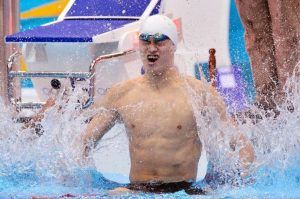 Water in my eyes?! The worst![/caption]
The Angry Bird. Find a lane rope, prop yourself up on it, and commence flapping your arms up and down against the water, causing a massive splash that lets everyone know that you are, in fact, the man. Sun Yang performed a textbook Angry Bird after his 1500m win in London, where he obliterated the world record by three seconds and nearly became the first man to break 14:30. Bonus points for loud, caveman yelling.
The Fist Pump. This one is by far the most common. You can do the quietly satisfied, subtle one-pump, or you can give it a full swing with your arm, to the point that it looks like you may launch it from the socket. Stretch liberally before doing the baseball-pitch fist pump.
I’m Number One. Part fist pump, part stoic, a simple raise of the arm, and that lone index finger that proclaims that you are numero uno. If somehow you could stuff a massive foam finger under your block and wield it in your post race party I imagine you would make the late night Sportscenter Top 10. So in other words, worth a try.
The Stalin. Stoic to the end, this swimmer looks up at the scoreboard, sees the WR beside their name, and is completely unmoved. No smile, no flapping, just a small nod of the head that signifies mission accomplished. I have always suspected that swimmers who react like this wait until they get back to their hotel room, where they get in the bathtub and perform a 15 minute Angry Bird/Can’t Believe I Did It (Crying Edition) in the company of their gold medal and teddy bear. Or something like that.
The Crowd Shout Out. Even if you don’t know anyone in the crowd, pick the best looking member of the opposite sex and give them a point and a smile-- Yeah, you! You know why.]]>YourSwimBook is a log book and goal setting guide designed specifically for competitive swimmers. It includes a ten month log book, comprehensive goal setting section, monthly evaluations to be filled out with your coach, and more.
Learn 8 more reasons why this tool kicks butt now.
Join the YourSwimBook weekly newsletter and get motivational tips and more straight to your inbox. Sign up for free here.]]>
Water in my eyes?! The worst![/caption]
The Angry Bird. Find a lane rope, prop yourself up on it, and commence flapping your arms up and down against the water, causing a massive splash that lets everyone know that you are, in fact, the man. Sun Yang performed a textbook Angry Bird after his 1500m win in London, where he obliterated the world record by three seconds and nearly became the first man to break 14:30. Bonus points for loud, caveman yelling.
The Fist Pump. This one is by far the most common. You can do the quietly satisfied, subtle one-pump, or you can give it a full swing with your arm, to the point that it looks like you may launch it from the socket. Stretch liberally before doing the baseball-pitch fist pump.
I’m Number One. Part fist pump, part stoic, a simple raise of the arm, and that lone index finger that proclaims that you are numero uno. If somehow you could stuff a massive foam finger under your block and wield it in your post race party I imagine you would make the late night Sportscenter Top 10. So in other words, worth a try.
The Stalin. Stoic to the end, this swimmer looks up at the scoreboard, sees the WR beside their name, and is completely unmoved. No smile, no flapping, just a small nod of the head that signifies mission accomplished. I have always suspected that swimmers who react like this wait until they get back to their hotel room, where they get in the bathtub and perform a 15 minute Angry Bird/Can’t Believe I Did It (Crying Edition) in the company of their gold medal and teddy bear. Or something like that.
The Crowd Shout Out. Even if you don’t know anyone in the crowd, pick the best looking member of the opposite sex and give them a point and a smile-- Yeah, you! You know why.]]>YourSwimBook is a log book and goal setting guide designed specifically for competitive swimmers. It includes a ten month log book, comprehensive goal setting section, monthly evaluations to be filled out with your coach, and more.
Learn 8 more reasons why this tool kicks butt now.
Join the YourSwimBook weekly newsletter and get motivational tips and more straight to your inbox. Sign up for free here.]]> ]]>
]]>


 YourSwimBook is a log book and goal setting guide designed specifically for competitive swimmers. It includes a ten month log book, comprehensive goal setting section, monthly evaluations to be filled out with your coach, and more.
Learn 8 more reasons why this tool kicks butt now.
Join the YourSwimBook weekly newsletter and get motivational tips and more straight to your inbox. Sign up for free here.]]>
YourSwimBook is a log book and goal setting guide designed specifically for competitive swimmers. It includes a ten month log book, comprehensive goal setting section, monthly evaluations to be filled out with your coach, and more.
Learn 8 more reasons why this tool kicks butt now.
Join the YourSwimBook weekly newsletter and get motivational tips and more straight to your inbox. Sign up for free here.]]>| NAME | HEIGHT | World Record |
| Cesar Cielo | 6’5 (1.95m) | 46.91 |
| Alain Bernard | 6’5 (1.95m) | 46.94 |
| Eamon Sullivan | 6’2 (1.89m) | 47.05 |
| Pieter van den Hoogenband | 6’4 (1.93m) | 47.84 |
| Michael Klim | 6’3 (1.91m) | 48.18 |
| Alexander Popov | 6’6 (1.97m) | 48.21 |
| Matt Biondi | 6’7 (2.01m) | 48.42 |
| Rowdy Gaines | 6’1 (1.85m) | 49.36 |
| Jonty Skinner | 6’5 (1.95m) | 49.44 |
| Jim Montgomery | 6’3 (1.91m) | 49.99 |
| Average | 6’4 (1.93m) |
| NAME | HEIGHT | World Record |
| Britta Steffen (GER) | 5’11 (1.80m) | 52.07 |
| Lisbeth Trickett (AUS) | 5’7 (1.67m) | 52.88 |
| Jodie Henry (AUS) | 5’9 (1.76m) | 53.52 |
| Inge de Bruijn (NED) | 5’10 (1.78m) | 53.80 |
| Jingy Le (CHN) | 5’10 (1.78m) | 54.01 |
| Jenny Thompson (USA) | 5’10 (1.78m) | 54.48 |
| Kristin Otto (GDR) | 6’1 (1.85m) | 54.73 |
| Barbara Krause (GDR) | 5’11 (1.80m) | 54.98 |
| Kornelia Ender (GDR) | 5’7 (1.72m) | 55.73 |
| Shane Gould (AUS) | 5’7 (1.71m) | 58.5 |
| Average | 5’9 (1.76m) |
SEE ALSO: Michael Phelps: His Greatest Legacy Is Still to Come
It’s no surprise that his comeback has been compared to that of another Michael, that being of the Jordan variety. Jordan came back numerous times, after also promising that once he retired the first time that would be it. Jordan also publicly stated that he had no interest in competing as an aged athlete, past his prime where he couldn’t perform at his very best. (It’s no surprise that Phelps statement was similar to Jordan’s initial retirement epitaph; Jordan was Phelps’ hero growing up as a kid in Baltimore.)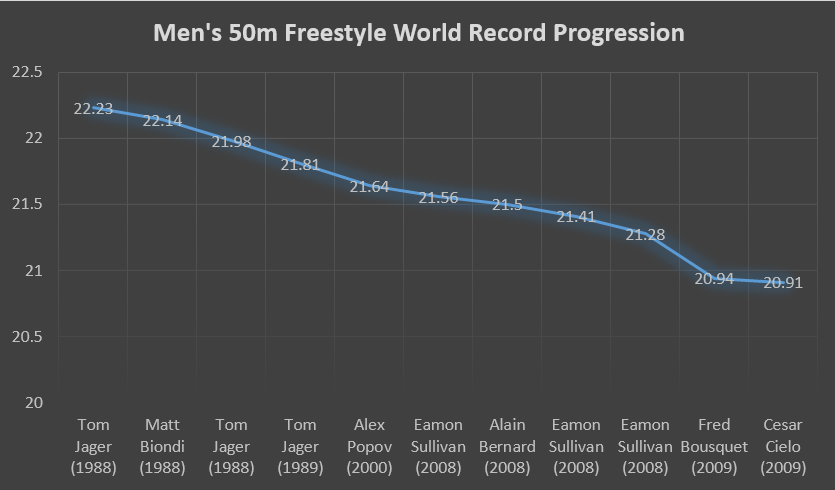 Conversely, if you look at the progression of the textile world bests from the past few years, there is a slight progression towards the sub 21 mark, although the key word is certainly “slight.” With the exception of a slightly slower 2011, the top men in the world have been maxing out in the mid to low 21.3 range.
Here is another fancy little graph, along with the trending line--
Conversely, if you look at the progression of the textile world bests from the past few years, there is a slight progression towards the sub 21 mark, although the key word is certainly “slight.” With the exception of a slightly slower 2011, the top men in the world have been maxing out in the mid to low 21.3 range.
Here is another fancy little graph, along with the trending line--
 In an event that is so short it would be silly to expect drastic changes in time without adjustments to swimwear and equipment. So will we see a sub 21 swim sometime soon? If we look solely at the rate of progression in the chart above, that 20-point race will come in approximately 6 years, just in time for the 2020 Tokyo Olympics!]]>YourSwimBook is a log book and goal setting guide designed specifically for competitive swimmers. It includes a ten month log book, comprehensive goal setting section, monthly evaluations to be filled out with your coach, and more.
Learn 8 more reasons why this tool kicks butt now.
Join the YourSwimBook weekly newsletter and get motivational tips and more straight to your inbox. Sign up for free here.]]>YourSwimBook is a log book and goal setting guide designed specifically for competitive swimmers. It includes a ten month log book, comprehensive goal setting section, monthly evaluations to be filled out with your coach, and more. Learn 8 more reasons why this tool kicks butt.
Note: We now have motivational swimming posters. Five of ’em, actually.
Join the YourSwimBook weekly newsletter group and get motivational tips and more straight to your inbox. Sign up for free here.
]]>YourSwimBook is a log book and goal setting guide designed specifically for competitive swimmers. It includes a ten month log book, comprehensive goal setting section, monthly evaluations to be filled out with your coach, and more.
Learn 8 more reasons why this tool kicks butt now.
Join the YourSwimBook weekly newsletter group and get motivational tips and more straight to your inbox. Sign up for free here.]]>
In an event that is so short it would be silly to expect drastic changes in time without adjustments to swimwear and equipment. So will we see a sub 21 swim sometime soon? If we look solely at the rate of progression in the chart above, that 20-point race will come in approximately 6 years, just in time for the 2020 Tokyo Olympics!]]>YourSwimBook is a log book and goal setting guide designed specifically for competitive swimmers. It includes a ten month log book, comprehensive goal setting section, monthly evaluations to be filled out with your coach, and more.
Learn 8 more reasons why this tool kicks butt now.
Join the YourSwimBook weekly newsletter and get motivational tips and more straight to your inbox. Sign up for free here.]]>YourSwimBook is a log book and goal setting guide designed specifically for competitive swimmers. It includes a ten month log book, comprehensive goal setting section, monthly evaluations to be filled out with your coach, and more. Learn 8 more reasons why this tool kicks butt.
Note: We now have motivational swimming posters. Five of ’em, actually.
Join the YourSwimBook weekly newsletter group and get motivational tips and more straight to your inbox. Sign up for free here.
]]>YourSwimBook is a log book and goal setting guide designed specifically for competitive swimmers. It includes a ten month log book, comprehensive goal setting section, monthly evaluations to be filled out with your coach, and more.
Learn 8 more reasons why this tool kicks butt now.
Join the YourSwimBook weekly newsletter group and get motivational tips and more straight to your inbox. Sign up for free here.]]>SEE ALSO: 8 Reasons a Swim Log Will Help You Swim Faster
2. Use Failure as Tackling Fuel You know how Adam Sandler’s chracter in the Water Boy had his tackling fuel? (If you have not seen this movie, please drop what you are doing and invest a couple hours into this movie.) Sandler's character would imagine all of the people that had tormented him, ridiculed him, and stepped on him, and then channel those memories into motivation to sack the living daylights out of the guy on the other side of the line of scrimmage. It worked for Bobby Boucher, and it can work for you. You have your own tackling fuel. It’s the cuts you almost made, the team you should have qualified for, that medal you coulda, woulda, shoulda earned. Use your past mistakes and failures to send you hurtling forwards. Failure should propel and motivate you, not define you. 3. Stop Making Excuses. My goggles filled up with water. My head hurts. The battery in my iPad is dead. The back of my Speedo is see-through. Blah blah blah. Our brains are amazing at certain things, not the least of which is seeking the easiest way to do something. It's simply the way we are wired. We are perpetually looking for the easy way out, and if that means holding on to that "I have a cold" excuse for one extra day so that we can miss an extra morning practice, you know that piece of mush between your ears will hold on to it. 4. Make Excellence Habitual. In a culture where mediocrity is tolerated and even celebrated, making excellence a habit can make you seem out to be a "try hard" or an "eager beaver" or something else that fits nicely into air-quotes. Sure, it sounds exhausting to do everything at your best. But it is nothing like the tiredness and lethargy that comes from perpetually acting at half capacity, and certainly doesn't compare to the consistent dullness and pain of untapped potential and half-baked results.SEE ALSO: How to Develop an Awesome Underwater Dolphin Kick
5. Fully Commit. Yeah, not achieving our goals is scary. But you know what is scarier? Spiders crawling across your face when you are sleeping. (Sorry.) In all seriousness, the only thing that is tangibly worse than failing at trying to achieve your goals is not trying at all. Yeah, we all have commitment issues with our goals. Stop over-thinking them, and start putting in small steps to give them an honest go. Besides, the best part about making a full, 100% exclusive commitment to your goals is that everything suddenly becomes black and white. There is no middle ground anymore, no room for compromise. Your actions are either in pursuit of your goals, or they are holding you back. [divider type="thin"]YourSwimBook is a log book and goal setting guide designed specifically for competitive swimmers. It includes a ten month log book, comprehensive goal setting section, monthly evaluations to be filled out with your coach, and more.
Learn 8 more reasons why this tool kicks butt now.
Join the YourSwimBook weekly newsletter group and get motivational tips and more straight to your inbox. Sign up for free here.
]]>SEE ALSO: 8 Reasons You Should Be Keeping a Swim Log
YourSwimBook is a log book and goal setting guide designed specifically for competitive swimmers. It includes a ten month log book, comprehensive goal setting section, monthly evaluations to be filled out with your coach, and more.
Learn 8 more reasons why this tool kicks butt now.
Join the YourSwimBook weekly newsletter group and get motivational tips and more straight to your inbox. Sign up for free here.
]]>No: I want to swim fast next summer.
Yes: I want to post a 22.15 in the 50 yard freestyle next summer.
Having a clear, unequivocal target allows you to move on to the next step of the goal setting process, and that is breaking down that goal and creating a plan to achieve it. Think of it this way: leaving yourself with fuzzy, vague goals will make you feel equally fuzzy in terms of direction. Write out a super specific goal, on the other hand, and everything you have to do to achieve it comes into focus.YourSwimBook is a log book and goal setting guide designed specifically for competitive swimmers. It includes a ten month log book, comprehensive goal setting section, monthly evaluations to be filled out with your coach, and more.
Learn 8 more reasons why this tool kicks butt now.
Join the YourSwimBook weekly newsletter and get motivational tips and more straight to your inbox. Sign up for free here.]]>]]>“When you get into a tight place and everything goes against you, till it seems as though you could not hang on a minute longer, never give up then, for that is just the place and time that the tide will turn.” - Harriet Beecher Stowe
[alert style="yellow"]BONUS: Download this list of workout tips as a lovely little PDF for free. You can use it as a checklist to remind yourself on a daily basis to train smarter and better. Click here to download it now.[/alert]
 ]]>YourSwimBook is a log book and goal setting guide designed specifically for competitive swimmers. It includes a ten month log book, comprehensive goal setting section, monthly evaluations to be filled out with your coach, and more.
Learn 8 more reasons why this tool kicks butt now.
Join the YourSwimBook weekly newsletter and get motivational tips and more straight to your inbox. Sign up for free here.
]]>
]]>YourSwimBook is a log book and goal setting guide designed specifically for competitive swimmers. It includes a ten month log book, comprehensive goal setting section, monthly evaluations to be filled out with your coach, and more.
Learn 8 more reasons why this tool kicks butt now.
Join the YourSwimBook weekly newsletter and get motivational tips and more straight to your inbox. Sign up for free here.
]]>How about having the ability to figure out performance leaks so that you can make the most of your practice time?
Do you want to be able to set better goals that will keep you motivated over the long term?
Of course you do. One of the best and under-utilized tools you can unleash on your swimming is keeping a swim log. Yes, the simple act of writing out your workouts can help you do all of the above. For some the idea of writing out their workouts might seem like homework, or just another thing to do at the end of a long day, but elite swimmers recognize the value of having their performance history at their fingertips. Here is the full breakdown for why this very simple tool is a must-add to your swimming weaponry:YourSwimBook is a log book and goal setting guide designed specifically for competitive swimmers.
It includes a ten month log book, comprehensive goal setting section, monthly evaluations to be filled out with your coach, and more.
Learn 8 more reasons why this tool kicks butt.
Coaches & Teams: Yes, we do custom orders for teams and groups. The more you order, the more you save. For a free custom quote for your club fill out this form.
]]> 4. I don’t have enough talent.
No matter how supernatural and mysterious talent is made out to be, certain kids aren’t born with more swimming talent than others. No joke. Read that again if you have to, but I am going to emphasize it for you just so that you can wrap your head around it (don’t worry, took me a couple tries the first time I heard it as well) – that fast kid next to you? The one whose parents and coach always say was born with more talent than anyone else? That kid does not have more “talent” than you.
Those with “talent” are simply athletes who have practiced smarter, for longer than you. Yes, some are born with more hunger for success than others, while some kids may have genetic gifts such as above average height or massive feet, but more talent? Nope.
Put aside the idea of innate talent and focus on execution, of swimming at an excellent level. Once you do this long enough, once you get used to practicing at a high level, others will look at you as well and say, “Jeez, he/she is really talented!”
5. I might fail.
So?
But in all seriousness, what is the worst that is going to happen if you did fail? Let’s exaggerate this fear a little even. What is the absolute, worstest, most awfulest thing that would happen if you failed?
Let me save you the suspense: Not much.
There are a couple reasons for this:
4. I don’t have enough talent.
No matter how supernatural and mysterious talent is made out to be, certain kids aren’t born with more swimming talent than others. No joke. Read that again if you have to, but I am going to emphasize it for you just so that you can wrap your head around it (don’t worry, took me a couple tries the first time I heard it as well) – that fast kid next to you? The one whose parents and coach always say was born with more talent than anyone else? That kid does not have more “talent” than you.
Those with “talent” are simply athletes who have practiced smarter, for longer than you. Yes, some are born with more hunger for success than others, while some kids may have genetic gifts such as above average height or massive feet, but more talent? Nope.
Put aside the idea of innate talent and focus on execution, of swimming at an excellent level. Once you do this long enough, once you get used to practicing at a high level, others will look at you as well and say, “Jeez, he/she is really talented!”
5. I might fail.
So?
But in all seriousness, what is the worst that is going to happen if you did fail? Let’s exaggerate this fear a little even. What is the absolute, worstest, most awfulest thing that would happen if you failed?
Let me save you the suspense: Not much.
There are a couple reasons for this:


 YourSwimBook is a log book and goal setting guide designed specifically for competitive swimmers. It includes a ten month log book, comprehensive goal setting section, monthly evaluations to be filled out with your coach, and more.
Learn 8 more reasons why this tool kicks butt now.
Join the YourSwimBook weekly newsletter group and get motivational tips and more straight to your inbox. Sign up for free here.
]]>
YourSwimBook is a log book and goal setting guide designed specifically for competitive swimmers. It includes a ten month log book, comprehensive goal setting section, monthly evaluations to be filled out with your coach, and more.
Learn 8 more reasons why this tool kicks butt now.
Join the YourSwimBook weekly newsletter group and get motivational tips and more straight to your inbox. Sign up for free here.
]]>Any time swimming makes one of its few and far between appearances on television, along with it appears the glossy, over produced bios of our sport’s top athletes. The vignettes where we learn more about how the swimmer came up, their family, and how they were always destined to be champions.
What these features generally do not show is the grind. The struggle. The frequent doubt and second-guessing that comes with chasing down greatness. They forget to show that for each of these athletes, all the way up to Michael Phelps, they were subject to the same difficulties that befall the rest of us.
Whatever your goals, here are six common pitfalls that swimmers fall into while chasing their own version of swimming success:
1. Not dreaming big enough.
There are a heap of reasons why so many swimmers don’t dream big enough. People they trust or who are in authority positions have derided their ambitions. They feel that their surroundings (pool, coach, team, etc) aren’t in line with their goals. The paralysing thought of a failure as grand as your ambitions.
Whatever the case may be for you, at the end of the day clear your mind and ask yourself with complete sincerity: Why not you? Why not now?
2. You chronically plan.
You’re a master of goal setting, outlining elaborate, beautifully detailed goals. You go so far as to construct a carefully thought out goal plan, listing all of the things you need to do to achieve said goal. You write out the goal, create a list of affirmations, even go out and buy a log book as well as an app so that you can track, measure and analyze your progress.
You do everything except acting on it. For some that first step is such an overwhelming commitment that it terrifies them from taking it. Combat this by making it small, non-newsworthy, and something you can do with complete immediacy. (No waiting!)
3. You’re dependent on talent for swimming success instead of hard work.
We have all swum against kids who were designated as mega-talents. They appeared to have the sport on a string. The most striking examples of these are the kids who have the early growth spurt in addition to an easy knack for the sport.
Talent and size will only take you so far. Janet Evans, legendary American distance swimmer from the late 1980’s and early 1990’s is a perfect example. A shade over five feet, she had an unconventional stroke, but otherworldly work ethic, routinely crushing 10,000m workouts.
Don’t fall for the trap of believing that talent or genetics will get you to the next level.
4. You are expecting instant results.
I know how frustrating it can be when things don’t fall into place quickly enough or as quickly as you planned they would. It’s all the more infuriating when you did everything properly; your nutrition was spot-on, you attended every practice, you even devoted an extra fifteen minutes after each workout to do bonus core work. And yet, you still aren’t seeing results fast enough.
Your first instinct will be to throw in the towel. After all, the process isn’t working, right? Wrong. The process is working. You are improving; and success in the pool is never an overnight deal. Keep hammering at it, and realize that even though results aren’t piling up as quickly as you’d like, you are still improving.
5. Not trusting the process.
Similar to how we seek instant results, our head starts to cook up all sorts of negative stuff when we view things as not going as anticipated. We imagine that our natural speed has capped out. That we aren’t built to swim fast. That we aren’t deserving to swim at an elite level.
When these thoughts happen we tend to look for a way out, and this generally uncludes switching tack mid-course. Bailing pre-maturely doesn’t allow you the opportunity to allow the process to run its course, which means you will never know whether you would have succeeded had you stayed on track.
Understand that doubt is inevitable in moments of struggle, but don’t allow panic to derail your plan.
6. Comparing yourself to others.
I still do this on occasion, and I want to punch myself in the face each time I do because it’s utterly pointless to compare, measure and stack and serves nothing.
Stop comparing yourself and your swimming to those around you. Your swimming is completely and unequivocally yours. The splits the kid in the lane next to you might seem other worldly, but don’t let them discourage you.
Rather, follow your own path, direct all your energy inwards to improve every facet of your swimming you can, and ignore the sideshow.
]]>SEE ALSO: How to Prevent Swimmer's Shoulder
Don’t be fooled by this. Anything worth achieving requires hard work. A lot of it. Instead of cringing and grimacing at the sight of the work in front of you, be willing to hack away at it, piece by piece, day by day.“I don’t know the key to success, but the key to failure is trying to please everyone.”No doubt. The moment you decide to do something special with your swimming people will begin telling you whether you can do it. Whether you can’t. Whether you are capable. Some opinions may be based in authority (coaches, fellow swimmers), while others are from people who quite frankly don’t know what they are talking about. At the end of the day, learn to trust yourself. If you believe that it is possible, than that is literally all that matters. [alert style="yellow"]Reminder: You can download this full list for free as a glorious PDF that you can print out and use for daily reference. Click here to download it now and remind yourself on a daily basis to do it better than your competition.[/alert]
 ]]>
]]>Area of Improvement: Improve breast kick
The measuring stick: Kick 200m breaststroke in under 2:55
Actionable Items:
The list doesn’t have to be massive here either; generally 1-3 things is sufficient. What matters most here – and what will provide the most exceptional of results – is to execute this list consistently.
- Spend 10 minutes per day working on knee and ankle flexibility.
- Doing 10 minutes of vertical breaststroke kick 5x per week.
- Get video analysis of kick to check for any spots where propulsion is lost.
YourSwimBook is a log book and goal setting guide designed specifically for competitive swimmers. It includes a ten month log book, comprehensive goal setting section, monthly evaluations to be filled out with your coach, and more.
Learn 8 more reasons why this tool kicks butt now.
Join the YourSwimBook weekly newsletter group and get motivational tips and more straight to your inbox. Sign up for free here.]]>Closed fist swimming. Your forearms are a neglected surface area that helps you generate propulsion. We tend to get caught up with our hands at the expense of forgetting the rest of our arm. Closed fist swimming forces us to use those neglected parts of your arm.
Sculling. Another fantastic method to improve your feel of the water. You can do sculling in all areas of your stroke, from the catch, to the pull, to the exit. You can also do sculling on your front, back, and side, giving you tons of options no matter what your stroke or specialty is.
YourSwimBook is a log book and goal setting guide designed specifically for competitive swimmers. It includes a ten month log book, comprehensive goal setting section, monthly evaluations to be filled out with your coach, and more.
Learn 8 more reasons why this tool kicks butt now.
Join the YourSwimBook weekly newsletter and get motivational tips and more straight to your inbox. Sign up for free here.]]>If you’re going through hell, keep going. Winston Churchill
YourSwimBook is a log book and goal setting guide designed specifically for competitive swimmers. It includes a ten month log book, comprehensive goal setting section, monthly evaluations to be filled out with your coach, and more.
Learn 8 more reasons why this tool kicks butt now.
Join the YourSwimBook weekly newsletter and get motivational tips and more straight to your inbox. Sign up for free here.
]]>YourSwimBook is a log book and goal setting guide designed specifically for competitive swimmers. It includes a ten month log book, comprehensive goal setting section, monthly evaluations to be filled out with your coach, and more.
Learn 8 more reasons why this tool kicks butt now.
Join the YourSwimBook weekly newsletter and get motivational tips and more straight to your inbox. Sign up for free here.]]> ]]>
]]>Bowman: For about 5 years he did not take one day off.
Cooper: Christmas Day?
Bowman: Nope. We trained on Christmas.
Cooper: His birthday?
Bowman: Oh yeah, that’s a given. Twice on his birthday.
The desire not to lose, and the desire to accomplish something that had never been done before in Olympic history were what drove Phelps during those grueling years. “If you want to be the best, you have to do things that others aren’t willing to do,” he said. The road most traveled is exactly that; the one that most journey across, rarely taking a risk, rarely extending themselves beyond their comfort zone, and achieving exactly what everyone else is doing – the typical. To be the best at something is by it’s very definition to be abnormal. To separate yourself from the crowd and become exceptional requires first that you leave your comfort zone and reach out across your self-imposed limitations into the ether of the unknown.Reminder: Have you signed up for our weekly newsletter? Each week you get an email with motivational content designed exclusively for competitive swimmers. Join 5,000+ of your fellow swimmers and coaches getting fired up. It’s free and you can always unsubscribe. Click here to sign up today.
2. Talent and your past work will only get you so far. After Beijing the inevitable let down happened. He went on a whirlwind tour across the world, doing late night shows, day time shows, appearances for sponsors, and started up his foundation with the $1 million bonus that Speedo gave him for the Beijing heroics. Over the next couple years he would have difficulty motivating himself. He had accomplished so much, and with those 8 golds securely put away he felt a sagging sense of purpose. As a result he began missing practices. And not giving the effort that was required of him when he did show up. So much so that USA Swimming teammate Tyler Clary, who trained with Phelps at Michigan, called him out for having a substandard work ethic. “I saw a real lack of preparation from him,” Clary told a reporter prior to the London Games. “Basically, he was a swimmer that didn’t want to be there.” During the same 60 Minutes interview both Bowman and Phelps readily admit that he was having a hard time keeping interested in the sport after 2008. While London may have been his last hurrah (for now, at least), there was no doubt that the man who showed up in 2012 was not the same as four years earlier. Swimming out of lane 8 he placed outside of the medals in the 400m individual medley on the first night. And then he lost the 200m butterfly to South African upstart Chad le Clos – an event that he had utterly dominated for over a decade. All too often when we achieve some measure of success we relax. We lean back, chill out, and feel that because now that we have made it everything is going to be golden from here on out. In reality, the world will always catch up. There is no permanent position for the best; to stay there requires continuous work and focus. 3. The goal should be bigger than yourself. Phelps’ main goal in the sport was never solely about winning golds at the Olympics. But rather, those Olympic wins were meant to help further his main goal, which was to bring swimming to the masses, to transcend the sport, to prove that swimming didn’t have to be an every-four-years sport. In the years following the Olympics that Phelps competed in the membership of USA Swimming increasingly grew with each Olympiad, until in 2009 the number of registered club swimmers in the United States grew by a whopping 13%. This figure doesn’t include the countless number of swimmers that joined summer leagues, high school teams, and even masters programs across the country and world. Perhaps the most striking of the “Phelps effect” was Chad le Clos, the man that beat him in his best event in London. Le Clos had been inspired to take up swimming because of Phelps. As a 12 year old in South Africa, Le Clos watched Phelps compete at the 2004 Athens Games and decided at that moment to become the best swimmer he could be. Tap into a greater purpose with your swimming and your goals. It can be something as small as volunteering to coach the youngsters on your team, or to further the popularity of the sport by starting a team at your local high school. When we find a deeper purpose to what we are doing we connect further with the sport and our goals, while also finding an additional layer of motivation and inspiration. 4. Failure should drive you, not cripple you. While it’s hard to look at the most decorated athlete in the history of the Olympics and imagine him failing, Phelps has had numerous setbacks over his career. There was the DUI charge, being photographed at a party smoking pot. These have been well documented in the popular media. But what casual sports observers might not know is that there was also the time that he broke his wrist slipping on some ice during an Ann Arbour winter in Michigan. Just 8 months short of the Beijing Games, Phelps was ordered out of the water while his wrist healed. Instead of swimming, Phelps went to work on a stationary bike, logging up to 3 hours per day for the next two weeks until he was cleared to hop back in the pool. Setbacks and failures happen to us all. We tend to imagine that our sports heroes being larger than life and immune to such things, but that is not the case. When asked how he handles failure and setbacks, Phelps says that they are probably more beneficial, for they help to fuel him. “I don’t like to lose. If I fail, I ask myself, “What can I do to make sure that doesn’t happen again?”’ 5. Surround yourself with people who believe in you. In sport, as in life, to be successful requires a group surrounding us that support us, encourage us when we fill with doubt, who help us back on track when we stumble. We tend to lean towards wanting to be completely self-sufficient and independent, but our success is reliant on the people we choose to surround ourselves with. Phelps is no exception. He was 11 years old when Bob Bowman recognized his talents and fierce competitiveness at the North Baltimore Aquatic Club. Bowman encouraged the youngster to dream big, to start setting goals and to make a plan. Over the years the two would stay together, even when Bowman has brought on at Michigan, even after the monumental Olympic success, and even when Phelps walked away from the sport and then decided to make a return. On the home-front things were no different. His mom Debbie was a fixture during the NBC telecasts of his last three Olympics. And for good reason. The single mother raised a family of swimmers, pulling driving duty for Michael and his two older sisters. Driving them back and forth to the pool to two-a-days and weekend meets were among the sacrifices she made to help Phelps chase his dream. Perhaps most importantly, she believed in him. Encouraged him to chase his dreams when most other parents would have quietly sighed and shook their head. She allowed her son to grow. To make his own mistakes. To learn to be responsible and accountable. Success is difficult. There’s no doubt about that. But to do it completely on your own is hilariously challenging. By surrounding yourself with people who believe in you you gain the advantage of having people in your corner, who have your back no matter what the outcome, who believe in you during the times that you even don’t.]]>[alert style="grey"]Reminder: Have you signed up for our weekly newsletter? Each week you get an email with motivational content designed exclusively for competitive swimmers. Join 6,000+ of your fellow swimmers and coaches getting fired up. It’s free and you can always unsubscribe. Click here to sign up today.[/alert]
The secret to Shields’ massive underwater dolphin kick was simply this: Time spent. From an early age Shields had been dolphin kicks while he was out body-boarding on the shores of Florida and Southern California. More recently, he had watched video of himself underwater so that he could adjust the technical aspects, while also seeking out to improve core flexibility. Shields' advice for those who want to improve their own dolphin kick is to make underwaters part of the practice, starting with the warm-up:I’ve been doing the same warm-up…every day of my life. For warm-up we'll do 400, 4x100, and 4x50...I’ll do open turns and do 15 [underwater] easy and slow…That’s the secret right there, just doing it in warm up.He recognizes that there isn’t a secret bullet, a secret exercise or tip that will instantly give you a powerful kick. It's boring, routine, and exactly why most people will never do it.
 ]]>
]]>[alert style="grey"]Reminder: Have you signed up for our weekly newsletter? Each week you get an email with motivational content designed exclusively for competitive swimmers. Join 6,000+ of your fellow swimmers and coaches getting fired up. It’s free and you can always unsubscribe. Click here to sign up today.[/alert]
YourSwimBook is a log book and goal setting guide designed specifically for competitive swimmers. It includes a ten month log book, comprehensive goal setting section, monthly evaluations to be filled out with your coach, and more.
Learn 8 more reasons why this tool kicks butt now.
Join the YourSwimBook weekly newsletter and get motivational tips and more straight to your inbox. Sign up for free here.]]>YourSwimBook is a log book and goal setting guide designed specifically for competitive swimmers. It includes a ten month log book, comprehensive goal setting section, monthly evaluations to be filled out with your coach, and more.
Learn 8 more reasons why this tool kicks butt now.
Join the YourSwimBook weekly newsletter group and get motivational tips and more straight to your inbox. Sign up for free here.]]>[alert style="grey"]Breaking News Announcement: Have you signed up for my weekly newsletter? Each week you get an email with motivational content designed exclusively for competitive swimmers. Join 6,000+ of your fellow swimmers and coaches getting fired up. It’s free and you can always unsubscribe. Click here to sign up today.[/alert]
Vladimir Salnikov in 1988 winning the 1500m freestyle at the Seoul Olympics at the age of a then-ancient age of 28 after initially being passed over by the Russian swimming federation. Dara Torres, who at the age of 41 returned to competitive swimming to win three silver medals at the Beijing Olympics in 2008. Jason Lezak, also in Beijing, came back against the second fastest man ever in the event Alain Bernard to win the 4x100m freestyle relay, launching Phelps’ bid to win those 8 historic gold medals. This seemingly superhuman trait is already within you. It’s not something that only a gifted few possess, but rather, something you not only already have, but something you can further develop. Just think back to the last time you got really serious about accomplishing something. No matter what anybody said or did to dissuade you, you would not be stopped. There simply was no alternative. Now imagine if you could unleash and wield that fierce, unstoppable sense of drive and commitment at will. Consider for a moment how a lot of the typical things that hang up swimmers – insufficient training time, lack of resources, low confidance – are violently brushed to the side when you adopt this mindset. It doesn’t matter what obstacles are in the way. Big, small, whatever – they simply don’t matter. You won’t be stopped. Here are a few guidelines to help you recognize and fully embrace that inner drive so that you can use it at will:YourSwimBook is a log book and goal setting guide designed specifically for competitive swimmers. It includes a ten month log book, comprehensive goal setting section, monthly evaluations to be filled out with your coach, and more.
Learn 8 more reasons why this tool kicks butt now.
Join the YourSwimBook weekly newsletter and get motivational tips and more straight to your inbox. Sign up for free here.]]>SEE ALSO: How to Prevent Swimmer's Shoulder
Yes, it actually prolonged inflammation and has even been shown to make injuries worse by not allowing the body to flush out waste products in the inflamed area.FAQ: How much water should I be drinking after my workouts? For every pound lost drink 16-24 ounces.
YourSwimBook is a log book and goal setting guide designed specifically for competitive swimmers. It includes a ten month log book, comprehensive goal setting section, monthly evaluations to be filled out with your coach, and more. Learn 8 more reasons why this tool kicks butt.
Note: We now have motivational swimming posters. Five of ’em, actually.
Join the YourSwimBook weekly newsletter group and get motivational tips and more straight to your inbox. Sign up for free here.
]]>[alert style="grey"]Breaking News Announcement: Have you signed up for my weekly newsletter? Each week you get an email with motivational content designed exclusively for competitive swimmers. Join 6,000+ of your fellow swimmers and coaches getting fired up. It’s free and you can always unsubscribe. Click here to sign up today.[/alert]
4. Give other swimmers space. Unless the pool is completely brimming with swimmers – as is typical at a meet with one pool and 1,500+ swimmers – give the other swimmers in your lane a generous amount of space. As with pushing off right before someone turns, don’t swim on the heels of other swimmers. 5. Check for the direction of the circle before jumping in. I cannot count how many times swimmers have jumped in and started swimming against the posted circle directions. It causes log jams and confusion when people swim against the flow of traffic. 6. Don’t split the lane unless agreed to. If there are two swimmers in a lane often times they will split it, with one swimmer taking a side. This is something that should be decided between the two swimmers – don’t jump in and assume the other swimmer will automatically understand what you mean to do. 7. Rest in the corners. Between reps and sets it’s normal to want to catch your breath, and reset yourself mentally for the next round of swimming. Rest in the corners of the lane, as close to the wall or lane rope as possible so that other swimmers can turn unobstructed. If you decide to chill out in the middle of the lane don’t be surprised if you get flip-turned on. 8. Choose a lane according to your speed, not your ego. Yes, we all want to think that we are the fastest swimmer in the pool. This, sadly, isn’t always the case. Choose a lane that matches up with how quickly (or slowly) you are planning on swimming. In other words, the lane in which the swimmers are the least likely to impede your swimming, and vice versa. 9. Tap and pass. When moving past slower moving swimmers in your lane, tap them once on the foot and speed up to pass them. If you are about to be passed, do not speed up. Stay to the side and allow the faster moving swimmer to cruise past you. Passing down the middle of the lane when it is busy is dangerous and runs the risks of head on collisions, so make the transaction as smooth as possible whether you are passing or being passed. 10. Bring your own stuff. This seems like an obvious one, but bring your own equipment to the lane. Using the gear that belongs to other swimmers is not only bad etiquette in the pool, but a bad policy to have in life. The pull-buoys or paddles that other swimmers have will be adjusted to fit them specifically, so bring your own equipment.YourSwimBook is a log book and goal setting guide designed specifically for competitive swimmers. It includes a ten month log book, comprehensive goal setting section, monthly evaluations to be filled out with your coach, and more. Learn 8 more reasons why this tool kicks butt.
Note: We now have motivational swimming posters. Five of ’em, actually.
Join the YourSwimBook weekly newsletter group and get motivational tips and more straight to your inbox. Sign up for free here.
]]>YourSwimBook is a log book and goal setting guide designed specifically for competitive swimmers. It includes a ten month log book, comprehensive goal setting section, monthly evaluations to be filled out with your coach, and more.
Learn 8 more reasons why this tool kicks butt now.
Join the YourSwimBook weekly newsletter and get motivational tips and more straight to your inbox. Sign up for free here.]]> 2. A personal favorite. As someone who swam in a dark pool for much of my childhood, this was also the way that we typically viewed the pace clocks.
 3. For those who like to dangerously by scarfing down a big meal right before hopping into the water for a healthy round of anaerobic work.
 4. Yum, yum!
 5. Perhaps the only thing worse than slapping hands with a teammate is giving one of the pool-side ladders a surprise high-five.
6. That is one way to win the race. Can't DQ what you can't see.
5. Perhaps the only thing worse than slapping hands with a teammate is giving one of the pool-side ladders a surprise high-five.
6. That is one way to win the race. Can't DQ what you can't see.
 7. Amen.
 8. We've all been there -- toes barely graze the wall on the turn, but you still make it back in time to catch a breath and the interval.
 9. Otherwise known as the Warm-Up Hustler.
 10. I have been guilty of this one on far too many occasions. Nothing like starting a set and not knowing what you are supposed to be doing.
 11. We are absolutely not the shyest athletes on the planet.
 12. As a young age grouper an older swimmer told me that at night they kept sharks in the deep end of the pool. This was literally my nightmare.
 13. Butterfly isn't for everyone. Hard enough to do it quickly, let alone slowly.
 14. Our typical swim meet.
 15. We all knew (or sometimes were) that swimmer that would suddenly disappear when it came time to put in work.
 16. Yup.
 17. Swimcest is real. Even if it isn't successful.
 18. That moment of suspense and horror when coach throws up a huge bracket around a massive set.
 19. Swimcest Part 2. If there was ever motivation to train and swim faster, it is the fairer sex:
 20. The 7th circle of hell is reserved for the swimmer who drinks out of my water bottle and shanks my kickboard.
 21. We're swimmers. Sometimes it is the most profoundly simple things that please us.
 [divider type="thin"]
YourSwimBook is a log book and goal setting guide designed specifically for competitive swimmers. It includes a ten month log book, comprehensive goal setting section, monthly evaluations to be filled out with your coach, and more.
Learn 8 more reasons why this tool kicks butt now.
Join the YourSwimBook weekly newsletter group and get motivational tips and more straight to your inbox. Sign up for free here.]]>YourSwimBook is a log book and goal setting guide designed specifically for competitive swimmers. It includes a ten month log book, comprehensive goal setting section, monthly evaluations to be filled out with your coach, and more.
Learn 8 more reasons why this tool kicks butt now.
Join the YourSwimBook weekly newsletter and get motivational tips and more straight to your inbox. Sign up for free here.]]>
[divider type="thin"]
YourSwimBook is a log book and goal setting guide designed specifically for competitive swimmers. It includes a ten month log book, comprehensive goal setting section, monthly evaluations to be filled out with your coach, and more.
Learn 8 more reasons why this tool kicks butt now.
Join the YourSwimBook weekly newsletter group and get motivational tips and more straight to your inbox. Sign up for free here.]]>YourSwimBook is a log book and goal setting guide designed specifically for competitive swimmers. It includes a ten month log book, comprehensive goal setting section, monthly evaluations to be filled out with your coach, and more.
Learn 8 more reasons why this tool kicks butt now.
Join the YourSwimBook weekly newsletter and get motivational tips and more straight to your inbox. Sign up for free here.]]>Here is here your guide to developing a powerhouse underwater fly kick.
It’s hard to forget the first time you see a really powerful underwater dolphin kick. When done at top speed, it brings us a step closer to our ocean-bound kin, a seemingly perfect symbiosis of power and grace. For a few moments, as we snap through the water, we leave land and become something utterly different. As a scrawny 8-year old in the summer of 1988 I spent every morning and late afternoon cross-legged in front of my parents television as swimmers from across the world swam for glory at the Seoul Olympics. Names like Matt Biondi, Michael Gross, Janet Evans, and Kristina Egerzegyi became firmly implanted in my mind. In the following years I would always try to emulate my heroes of ‘88. Biondi’s powerful and effortless distance per stroke. Gross’ stoicness behind the blocks. Evans’ never-ending battery life in the pool. But it was a 5’8” backstroker that left the greatest impression. In the final of the 100m backstroke the USA’s David Berkoff and Japan’s Daichi Suzuki would swim nearly half of the final underwater, with Berkoff in particular, doing something that became widely known as the Berkoff Blastoff, staying under for the first 35 metres of the race. It was like nothing I had ever seen. The underwater footage provided a tantalizing glimpse into the undulating raw power. It was graceful, it was potent, and it was fast. At practice I would try my hardest to replicate the feats I had seen on TV. And while my Berkoff impersonation probably looked more like a thrashing salmon in its death throes than the animal for which the kick is named, I was hooked.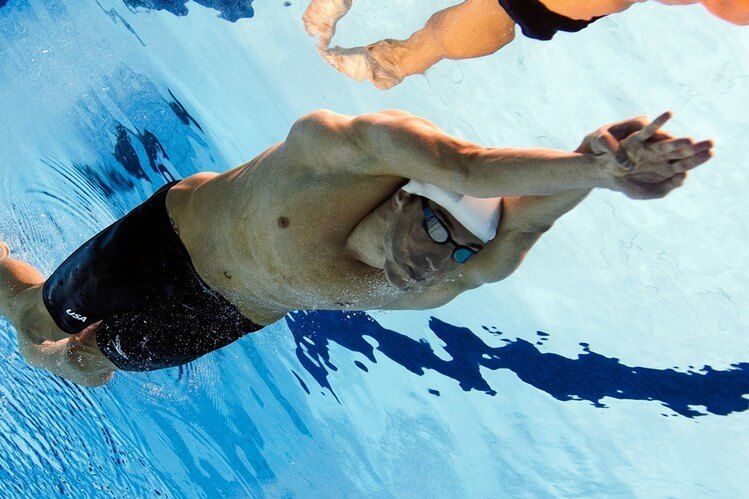 Now, having a solid underwater dolphin kick is a prerequisite for swimmers of every stroke.
It’s become as essential as having a good dive, solid turns, and good swimming technique. The importance of it becomes especially apparent with swimmers who compete primarily in short course meters and yards.
During the late 80’s and 90’s, because it was such a fringe aspect to swimming and because it was fairly difficult to teach, it wasn’t widely taught. As a young age grouper I knew having an underwater dolphin kick would be not only like, super awesome, but it would make me look like a total superstar in the water.
But where to start?
Imitation is one thing, but understanding the mechanics and physical traits necessary to power the kick efficiently and quickly are altogether another.
So that’s where this little guide is going to come in handy for you.
This guide is meaty; it comes in weighing at a solid 3,718 words, but it is action packed with things you can start doing today to improve your kick and is fairly comprehensive.
Everything in this guide is designed to be actionable and immediately implementable.
The guide covers published research on underwater fly kick (science!), as well as tips from biomechanists, high performance consultants, Olympic gold medalists, strength and conditioning specialists, and one of the most successful coaches on the planet.
Sounds good? Alright, let’s dive right on in.
Now, having a solid underwater dolphin kick is a prerequisite for swimmers of every stroke.
It’s become as essential as having a good dive, solid turns, and good swimming technique. The importance of it becomes especially apparent with swimmers who compete primarily in short course meters and yards.
During the late 80’s and 90’s, because it was such a fringe aspect to swimming and because it was fairly difficult to teach, it wasn’t widely taught. As a young age grouper I knew having an underwater dolphin kick would be not only like, super awesome, but it would make me look like a total superstar in the water.
But where to start?
Imitation is one thing, but understanding the mechanics and physical traits necessary to power the kick efficiently and quickly are altogether another.
So that’s where this little guide is going to come in handy for you.
This guide is meaty; it comes in weighing at a solid 3,718 words, but it is action packed with things you can start doing today to improve your kick and is fairly comprehensive.
Everything in this guide is designed to be actionable and immediately implementable.
The guide covers published research on underwater fly kick (science!), as well as tips from biomechanists, high performance consultants, Olympic gold medalists, strength and conditioning specialists, and one of the most successful coaches on the planet.
Sounds good? Alright, let’s dive right on in.
Remember: the feet are the only things creating propulsion when you are kicking. Your thighs, knees and hips are driving them, but it is your feet that actually are solely responsible for moving you through the water.
Remember: Your underwater dolphin kicking isn’t about generating speed—it’s about holding on to the speed you generate off the start and turns for as long as you can. Think of a Ferrari cutting through the water versus a big Mack Truck.
Remember: Picture a whip when you are kicking-- the handle is your core, the tail of the whip your feet.
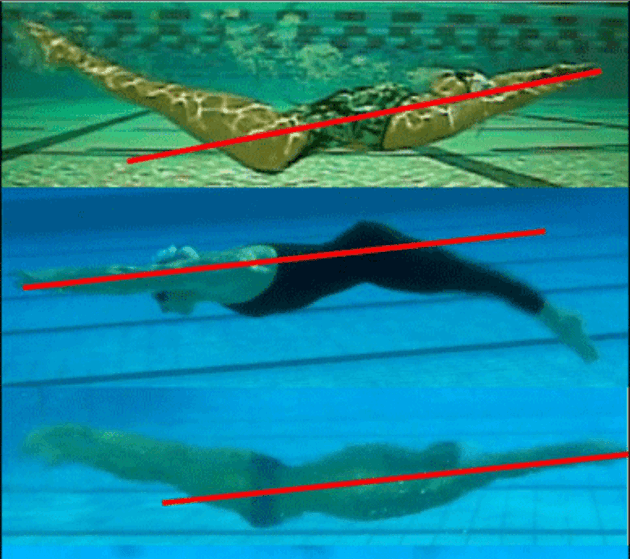 Notice that in all three cases that the swimmers' respective kicks complete the down (or up, in the case of the backstroker) kick well in front of their body. Doing so allows the swimmer to use the strength and power of their quadriceps in delivering the kick.
Remember: the execution and follow through of the kick should take place in front of your body.
Notice that in all three cases that the swimmers' respective kicks complete the down (or up, in the case of the backstroker) kick well in front of their body. Doing so allows the swimmer to use the strength and power of their quadriceps in delivering the kick.
Remember: the execution and follow through of the kick should take place in front of your body.
“Maximize toe speed in up and down kick phases,” Atkinson said. “Work on minimizing the transition time between up and down phases.”
Remember: You want a seamless transition between the up and down phases of your kick, and you want your toes to move like they are running late.
"With respect to improving underwater dolphin kick, without writing a dissertation and with respect to biomechanics, I have found that the two most important elements missing in most swimmers are the tendency to kick from the knees, rather than undulate from the hips, and the absence of a forceful up kick."A favorite of Hall's drills to help improve the balance is to perform the dolphin kick while on your side, which forces you to use the upkick.
Remember: the upkick isn't just for setting up your next big dolphin kick, it can also be used to generate a little more propulsion through the water.
To summarize what you should focus on in terms of technique:“Ankle flexibility is the secret weapon of elites with a great dolphin kick.” – Mel StewartHere is my five point plan for getting loosey-goosey feet:
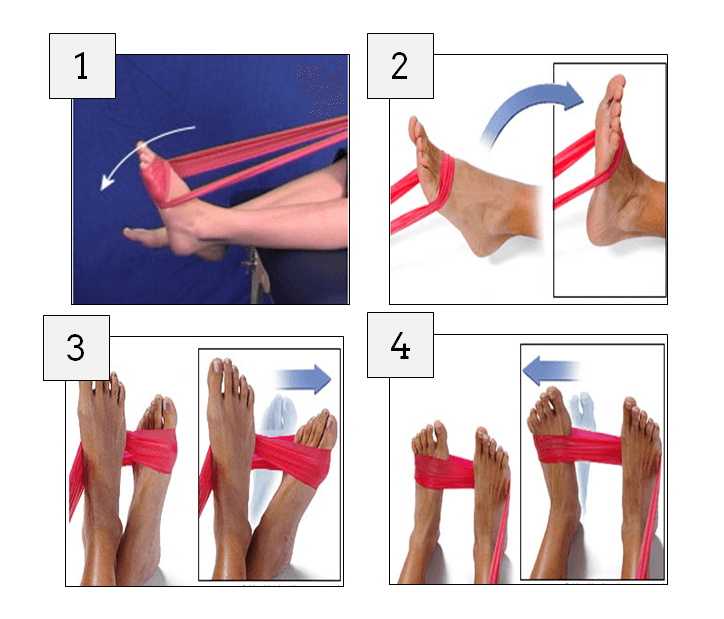 ]]>
]]>[alert style="grey"]Bonus: You can download this full list for later, including 3 more bonus strategies that you can use to stay motivated anytime you need it. Download the PDF with 3 bonus strategies by clicking here.[/alert]
 ]]>
]]>[alert style="yellow"]Reminder: Want awesome motivational content designed just for swimmers delivered to your inbox? Click and join the YourSwimBook mailing list, where you will get blog updates (only the awesome ones -- promise!), as well as exclusive motivational content that speaks to you, the awesome competitive swimmer, every Sunday. After last week's email one subscriber wrote, "You are honestly amazing! Thank you so much!" Hey, I'll take it![/alert]
1. Willing is not enough. We must do. - Bruce Lee. 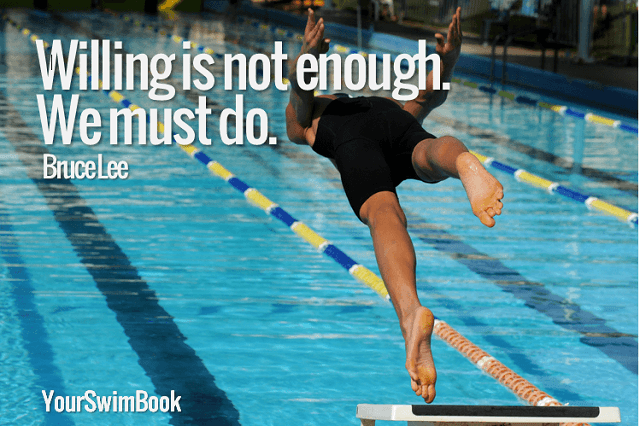 2. If you're going through hell, keep going. - Winston Churchill
 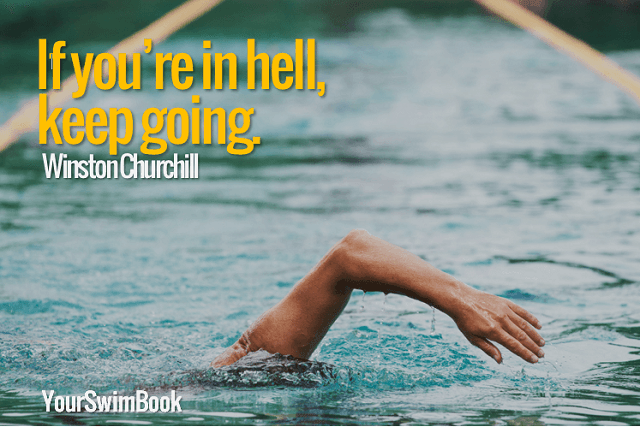 3. You have to expect things from yourself before you can do them.
  4. Make each day your masterpiece. - John Wooden
  5. Excellence is the gradual result of always striving to do better.
  6. Win if you can, lose if you must, but never quit.
 .
7. What to do with a mistake: Recognize it. Learn from it. Forget about it.
.
7. What to do with a mistake: Recognize it. Learn from it. Forget about it.
 8. It's not whether you get knocked down. It's whether you get back up.
 9. Never give up! Failure and rejection are the first steps to succeeding.
 10. A champion is someone who gets up when they shouldn't.
 [divider type="thin"]
YourSwimBook is a log book and goal setting guide designed specifically for competitive swimmers. It includes a ten month log book, comprehensive goal setting section, monthly evaluations to be filled out with your coach, and more.
Learn 8 more reasons why this tool kicks butt now.
Join the YourSwimBook weekly newsletter group and get motivational tips and more straight to your inbox. Sign up for free here.]]>
[divider type="thin"]
YourSwimBook is a log book and goal setting guide designed specifically for competitive swimmers. It includes a ten month log book, comprehensive goal setting section, monthly evaluations to be filled out with your coach, and more.
Learn 8 more reasons why this tool kicks butt now.
Join the YourSwimBook weekly newsletter group and get motivational tips and more straight to your inbox. Sign up for free here.]]>When I look back on all my injuries and rehabs that I went through, I wish I could have approached them differently. I was always trying to get back in shape too fast and not being fully considerate of the healing process post surgery. As long as I felt good I was pushing myself to the limit as I always did when I was healthy. As I reflect back on it now, I realize that I needed to be more careful and thorough in my rehab process, give time for the injury to heal properly especially after surgery, and build the strength back slowly.Despite the reconstructive surgery, by the fall of 2003 Krayzelburg continued to feel pains and aches in his shoulders, with not only the tendon in his shoulder still torn, but the shoulder capsule itself was loose, which was not helping the healing process, and if anything, probably even causing further damage. With Olympic Trials not even 8 months away, the decision was made to train through it. In order to do so, he had to alter his approach in the water:
The decision was pretty simple, train with the injured shoulder for the next 8 months and give it my best shot at Olympic Trials. To preserve the shoulder and avoid doing more damage to it, I had to adjust my training. For the next three months I did not use my left arm while training. I did mostly kicking and swimming with one arm. I also spent a lot of time on the stationary bike trying to keep my endurance up, because of my limited ability in the water.Perhaps most notably, Krayzelburg never lost sight of the goal, and remained focused and optimistic. I cannot count how many times I have seen athletes fall to the wayside when injuries force them to adjust or alter their preperation. Being flexible with your training, and finding the positive out of a bad situation is key, and Krayzelburg was committed to doing both:
Although my situation was pretty bleak, together with my coach we found ways to still get the most out of our training sessions and look to improve in other aspects of my preparation. Limited to kicking only, I set a goal for myself in training sessions to keep up with my teammates while they were swimming. Of course I could only do it for so long, but I knew giving myself this challenge I would become a better kicker, and make something positive out of a bleak situation.At the Olympic Trials Krayzelburg passed on the 200, instead choosing to focus all of his efforts and preparation for the 100m backstroke. He would place 2nd behind Aaron Peirsol, who he was training with under Dave Salo at the time, and punched his ticket for Athens. At the 2004 Olympics he would come 0.02 short of a silver, 0.01 short of a bronze in the 100m backstroke final, unable to repeat at Olympic champion. He would, however, add gold as a result of his participation on the US men’s 4x100m medley relay, giving him 4 Olympic gold medals over the course of his career.]]>
The way I operate, just so you understand, as I said this earlier is that I don’t write my workouts down. I have a sense of what I want to do. I kind of gauge my team and where we need to go and what it looks like. I come in with an idea of certain things that I want to accomplish in a workout and it just comes off my head. The coaches will come in and ask, what are we going to do? I say, I don’t know, just tighten up the seat belt and let’s go.For parents who may have used to have been swimmers, and swam back in the “good old days” where the norm was pounding out yardage until your arms fell off, it can be easy to see that Salo’s approach might be disconcerting. Salo admits that after leaving Irvine for USC he figured that the so-called “helicopter parents” would decrease, especially going from a team that regularly has 400+ swimmers to a university program with more mature student-athletes that number in the dozens. While still in the club environment, Salo would set the tone of the meetings with these parents quickly:
Imagine this. You are sitting down with a parent who is complaining about what you are doing. They say well, “Coach Salo, I just do not agree with you.” You say, “Umm, it is Doctor Salo.” I did that once and the parent just melted. You want to be a successful club coach get, a Ph.D or an MD or just JD…It really can set the tone for parent meetings.When that fails, and the parent is continuing to impede in the coaching and trying to drive the program and instruction for the swimmer, the only recourse left, is to cut the cord:
Beware. When a parent comes in with a Power Point presentation, it is time to move that parents away. So how do you deal with helicopter parents? You just tell them the honest truth. It’s okay to say, “Look, our program is not for you.” What I have been telling my coaches at Irvine is I want them to interview families that want to join the team. If you feel they shouldn’t be on our team with our values, you need to tell them to move on.]]>
 ]]>
]]>“I don’t know the key to success, but the key to failure is trying to please everyone.”No doubt. The moment you decide to do something special with your swimming people will begin telling you whether you can do it. Whether you can’t. Whether you are capable. Some opinions may be based in authority (coaches, fellow swimmers), while others are from people who quite frankly don’t know what they are talking about. At the end of the day, learn to trust yourself. If you believe that it is possible, than that is literally all that matters. [alert style="yellow"]Reminder: You can download this full list for free as a glorious PDF that you can print out and use for daily reference. Click here to download it now and remind yourself what it takes to swim like a certified badass.[/alert] 3. Try don't to chase too many goals at once. Once we get a little taste of success, of the rewards that come with chasing the pursuit of excellence, we tend to get a little greedy. We start looking outwards for other awesome stuff to achieve, expanding our vision, and at the same time watering down our efforts, and eventually, our results as well. Resist the urge to achieve everything at once, and instead drill down with remarkable focus and intensity on a select number of goals. It’s best to do a couple things exceptionally well then to do numerous at a mediocre level. 4. They don’t allow others to define their success. Having goals set for you, or creating goals that are designed to please someone else, are destined for failure. (At which point you will not only feel like you have disappointed yourself, but also the other person who somehow managed their way into your plans for success.) Create goals and a vision that is yours. Your goals are the ones that will motivate you beyond the first couple weeks of hard training. During the small dips in motivation, and in the dead of winter when it is freezing outside and the last thing you want to do is go to practice. 5. They don’t focus on what they can’t control. Ultimately, we can only control so much about the outcome. We can only manage our own performance. Getting caught up in what other swimmers are doing will only distract you from working on the things that matter to your own swimming. When you are standing up on the blocks next to your top competitor you should be quietly confidant because you did everything you could do to prepare. At this point the confidence has overtaken you because the result at this point will write itself. 6. They don’t spend time blaming others or making excuses. We all experience frustration and disappointment when things do not go as planned. The easy thing to do is to brush off responsibility and lay it at the feet of a variety of excuses. It’s easy to say that the pool wasn’t the right temperature, or that your cap didn’t feel right, or that you simply didn’t feel like it. Elite swimmers don’t spend their time making excuses, or shouldering their performances on others. Instead, these athletes are more than willing to take full accountability for their swimming, both in good times and in bad. 7. They don’t think success happens overnight. There is no such thing as an overnight success story. There is only the illusion of it. Behind the scenes, long before the gold medal swim they were toiling away, working with patience and determination for their own day to splash on the scene. Being successful equates with being patient and hungry, of understanding that success is found in the process, in showing up everyday and doing their best. The successful swimmer, although eager and starved for success, also knows that achieving big time stuff is a long term process, not something that will happen overnight. 8. They don’t fold when things get rough. Adversity happens to all of us. What marks the difference between the swimmer on the top of the podium and the one sitting in the stands is a refusal to fold under pressure and difficulty. Every swimmer at some point in the process will get hit by a barrage of setbacks. Getting really sick, a gnarly injury, and so on. What matters is not necessarily what happens, but how you react in the aftermath. Will you bounce back stronger after a shoulder injury? Phelps did after he broke his wrist in the run-up to Beijing. Will you bounce back after getting sick and missing a week of training? Or will you steady on when your coach up and leaves, or you move to a new team? 9. They are willing to find a new path. The path to success isn’t a sure one. While we can try and plot the steps that it will take to get there, hiccups inevitably arise, and there will even be moments where you progress much faster than you ever thought possible. Elite swimmers know that while their path to success is flexible and up for change, their will to see the path through is not. 10. They learn from their mistakes. Championship swimmers recognize the inherent value in failure, for it provides a valuable opportunity for feedback and learning – if you’re willing to see it as such. For some swimmers failure is the end. It’s proof that they couldn’t do it, that they don’t deserve it, and that they will never be the amazing swimmer they thought they could be. For the best swimmers in the world (and in your local pool), failure is nothing but a stepping stone, an opportunity to learn what works and what doesn’t, an opportunity to learn and adapt and ultimately, charge forwards smarter and faster. [Want more motivational goodness? Join thousands of your fellow swimmers getting fired up and chasing after their goals by joining the YourSwimBook newsletter. Every Sunday you'll receive an email chock-full of awesome. No big deal! Sign up free below today!]]]>
SEE ALSO: 5 Swimming Posters to Get You Motivated
That no matter how much I dedicated myself to improving that the Ryan’s of the world, who seemingly without trying cornered the market on winning, would always have the upper hand. My parents, ever supportive, told me that it was okay, that I would grow at some point as well, and that Ryan, with his loose commitment to the sport would see his advantage dissipate in the face of a superior work ethic and attitude. Sulking, I shook my head and stared off into the night. After all, what can you really tell a 13 year old in that moment to make them feel better? [divider type="thin"] 1. It’s challenging so it must be complicated. Because it is so rare, we expect success at the highest levels to be extraordinarily complicated. We imagine that the only way someone could swim so fast is by some miracle technique, some crazy unorthodox training schedule, or more increasingly, a miracle supplement (both legal and not-so-much). I imagine that this is why we are so drawn to the shortcuts and the promises of limit-busting gear and supplements. Finally, the advertisements tell us, we have the tools to outsmart what it takes to be elite, to outflank and out-gadget it. As a result, we begin to lean on them, to the point that we begin to neglect the things that truly matter. Like technique. Showing up every day. Doing it a little more and doing it a little better than the next guy or gal. When it comes down to it, performing well in the pool is that simple. Easy? Rarely. But simple? Almost always. 2. They did it alone. Relying on the innate talent and physical gifts you are provided with is one thing. To succeed in a sport that requires constant feedback, the emotional support of friends and family, as well as the financial resources that comes with being an amateur athlete is another. Some athletes believe that if they rely on the assistance of others over the course of their journey it somehow cheapens the end result. Success doesn’t happen in a vacuum, there will be those who affect your journey. Your parents, teammates, and of course your coaches will all play a big role in how far you take your swimming. 3. There is no room for mistakes. We tend to avoid friction at all costs. And a certain amount of friction is counter-productive to our goals. To fail every set would be pointless. But to fail every so often in order to stimulate growth is essential. Don’t assume that the elite swimmers that surround you always make every set, or don’t miss the occasional workout, or don’t get down on themselves when things aren’t going as smoothly as they would like. There will be strife, there will be challenges, and there will be times where you outright screw up. Understand that messing up and falling short is a vital part of the process, and will provide you a far better lesson than succeeding every step of the way. 4. Once you get to a specific level, you are set. We tend to imagine that once we achieve a specific level of success that we have “made it.” In some respects, staying at the top is more challenging than the ascent. Now that you have hit the top, a sense of complacency creeps in, added to the big red target that you now have hanging off your shoulders. Michael Phelps learned this in the years after Beijing. Coming off of the sky-high triumph of the ’08 Olympics the Baltimore Bullet found his motivation and commitment to the sport wavering. Coasting along on his talent and the work he had done pre-Beijing his grip on the international stage began to weaken. In London he would still perform well, just not to the atmospheric standards that we had come to expect from the greatest swimmer of all time. He would lose the 200m butterfly, his signature event, while also placing out of the medals in the 400m individual medley on the opening night of swimming events. Once you are at the top the work doesn’t stop. 5. It doesn’t matter who we surround ourselves with. We tend to fall in line with the people that we surround ourselves with. If the swimmers in our lane are leaving a couple seconds early, it doesn’t take us long to start doing so as well. If the swimmers in our group are chronically late, than we don’t see it as a big deal to show up tardy as well. Achieving big things in the pool is hard enough. Trying to chase down those big goals while the athletes around you toil in mediocrity is even tougher. 6. Hard work solves everything. Hard work doesn’t make you a fast swimmer, hard, intelligent work does. Getting in and thrashing around at full throttle for 4,000 yards with horrible technique will certainly burn a whole heap of calories, but it won’t make you a faster swimmer. Fast swimmers not only train their butt off in the water, but they do it with purpose, and they do it tactically. This means being disciplined to maintain good technical form even when you exhausted at the end of a set. It means focusing on their turns and breakouts even during sets that don’t require full effort. 7. Success unraveled exactly the way they thought it would. Swimming is a journey, a long one at that. Even over the course of one season a lot can change. Your training situation may unexpectedly be uprooted, you might hit a surprise—but not altogether unwelcome!—growth spurt, or find one of your off-strokes developing at an unforeseen rate. As a result, the goals we set for ourselves at the beginning of the year often come with a shorter than anticipated expiry date. And this isn’t a bad thing. Our goals should be as fluid and open to change as we are. Growth is difficult to come by with rigidity, and to be able to adapt is a skill that will serve you just as well in life as it will in the pool. Being adaptable means that you welcome the new opportunities that open themselves along the way. It signifies that you are more willing to brave the bumps and unexpected turns in the road. 8. The best swimmers are naturals, they can just wing it. We all had that kid on our team who showed up late every day to practice, didn’t complete the sets properly, goofed off, and then when it came to meet time, thoroughly destroyed us. (Ahem, Ryan.) The despair that results from this can be overwhelming—you trained your butt off, did everything correctly, and still this swimmer beat you like a rented mule when it mattered most. The truly good swimmers don’t rely on their talent, or luck, or being in the right place at the right time, they seize the talent and abilities handed to them and make the most out of them, using them instead of depending on them. 9. You have to be cut-throat and egotistical to succeed in the pool. Successful swimmers are among the most generous with their time. You see them at camps working with youngsters, and at the top echelon of swimming superstars are exceedingly generous with their time. Ryan Lochte, despite what one may think about his choice of tooth apparel during the London Games, and his attempt at becoming a reality television star, refuses to deny fans an autograph. As a youngster he was brushed aside by one of his swimming idols, and with that memory seared into his mind vowed to never turn away youngsters seeking an autograph. Additionally, the top athletes in the world don’t tie their accomplishments to the losses of others. To win against an opponent is never as satisfying as overcoming a competitor who is at the top of their abilities. They understand that the value of their victory is tied to the veracity of the competition. 10. You have to develop at a specific rate, by a specific point, to be successful. Comparison is the mother of all ways to completely discourage yourself. If no two people are alike, than how is it fair to compare yourself up against a swimmer whose path, physical dimensions and innate skills are completely different than those you possess? One of my favorite swimmers from the 1990’s was Bill Pilczuk. Not because he achieved a whopping sense of success—he book-ended winning gold at world championships in 1998 in the 50m free by just missing qualifying for the 1996 and 2000 US Olympic teams—but because he took his own path. Coming out of high school he was offered zilch in terms of scholarships, had to pay his way while walking on to Auburn, and then didn’t achieve “success” until he was 26 years old at the Perth worlds. His path, far from the typical age group prodigy to NCAA stand-out to international contender, is a powerful reminder that our swimming careers, our expedition towards the summit of our abilities, are wildly different. At the end of the day you need to be comfortable in knowing that your own journey is going to be completely and uniquely yours. That is what I would have told my 13-year old self that night.YourSwimBook is a log book and goal setting guide designed specifically for competitive swimmers. It includes a ten month log book, comprehensive goal setting section, monthly evaluations to be filled out with your coach, and more.
Learn 8 more reasons why this tool kicks butt now.
Join the YourSwimBook weekly newsletter and get motivational tips and more straight to your inbox. Sign up for free here.
]]>The big issue for me was whether he was going to keep his 'feel' for the water. I knew he had the background. I knew he had the technique. If he was rested I knew he could swim fast. Then it was all about keeping his head together. I just assured him, OK, we're in taper. You're going to be resting anyway. You may as well be resting like that.Best notes that he does his training cycles as 3.5 weeks on, half a week off with Magnussen…
If we're in a longer, more aerobic cycle with three-and-a-half weeks on and a half-week off. If it's a more intense cycle we'll go three and one "off" where we come back to maybe 60 per cent of everything…. Front of the cycle is faster stuff, back of the cycle is more back-end (of the race pace).In one of the more interesting tidbits, and something I suspect many coaches will take away, is that at the beginning of each mini 4-week cycle Best had Magnussen focus on being fast. How fast? Race speed fast. As the cycle progresses the goal is to maintain and load that race speed. In the words of Best, “Find the race speed and then load it. Load the **** out of it.” Best recognizes the need for an athlete to be calm and in the correct state of mind before a race in order to execute the plan…
When you're angry all the blood goes to your hands and feet because you've got to fight. When you're afraid, blood goes to your legs because you've got to run. It goes away from your brain. But if you're composed or if you're happy, blood flows to your brain. If you're not emotionally distracted you've got to be in a better state to be more intelligent to execute the way you want to execute. And that's what we do going into meets, more than we do talking about everything they've got to do during a race because they know what they have to do. They know how to do it. They're racers.Best notes that with Magnussen it wasn’t about making his top-end speed quicker, the goal is trying to make his “easy” race speed easier. With Magnussen having always been a strong finisher in his races, the temptation has always been to sacrifice his strength “in order to develop his weakness” by focusing too heavy on the front end.
We just do a lot of practice at race speed and make him faster at race speed, so his easy speed is faster. Not his fast speed is faster. His easy speed had to get faster. We do a lot of easy-speed work , rather than top-end speed. A lot of coaches were saying you're got to get his top-end speed up. But that's not the way he swims. He doesn't even swim with a top-end speed stroke. It's almost a 200m-type timing. We did a lot of work to make that better and he's now now a second faster than he was at Trials last year down the first 50m. But his stroke rate and his stroke count are the same.The top swimmers, the ones who are able to push through the pain and struggle to get themselves to the podium understand that it is by becoming comfortable—or at least familiar—with the grind and pain…
You've got to be able to 'go'. Your brain cannot be telling you, 'holy ****. This is the first time I've done this. I better shut down and go into protection mode.' The competitor needs to know, I've done this before. I know it hurts, but I've done it before. It's familiar. I am not going to shut down because this isn't familiar. It's about familiarity as much as anything we do.On why swimmers should avoid doing crunches…
Sit-ups develop the wrong set of abs for me. I think we need to develop the abs a little deeper and abs that twist us rather than abs that hold us. We do a lot of twisting, between the shoulders and the hips. The torque we develop - we call it a coil - between the shoulders and the hips develops that chain of power. We can't do straight situps because that will sit us forward and we can't be sitting forward like that in the water because bananas don't swim quick.]]>
What a waste of an amazing talent…
He’s so talented, no wonder he goes so fast…
If you have spent longer than ten minutes on deck at a swim meet you have heard a coach or parent say a variation of the above statements. The lamenting is surprisingly common, so much so that it cannot help but make you wonder why so many talented swimmers never achieve the trajectory that is expected of them. Sure, laziness, apathy and a lack of interest are common reasons for why swimmers don’t realize the potential they hold. But perhaps there is a little more to this. The reality is that we don’t understand why some kids are gifted, while others are not. We like to think that we have the answers—play classical music while they are still in the womb, use high grade organic “brain fuel” baby food, hire the best coaches and use the best facilities. But in the argument between nature vs. nurture (a.k.a. the 10,000 hour rule), there is no clear winner for the time being. All great athletes are a mixture of both, just how much it balances out is hard to say. The odd thing about talent is that when we heap the “you’re so talented” praise on an athlete, it tends to have the opposite effect of what we intend. Here are 7 curses of being a talented athlete, as well as some research to back it all up: Talent has high, often ridiculous, expectations. It expects to never screw up. It expects that things will go perfectly every time it wades out into the water. Talent doesn’t like to ask for help. Talent expects to be able to do things on its own. After all, what is the point of being gifted if you need help or assistance? Talent relies on itself. Talent feeds on praise, and when given enough of it expects it to simply be there whenever competition comes around. By leaning on their talent and avoiding things they can control, like their mental toughness, swimmers leave things up to fate (or rather, the competition). Talent expects to be used. When you are recognized at being talented, the assumption immediately becomes that you have taken responsibility for this innate ability, and now you owe it to yourself (and others, it sometimes feels like) to see it through. Talent isn’t earned. As a result, it can become to feel more like a burden. Something heaped upon an athlete who didn’t necessarily ask for it. The swimmer realizes that “talent” isn’t them, it isn’t something they requested, and the praise it receives has nothing to do with anything they have done. It’s the talent that did the hard work, the swimmer was just along for the ride. Talent very quickly becomes expectation. “If only” they applied themselves in the pool he or she child would swim faster. With talent comes a series of expectations and bars that are supposed to be achieved. With talented athletes you start to hear the inevitable comparisons—“Oh, he’s the next Michael Phelps” or “She’s just as talented as Missy Franklin.” Talent gets mixed up with self-identity. Our society rewards those who are impressive. And because the talented swimmer possesses something rare and admirable it is easy for them to sink into feeling as though they are the sum of these performances. They come to identify themselves as this talent—“I’m a fantastic swimmer and that is it.”YourSwimBook is a log book and goal setting guide designed specifically for competitive swimmers. It includes a ten month log book, comprehensive goal setting section, monthly evaluations to be filled out with your coach, and more. Learn 8 more reasons why this tool kicks butt.
Note: We now have motivational swimming posters. Five of ’em, actually.
Join the YourSwimBook weekly newsletter group and get motivational tips and more straight to your inbox. Sign up for free here.
]]> YourSwimBook is a log book and goal setting guide designed specifically for competitive swimmers. It includes a ten month log book, comprehensive goal setting section, monthly evaluations to be filled out with your coach, and more. Learn 8 more reasons why this tool kicks butt.
Note: We also have motivational swimming posters now. Five of 'em!
Join the YourSwimBook weekly newsletter group and get motivational tips and more straight to your inbox. Sign up for free here.
]]>
YourSwimBook is a log book and goal setting guide designed specifically for competitive swimmers. It includes a ten month log book, comprehensive goal setting section, monthly evaluations to be filled out with your coach, and more. Learn 8 more reasons why this tool kicks butt.
Note: We also have motivational swimming posters now. Five of 'em!
Join the YourSwimBook weekly newsletter group and get motivational tips and more straight to your inbox. Sign up for free here.
]]>Proper body position is key to freestyle swimming. Yet our instinct works against us. As land animals we spend most of our life looking where we’re going so we don’t run into things. In the water, we compensate for lack of balance and orientation by looking forward. We may feel more secure about approaching threats such as walls, other swimmers and rogue kick boards, but it doesn’t help get us down the pool efficiently.
If your eyes are too far forward, your head is too high. You’re fighting an uphill battle with the rest of your body. While you’re busy getting a better look at oncoming traffic, your body has gone south. And that’s not all. You’ll be using more fuel on keeping yourself afloat rather than propelling yourself to the other end. Whether it be 10 laps or 100, overcoming the extra drag and expending more force to stay buoyant will raise your heart rate, tighten your neck, shoulders and back and slow you down in the process.
The best swimming mechanics cannot defeat the physics of increased drag – public enemy number one for Olympian and recreational swimmers alike. So whether you’re training to take down the competition or just going head to head with the pace clock, swim with your eyes down and slightly forward.]]>
SEE ALSO: How to Develop a Monster Underwater Dolphin Kick
Anyways. Below is a video from a tri-meet that was held between Harvard, Yale and Princeton during January of 2011. This is one of the great fears of the competitive swimmer. That their conditioning and stroke will fail them thoroughly and completely at the end of a race.SEE ALSO: Butterfly Sets: How to Dominate Your Next 100m Butterfly
Keep your eye on the brave young man in lane 3. Edit: In case you were wondering who the brave swimmer was, it was Princeton's Charley Wang. After taking it out in a 51.52, he brought it back in a 35.3 on that last 50. He wasn't the only one to take it out like a wild man that day, his teammate David Reid split a 54.99 at the 100 and came home in a 34.4 on the last 50. Big ups to Braden from SwimSwam for the tip!YourSwimBook is a log book and goal setting guide designed specifically for competitive swimmers.
It includes a ten month log book, comprehensive goal setting section, monthly evaluations to be filled out with your coach, and more.
Learn 8 more reasons why this tool kicks butt now.]]>SEE ALSO: 5 Swimming Posters to Keep You Motivated This Season
After all… Ever notice that when you go on a hot streak—whether it is making X number of morning workouts in a row or consistently crushing the main set—that breaking the streak becomes more of a disappointment than the actual bad workout or set that caused it? This is something called loss aversion in action. It’s a bias in decision making where at the end of the day we lean towards avoid losing compared to striving for wins. And it is something that is surprisingly common:Enjoy this article? Join 9,000+ fellow swimmers who read my newsletter last week. Sign me up!
]]>YourSwimBook is a log book and goal setting guide designed specifically for competitive swimmers. It includes a ten month log book, comprehensive goal setting section, monthly evaluations to be filled out with your coach, and more.
Learn 8 more reasons why this tool kicks butt now.
Join the YourSwimBook weekly newsletter group and get motivational tips and more straight to your inbox. Sign up for free here.
]]>SEE ALSO: 3 Tips to Improve Your Distance Per Stroke
SEE ALSO: Brant Best on Swimming a More Efficient Freestyle
SEE ALSO: How to Swim Better Freestyle with Nathan Adrian
SEE ALSO: 3 Tips to Improve Your Distance Per Stroke
SEE ALSO: 3 Sneaky Training Tips for a Faster Sprint Freestyle
“If I see any (challengers), I have to swim faster and make them feel sick. If they have a little potential, you must get on top of them and kill that enthusiasm right away so they will lose their interest in swimming.”
Photo: Marco Chiesa
YourSwimBook is a log book and goal setting guide designed specifically for competitive swimmers. It includes a ten month log book, comprehensive goal setting section, monthly evaluations to be filled out with your coach, and more. Learn 8 more reasons why this tool kicks butt.
Note: We now have motivational swimming posters. Five of ’em, actually.
Join the YourSwimBook weekly newsletter group and get motivational tips and more straight to your inbox. Sign up for free here.
]]>SEE ALSO: Rise and Swim - The Ultimate Motivational Video for Swimmers
YourSwimBook is a log book and goal setting guide designed specifically for competitive swimmers. It includes a ten month log book, comprehensive goal setting section, monthly evaluations to be filled out with your coach, and more. Learn 8 more reasons why this tool kicks butt.
Note: We now have motivational swimming posters. Five of ’em, actually.
Join the YourSwimBook weekly newsletter group and get motivational tips and more straight to your inbox. Sign up for free here.]]>SEE ALSO: How to Mentally Stay in Your Own Lane
During his 1972 run in Munich, where he would win 7 gold medals, he feigned being sore and injury in the ready room prior, having his coach Sherm Chavoor tag along and massage his “injured” shoulders while Spitz feigned a grimace. “My competitors would stare at us with their mouths open,” Spitz would recall in later years. Victor Davis, a fiery Canadian who at one point held the world record in the 100m and 200m breaststrokes during the 1980's would splash water all over himself in the moments before a race, often simultaneously dousing swimmers in the lanes next to him. For the coup de grace, however, he would throw some water in his mouth and spit it into the competitor’s lane next to him. For Davis, this intensity wasn’t an act. In what turned out to be one of the more controversial (and I hesitate to use the word) moments in Canadian swimming Davis kicked a plastic chair across the pool deck at the Commonwealth Games. In front of the Queen. Oh, the horror! (But seriously, the media made a big deal out of this.) Mental warfare on the pool deck is nothing new. For as long as there have been elite swimmers there have been mind games. Don Schollander, recognized as an 18-year old that all swimmers at the top level were nearly identical in talent and training. What set them apart was the mental toughness they had at crunch time, and the ability to psych out the competition before the race. In one such event, highlighted in his auto-biography Deep Water, Schollander was in the ready room before the 100m freestyle semi-final at the 1964 Games. One of his competitors, France’s Alain Gottvalles had been doing some talking, boasting he could crush a bottle of wine and smoke like a chimney on a daily basis and still be the fastest swimmer on the planet. Gottvalles, just a month earlier, had established the standing world record at 52.9. Schollander saw past the bravado and recognized that Gottvalles was nervous. He got closer and closer to him in the ready room until he was standing over him. Gottvalles shifted down the bench. Schollander followed. When Gottvalles got up to escape to the bathroom, Schollander followed and stood behind him. The implication was crystal clear—Gottvalles would be unable to escape the wrath and fury of Schollander. The following evening Schollander would handily win the 100m freestyle in an Olympic record time of 53.4. Gottvalles, despite his swagger in the run-up to the Games, placed outside of the medals in fifth. Schollander, meanwhile, would go on to win 4 gold medals at those games, becoming the first swimmer in history, and only the second athlete to do so. The ready room antics aren’t always just limited to stare-downs and mental combat. Sometimes it even gets physical. At the 2011 world championships Australia’s Alicia Coutts had a ready room incident that set the bar pretty low for what some athletes are willing to do to get that critical mental edge. According to Coutts a European rival (who she wouldn’t name in subsequent interviews) elbowed her in the head a couple times while they waited to march out on deck for the final of the 100m freestyle. To add insult to attempted injury, the offending swimmer then turned and spat on the ground at Coutts feet as they walked up the stairs to the pool deck in Shanghai. The reserved Coutts, who was understandably shocked at the aggressiveness of her competition, took it in stride. “She obviously thought I was a threat,” Coutts said afterwards. “She felt she needed to put me off.”]]>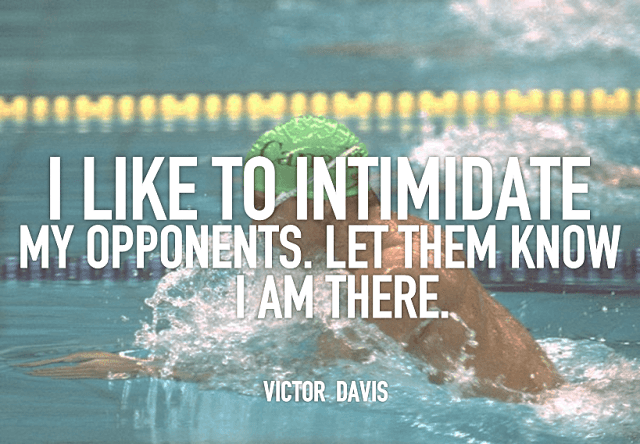 HIS LEGACY
Davis’ shadow continues to loom large on the collective consciousness of Canadian swimming. He was a larger than life presence in real life, and this intensity and has reached the point of legendary status.
In a country whose sporting landscape is dominated year-round by hockey, it makes it even more remarkable that 20 years after his passing that the CBC (the national public network in Canada) would produce a biopic film of Victor.
Davis continues to live on both literally and physically. His heart, liver and kidneys were donated for…
Canadian swimmers that have come up over the past twenty years no doubt have heard about the Victor Davis Memorial Fund at some point. At the 2008 Beijing Olympics 13 of the swimmers representing Canada were recipients of the fund.
Swimmers including Annamay Pierse (who broke the world record in the 200m breaststroke), Brent Hayden (world champion and London bronze medalist in the 100m freestyle) and Ryan Cochrane (two-time Olympic medalist in the 1500m freestyle) are two noteworthy recipients.
As for Davis, he continues to be remembered fondly by swimmers in Canada—even if one wonders if the memory is fading like all things tend to do—perhaps best with the words he used as his personal motto—“Go big, or go home.”]]>
HIS LEGACY
Davis’ shadow continues to loom large on the collective consciousness of Canadian swimming. He was a larger than life presence in real life, and this intensity and has reached the point of legendary status.
In a country whose sporting landscape is dominated year-round by hockey, it makes it even more remarkable that 20 years after his passing that the CBC (the national public network in Canada) would produce a biopic film of Victor.
Davis continues to live on both literally and physically. His heart, liver and kidneys were donated for…
Canadian swimmers that have come up over the past twenty years no doubt have heard about the Victor Davis Memorial Fund at some point. At the 2008 Beijing Olympics 13 of the swimmers representing Canada were recipients of the fund.
Swimmers including Annamay Pierse (who broke the world record in the 200m breaststroke), Brent Hayden (world champion and London bronze medalist in the 100m freestyle) and Ryan Cochrane (two-time Olympic medalist in the 1500m freestyle) are two noteworthy recipients.
As for Davis, he continues to be remembered fondly by swimmers in Canada—even if one wonders if the memory is fading like all things tend to do—perhaps best with the words he used as his personal motto—“Go big, or go home.”]]>"She has a very intense competitive drive." -- Nathan Adrian.In this video we get a glimpse into some of the training that she undergoes on a daily basis at Cal both in the pool and the weight room. (And even on the beach.) "I love training," Coughlin tellingly says. Enjoy! ]]>
Here is here your guide to developing a powerhouse underwater fly kick.
It’s hard to forget the first time you see a really powerful underwater dolphin kick. When done at top speed, it brings us a step closer to our ocean-bound kin, a seemingly perfect symbiosis of power and grace. For a few moments, as we snap through the water, we leave land and become something utterly different. As a scrawny 8-year old in the summer of 1988 I spent every morning and late afternoon cross-legged in front of my parents television as swimmers from across the world swam for glory at the Seoul Olympics. Names like Matt Biondi, Michael Gross, Janet Evans, and Kristina Egerzegyi became firmly implanted in my mind. In the following years I would always try to emulate my heroes of ‘88. Biondi’s powerful and effortless distance per stroke. Gross’ stoicness behind the blocks. Evans’ never-ending battery life in the pool. But it was a 5’8” backstroker that left the greatest impression. In the final of the 100m backstroke the USA’s David Berkoff and Japan’s Daichi Suzuki would swim nearly half of the final underwater, with Berkoff in particular, doing something that became widely known as the Berkoff Blastoff, staying under for the first 35 metres of the race. It was like nothing I had ever seen. The underwater footage provided a tantalizing glimpse into the undulating raw power. It was graceful, it was potent, and it was fast. At practice I would try my hardest to replicate the feats I had seen on TV. And while my Berkoff impersonation probably looked more like a thrashing salmon in its death throes than the animal for which the kick is named, I was hooked.
Now, having a solid underwater dolphin kick is a prerequisite for swimmers of every stroke.
It’s become as essential as having a good dive, solid turns, and good swimming technique. The importance of it becomes especially apparent with swimmers who compete primarily in short course meters and yards.
During the late 80’s and 90’s, because it was such a fringe aspect to swimming and because it was fairly difficult to teach, it wasn’t widely taught. As a young age grouper I knew having an underwater dolphin kick would be not only like, super awesome, but it would make me look like a total badass in the water.
But where to start?
Imitation is one thing, but understanding the mechanics and physical traits necessary to power the kick efficiently and quickly are altogether another.
So that’s where this little guide is going to come in handy for you.
This guide is meaty; it comes in weighing at a solid 3,004 words, but it is action packed with things you can start doing today to improve your kick and is fairly comprehensive.
Everything in this guide is designed to be actionable and immediately implementable.
The guide covers published research on underwater fly kick (science!), as well as tips from biomechanists, high performance consultants, Olympic gold medalists, strength and conditioning specialists, and one of the most successful coaches on the planet.
Sounds good? Alright, let’s dive right on in.
Remember: the feet are the only things creating propulsion when you are kicking. Your thighs, knees and hips are driving them, but it is your feet that actually are solely responsible for moving you through the water.
Remember: Your underwater dolphin kicking isn’t about generating speed—it’s about holding on to the speed you generate off the start and turns for as long as you can. Think of a Ferrari cutting through the water versus a big Mack Truck.
Notice that in all three cases that the swimmers' respective kicks complete the down (or up, in the case of the backstroker) kick well in front of their body. Doing so allows the swimmer to use the strength and power of their quadriceps in delivering the kick.
Remember: the execution and follow through of the kick should take place in front of your body.
“Maximize toe speed in up and down kick phases,” Atkinson said. “Work on minimizing the transition time between up and down phases.”
Remember: You want a seamless transition between the up and down phases of your kick, and you want your toes to move like they are running late.
"With respect to improving underwater dolphin kick, without writing a dissertation and with respect to biomechanics, I have found that the two most important elements missing in most swimmers are the tendency to kick from the knees, rather than undulate from the hips, and the absence of a forceful up kick."A favorite of Hall's drills to help improve the balance is to perform the dolphin kick while on your side, which forces you to use the upkick.
Remember: the upkick isn't just for setting up your next big dolphin kick, it can also be used to generate a little more propulsion through the water.
To summarize what you should focus on in terms of technique:“Ankle flexibility is the secret weapon of elites with a great dolphin kick.” – Mel StewartHere is my five point plan for getting loosey-goosey feet:
]]>"For me," Phelps said. "Some of the most effective work in the pool comes with vertical kicking and underwater kicking. It's painful, but effective."In the following video we get a chance to see some of this vertical kick training in action, with Phelps using a weight belt. From the pool deck Coach Bowman instructs his pupil to--
SEE ALSO: Butterfly Sets: 3 Sets for Dominating the 100m Butterfly
The video is voiced-over in Japanese, and also shows Japanese swimmer Hisayoshi Sato trying to emulate Phelps work. Here is the video, enjoy!]]>[alert style="yellow"]SEE ALSO: Top 5 Core Exercises for Swimmers[/alert]
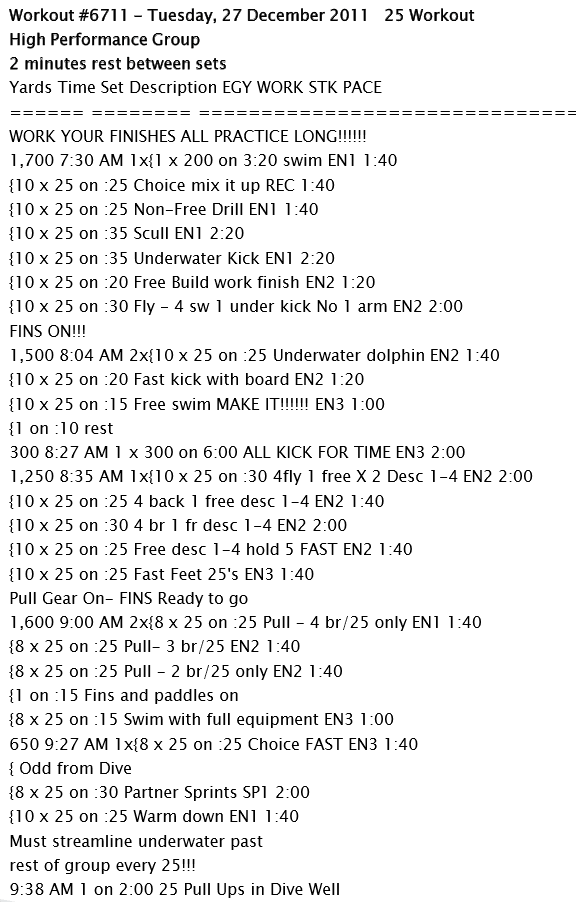
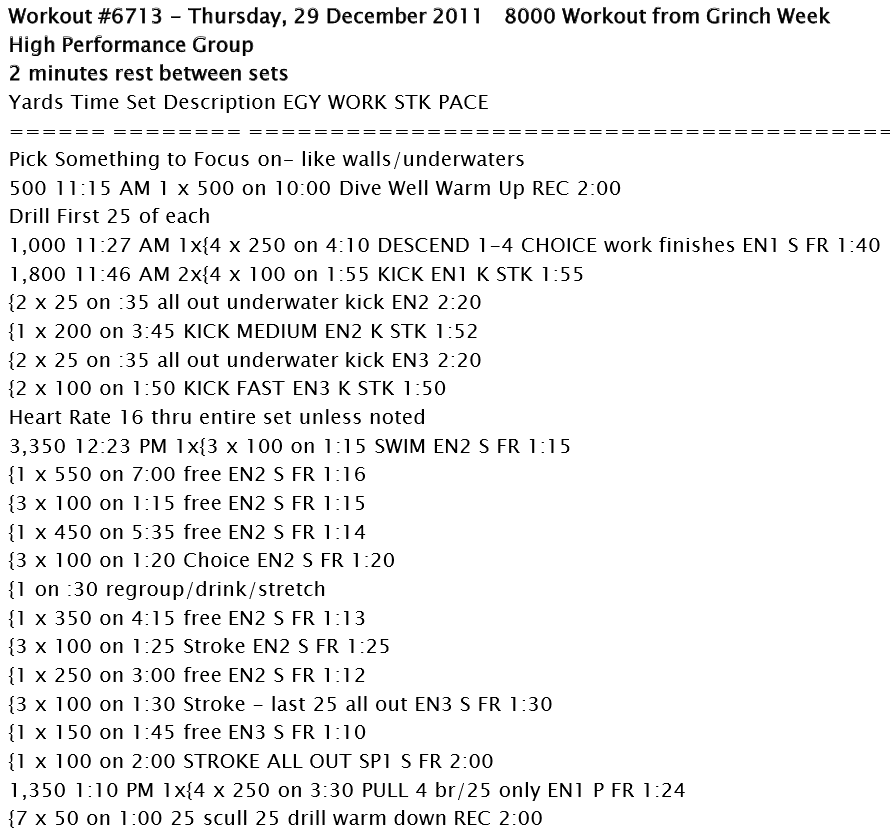 ]]>
]]>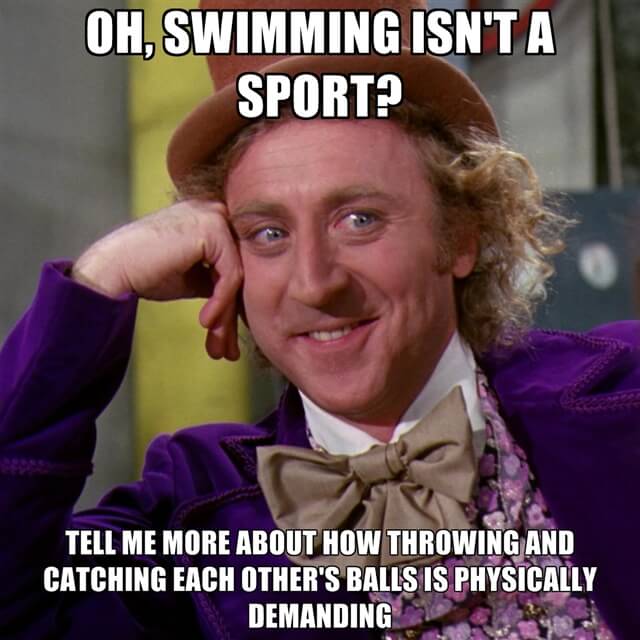 ]]>
]]>[alert style="grey"]I was wondering why is team travel so hard at swim meets (sleeping in hotels, etc) and how can I make it easier for me so that I can still swim fast on the road? -- Jessica L.[/alert]Swimmers understand how much of a commitment the sport is. The long hours of training, the investment of thousands of sessions in the pool in the hopes of seeing a drop of a second or two come race-time, and of course, the reason we hone our skills in the water… The swim meet. For those of us who live far from the bustling metropolis’ of swimming, this means road trips, hotels, and long weekends spent in unfamiliar aquatic centers sometimes very, very far from home. So how can we make sure that all that hard work doesn’t go to waste on account of crappy hotel beds, unfamiliar foods that leave us feeling sluggish, and foreign waters? Here are 4 ideas:
Pack your pillow. Seems silly, but something as simple as your own pillow from home can give you that feeling of being in your own bed that can help you doze off easier. If you have a stuffed animal you sleep with (no judgement from me) pack the little fella as well.
Keep the same routine you have at home. Each night before you go to bed you typically perform a ritual of sorts, even if it is not completely conscious. You brush your teeth, throw your clothes in the hamper, read in bed for a few minutes, and then kill the lights. Replicate this ritual while you are on the road as well.
Bring some of your usual snacks along. While meals and snacks should be provided or arranged for you on the road (I am talking mostly to you age groupers), have some snacks packed for the gaps between meals and for after your races. Some almonds, fruit, granola bars, etc. are easy ways to keep you satiated between meals, while also providing a taste of home.
White noise. While this isn’t always possible as you are likely to be bunked up with teammates, having a little fan in the corner of the room can be helpful to drown out the noise of the city outside, or the noisy couple down the hall. Conversely, if white noise isn’t an option, and you know that you are going to have a chainsaw sleeping in your hotel room, pack some ear plugs.
Have dedicated rest and relaxation rooms between sessions. After each preliminaries sessions there was always a group of swimmers who didn’t qualify for finals that night, meaning that they wouldn’t be bedding down between sessions. Have rooms specifically for the athletes who need to shut it down for a nap between sessions so that they can get the rest they need.
[alert style="grey"]My name is Matt, and every day at practice the sets I look forward most to are the ones where we get to do pull. I can go nearly as fast doing pull as swim and usually end up leading the lane as a result. When it comes to kicking, on the other hand, I immediately find myself at the back of the lane. What is the fastest way to improve my flutter kick? Matt R. [/alert]I recently put together a large guide on how to improve your underwater dolphin kick that covers a lot of the same ground we are going to get into here, so I’ll summarize the main points from the guide as it relates to flutter kick, while also try to emphasize just how important a fast freestyle kick truly is. The first thing I should point out is that the goal in having a faster flutter kick is to improve your overall swimming, not just to become a good kicker. After all, to swim fast freestyle you have to possess a nearly unfathomably fast kick. Alexander Popov, two-time Olympic champion in both the 50m and 100m freestyles could kick 50m long course in 27 seconds. Cesar Cielo, world record holder in the 50 and 100m freestyle can kick the same length in 30 seconds. Other top sprinters including Americans Nathan Adrian and Jimmy Feigen have made it clear that to swim fast you need to put in work on your legs. Even if you are not a sprint swimmer, athletes like Katie Ledecky are showing that you need to have some serious wheels in the lower body to compete at an elite level.
SEE ALSO: 3 Drills for a Faster Freestyle Kick
Despite this, it seems many swimmers (and even coaches) don’t emphasize lower body work in the pool. Sure, a bunch of kick sets might get scrawled up at the beginning of the season for aerobic work, but this typically tapers off as the season unwinds. Your legs, being those big trunks of muscle that they are, need to be in hilarious shape in order to develop the type of propulsion and stability necessary for high speed swimming. Gary Hall Sr. of the Race Club puts it best when he writes--Most coaches and swimmers do not understand nor appreciate how important the swimming kick speed is to the overall swim speed. Nor do they work the legs enough in practice. The legs really don’t get a recovery period during the race and they are moving at 3 times (or arguably 6 times, if one considers the upkick) the rate of the arms. The legs are essentially working constantly, kicking in both directions. The arms get a few important tenths of a second of recovery on each cycle. Relative to the arms, the legs must be much fitter in order to sustain their fast motion throughout the race. Gary Hall Sr., "Swimming Kick Speed Determines Baseline Swim Speed."
YourSwimBook is a log book and goal setting guide designed specifically for competitive swimmers. It includes a ten month log book, comprehensive goal setting section, monthly evaluations to be filled out with your coach, and more.
Learn 8 more reasons why this tool kicks butt now.
Join the YourSwimBook weekly newsletter group and get motivational tips and more straight to your inbox. Sign up for free here.
]]>Many of us are under the impression that greatness is something that is bestowed upon us. And while talent does play an undeniable role, how far you get both in life and in the pool will rely much more on your tenacity and willingness to be great. Choosing greatness seems like a no-brainer—after all, who wouldn’t want to dunk themselves in the pool of greatness on a daily basis? But how many will actually make the decision day in and day out to be great? Will you?1. Greatness is a choice.
When we sit back and actually look at the things we get worked up over it might make us feel a little foolish. Some of the common things that make us angry: Getting cut off in traffic. That friend who doesn’t text back in a remotely timely manner. A piece of technology that fails us. Some of the common things that makes great swimmers angry: Wasting an opportunity to train. Not giving a full effort at practice. Knowing they could have done more. We choose the things we get angry about. Will you choose to be angry about the inconveniences of life, or the fundamentals of your swimming?2. You can tell the greatness of a man by what makes him angry. (Abraham Lincoln)
In dreaming of our goals we think about a concrete result. A gold medal. A best time. A world record. But what the truly great swimmers understand is that while it is important to have those lofty ambitions, what is more important is priding themselves on being the type of athlete who develops the scaffolding, the systems, the routines, the day-to-day habits and rituals that will eventually produce those results. That is where greatness is inherently found. In the seemingly boring routine of showing up every day. Of making good life decisions when no one is watching. Greatness isn’t something you achieve, it is something you become.3. Greatness is not a result. It’s a state of being.
The idea of perfect and frictionless progress is an appetizing one. When we think and dream about success we consider in these broad and simple manner: My goal + hard work = I win! But what really happens, what needs to happen, is the hard stuff. The setbacks. The failures. The friction. The grind. Whatever else you want to call it. The moments that will test you, that will push you to the brink of giving up. Make no mistake, you need these moments of strife. Why? Because they are precisely what will separate you from the rest who crave the exact same thing.4. Greatness needs great challenges.
Greatness doesn’t manifest itself in a moment. It’s not developed by a single race, or an individual snippet of time. It is honed, groomed and carefully and laboriously assembled over a long period of time. Piece by piece. Yard by yard. It is the sum of a thousand small victories, of a million little moments where an athlete could have said yes to a night out, but said no, or could have rolled over when their alarm clock went off, but didn’t, or could have left practice early, but did the hard and lonely extra work. A gold medal might make someone great, for that fleeting moment is the only piece of insight we have had into a champion’s journey. We don’t see the two-a-days, the lonely extra sessions when everyone else has gone home, or the countless small steps.5. True greatness consists in being great in little things. (Charles Simmons)
Greatness, by its very definition, is uncharted. It’s somewhere you have never been, something you have never done. It’s out there somewhere in the dark, and to get there you will have to step off the ledge. You will have to step into the unknown, where there are no guarantees, no iron-clad assurances of success. To chase and attain greatness you will have to do things you have never done before, with no guarantee that you will achieve the results you so badly crave. This in itself is enough to prevent most people from ever making an honest effort. These are the swimmers that are constantly seeking validation, asking if they are capable, asking if they have a shot, all the while not fully investing themselves in giving themselves the opportunity to find out.6. Greatness is a road leading towards the unknown. (Charles de Gaulle)
To be great is not normal. It is weird. It is rare. And if anything, it is wholly abnormal. To do something you have never done before, that nobody else has done before, requires a certain amount of stubborness and a rageful self-belief in your mission that for most will seem mad. Escaping the mental lockstep of what is normal, the patterns and expectations of what is supposed to be conventional requires you to be a little mad, a little crazy, and a little stubborn.7. Greatness requires a certain degree of madness.
 ]]>
]]>SEE ALSO: How to Develop an Awesome Underwater Dolphin Kick
 The best part about this set?
No matter how busy the pool is you can always grab yourself a corner of the lane. This is a favorite of mine to do when the "fast" lane at the local Y is overflowing with swimmers and I need to kill some time while also getting some work in.
The best part about this set?
No matter how busy the pool is you can always grab yourself a corner of the lane. This is a favorite of mine to do when the "fast" lane at the local Y is overflowing with swimmers and I need to kill some time while also getting some work in.
SEE ALSO: 3 Drills for a Faster Freestyle Kick
Although it only takes about 5 minutes at the intervals listed below, it can be taxing (for me, at least). Feel free to play around with the reps and intervals while also adding resistance and the awesomest of form. With fins: 10x:30 as-- :15 seconds as fast as possible, :15 seconds off.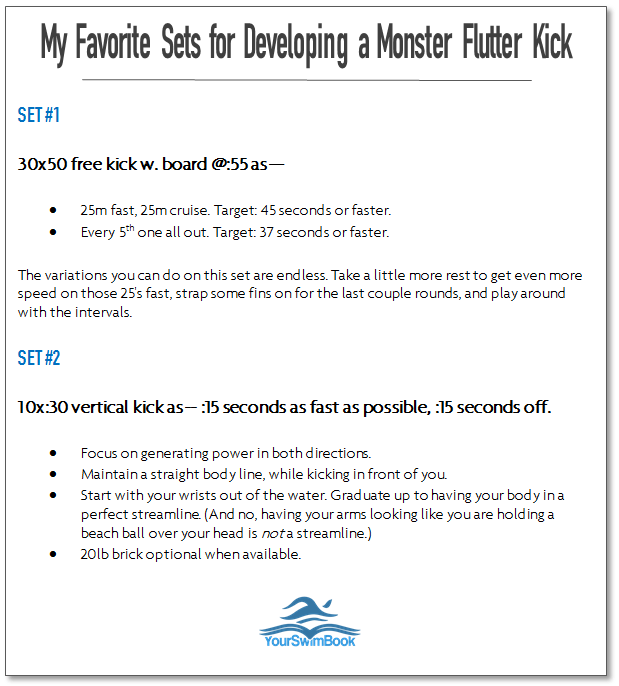 [divider type="thin"]
YourSwimBook is a log book and goal setting guide designed specifically for competitive swimmers. It includes a ten month log book, comprehensive goal setting section, monthly evaluations to be filled out with your coach, and more. Learn 8 more reasons why this tool kicks butt.
Note: We now have motivational swimming posters. Five of ’em, actually.
Join the YourSwimBook weekly newsletter group and get motivational tips and more straight to your inbox. Sign up for free here.]]>
[divider type="thin"]
YourSwimBook is a log book and goal setting guide designed specifically for competitive swimmers. It includes a ten month log book, comprehensive goal setting section, monthly evaluations to be filled out with your coach, and more. Learn 8 more reasons why this tool kicks butt.
Note: We now have motivational swimming posters. Five of ’em, actually.
Join the YourSwimBook weekly newsletter group and get motivational tips and more straight to your inbox. Sign up for free here.]]>
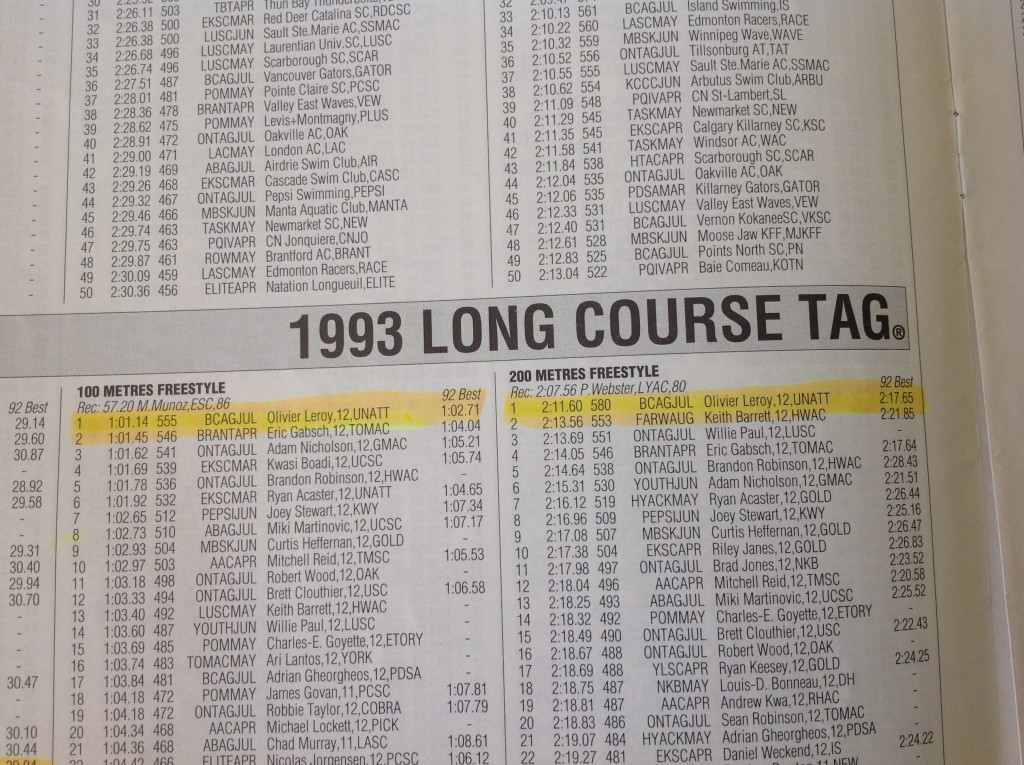 How can you do the same with your own swimmers?
Record and rank attendance. Or have your swimmers rank their effort in practice (averaged out with what you think they did), and keep a running record.
Record in-practice best times. Best times don’t have to be limited to the events performed in competition. 500 kick for time, or 25 underwater dolphin kick for time, and so on. (Take this a level further by recording stroke count as well.)
YourSwimBook is a log book and goal setting guide designed specifically for competitive swimmers. It includes a ten month log book, comprehensive goal setting section, monthly evaluations to be filled out with your coach, and more. Learn 8 more reasons why this tool kicks butt.
Note: We now have motivational swimming posters. Five of ’em, actually.
Join the YourSwimBook weekly newsletter group and get motivational tips and more straight to your inbox. Sign up for free here.
]]>
How can you do the same with your own swimmers?
Record and rank attendance. Or have your swimmers rank their effort in practice (averaged out with what you think they did), and keep a running record.
Record in-practice best times. Best times don’t have to be limited to the events performed in competition. 500 kick for time, or 25 underwater dolphin kick for time, and so on. (Take this a level further by recording stroke count as well.)
YourSwimBook is a log book and goal setting guide designed specifically for competitive swimmers. It includes a ten month log book, comprehensive goal setting section, monthly evaluations to be filled out with your coach, and more. Learn 8 more reasons why this tool kicks butt.
Note: We now have motivational swimming posters. Five of ’em, actually.
Join the YourSwimBook weekly newsletter group and get motivational tips and more straight to your inbox. Sign up for free here.
]]> The common thread with the aforementioned scenarios is that our brain is trying to justify not leaving our perceived zone of comfort, even if keeping us where we are is detrimental to our long term growth and ambitions.
We are wired poorly to be pushed out of our comfort zone, and this is why we feel resistance when we try to plod forward into new or unfamiliar territory.
Understanding this, you can place better context around the following excuses when they rear their heads the next time you are prepping to make moves:
The common thread with the aforementioned scenarios is that our brain is trying to justify not leaving our perceived zone of comfort, even if keeping us where we are is detrimental to our long term growth and ambitions.
We are wired poorly to be pushed out of our comfort zone, and this is why we feel resistance when we try to plod forward into new or unfamiliar territory.
Understanding this, you can place better context around the following excuses when they rear their heads the next time you are prepping to make moves:
 Look:
This isn’t a case to journal and monitor every last little thing in your training.
You don’t need to write out the number of steps you take on a daily basis, or the precise caloric intake of your diet, or the stroke count of every single lap of swimming you do.
(But hey, if that is what works for you, than all the power to you.)
On the other hand…
You definitely should be noting the couple of things in your swimming that will make the most profound impact on whether or not you achieve your goals.
If you’re serious about making substantial and profound improvement in your swimming, and you are going through the motions of your training, not bothering to stop and see what is working, and what is not, than you are leaving a lot of precious information and motivation on the table.
After all, if you are truly down to improve a facet of your swimming, you oughta be measuring it.
So sit back, think about the 1-2 things that will have the biggest amount of impact on your training, and starting logging it.
Not tomorrow...
Not next week...
But at today’s practice.
And when you are ready, join a heap of former and current Olympians, national champions, and top level Division 1 teams that are using YourSwimBook to log their workouts.
YourSwimBook is a log book and goal setting guide designed specifically for competitive swimmers. It includes a ten month log book, comprehensive goal setting section, monthly evaluations to be filled out with your coach, and more. Learn 8 more reasons why this tool kicks butt.
Note: We now have motivational swimming posters. Five of ’em, actually.
Join the YourSwimBook weekly newsletter group and get motivational tips and more straight to your inbox. Sign up for free here.]]>
Look:
This isn’t a case to journal and monitor every last little thing in your training.
You don’t need to write out the number of steps you take on a daily basis, or the precise caloric intake of your diet, or the stroke count of every single lap of swimming you do.
(But hey, if that is what works for you, than all the power to you.)
On the other hand…
You definitely should be noting the couple of things in your swimming that will make the most profound impact on whether or not you achieve your goals.
If you’re serious about making substantial and profound improvement in your swimming, and you are going through the motions of your training, not bothering to stop and see what is working, and what is not, than you are leaving a lot of precious information and motivation on the table.
After all, if you are truly down to improve a facet of your swimming, you oughta be measuring it.
So sit back, think about the 1-2 things that will have the biggest amount of impact on your training, and starting logging it.
Not tomorrow...
Not next week...
But at today’s practice.
And when you are ready, join a heap of former and current Olympians, national champions, and top level Division 1 teams that are using YourSwimBook to log their workouts.
YourSwimBook is a log book and goal setting guide designed specifically for competitive swimmers. It includes a ten month log book, comprehensive goal setting section, monthly evaluations to be filled out with your coach, and more. Learn 8 more reasons why this tool kicks butt.
Note: We now have motivational swimming posters. Five of ’em, actually.
Join the YourSwimBook weekly newsletter group and get motivational tips and more straight to your inbox. Sign up for free here.]]>[alert style="grey"]There are days where the last thing I want to do is train. I simply can’t gather up the willpower to train as hard as I know I should. Why are there those days that I have no willpower to do the right things for my training, and then other days I have willpower to spare? Jenni W. [/alert]Why does our willpower desert us? Why does it only show up sometimes, and then others it is nowhere to be seen? And more importantly, what are the conditions for willpower to grow wildly so that we can never ever go without it and achieve all the crazy-awesome things we want to accomplish in the pool?
 There are lots of times where our willpower saves us...
We are able to say no to that last cookie. We are able to turn off Netflix before the next episode of one of our favorite television shows automatically starts. We put our phone away for the night even though we are anticipating a return text.
Then there are times when that willpower is nowhere to be found...
When we are fading hard at the end of a set and our technique is falling apart like a two dollar sweater. When it is 11:45pm and you know you should be in bed sleeping for an early AM call but you can’t pry yourself from the TV. When it is an hour before practice and the last thing you want to do is show up early and complete a missed dryland.
There are a couple different reasons your willpower is inconsistent…
YourSwimBook is a log book and goal setting guide designed specifically for competitive swimmers. It includes a ten month log book, comprehensive goal setting section, monthly evaluations to be filled out with your coach, and more.
Learn 8 more reasons why this tool kicks butt now.
Join the YourSwimBook weekly newsletter and get motivational tips and more straight to your inbox. Sign up for free here.]]>
There are lots of times where our willpower saves us...
We are able to say no to that last cookie. We are able to turn off Netflix before the next episode of one of our favorite television shows automatically starts. We put our phone away for the night even though we are anticipating a return text.
Then there are times when that willpower is nowhere to be found...
When we are fading hard at the end of a set and our technique is falling apart like a two dollar sweater. When it is 11:45pm and you know you should be in bed sleeping for an early AM call but you can’t pry yourself from the TV. When it is an hour before practice and the last thing you want to do is show up early and complete a missed dryland.
There are a couple different reasons your willpower is inconsistent…
YourSwimBook is a log book and goal setting guide designed specifically for competitive swimmers. It includes a ten month log book, comprehensive goal setting section, monthly evaluations to be filled out with your coach, and more.
Learn 8 more reasons why this tool kicks butt now.
Join the YourSwimBook weekly newsletter and get motivational tips and more straight to your inbox. Sign up for free here.]]> Motivation is not a prerequisite to doing what you need to do.
It’s easy to talk ourselves of doing the right thing as a result of motivation. Somewhere along the way we figured that we had to be motivated to do something. Habit, will and dedication weren’t enough—we had to be jacked up as well. And if we weren’t, then obviously we don’t truly want it.
Motivation is for amateurs.
Amateurs sit around and wish for motivation to show up. To guide their effort. To support and push them when they are tired and sore. They complain that they aren’t motivated, do little to actively find it, and hinge their effort on whether they are feeling inspired that day or not.
Pros go to work, regardless of whether they are hit by an extra spark of inspiration or motivation that day. They know that there is work to be done, and motivated or not, it is going to get done. Period. End of story.
(Or rather… End of story. And then… Period. Okay, that works a little better.)
The work required for generating killer results in the pool isn’t inherently fun.
It’s rewarding in many ways, but at many points it is anything but pleasurable or fun.
It means braving all of those early mornings, maintaining technique and mental focus when your muscles and lungs and brain want to fold, of doing the right stuff when no one is around to pat you on the shoulder and say, “Good job!”
When you are starting out on the path towards something hot and awesome everything is a whole lot easier. You have energy to spare, getting to the pool on time is a cinch, and maxing out your time in the water is a breeze. And not only is the in-the-pool stuff easy—easy might not be the word—but it easier because you have the wind behind your back from all that initial excitement and buzz.
Motivation is not a prerequisite to doing what you need to do.
It’s easy to talk ourselves of doing the right thing as a result of motivation. Somewhere along the way we figured that we had to be motivated to do something. Habit, will and dedication weren’t enough—we had to be jacked up as well. And if we weren’t, then obviously we don’t truly want it.
Motivation is for amateurs.
Amateurs sit around and wish for motivation to show up. To guide their effort. To support and push them when they are tired and sore. They complain that they aren’t motivated, do little to actively find it, and hinge their effort on whether they are feeling inspired that day or not.
Pros go to work, regardless of whether they are hit by an extra spark of inspiration or motivation that day. They know that there is work to be done, and motivated or not, it is going to get done. Period. End of story.
(Or rather… End of story. And then… Period. Okay, that works a little better.)
The work required for generating killer results in the pool isn’t inherently fun.
It’s rewarding in many ways, but at many points it is anything but pleasurable or fun.
It means braving all of those early mornings, maintaining technique and mental focus when your muscles and lungs and brain want to fold, of doing the right stuff when no one is around to pat you on the shoulder and say, “Good job!”
When you are starting out on the path towards something hot and awesome everything is a whole lot easier. You have energy to spare, getting to the pool on time is a cinch, and maxing out your time in the water is a breeze. And not only is the in-the-pool stuff easy—easy might not be the word—but it easier because you have the wind behind your back from all that initial excitement and buzz.
 There is a lot of gratification and motivation that comes with showing up every day and doing the work. But that motivation isn’t something you should rely on. On days where you are tired and sore it will nowhere to be seen. But that shouldn’t be the thing to dissuade you from putting on a whooping down at the local aquatic center that day.
After all…
When you show up consistently.
Streamline your life outside the pool for success in it…
Then something kinda funny starts to happen…
Motivation starts to build upon the results of your hard work.
You stop having to seek outwards for it.
The more consistent you are in the pool, the better you are going to feel about your swimming.
The harder you work, the more you are going to value your investment of time and sweat equity and continue to hammer on.
Action drives motivation.
Not the other way around.
YourSwimBook is a log book and goal setting guide designed specifically for competitive swimmers. It includes a ten month log book, comprehensive goal setting section, monthly evaluations to be filled out with your coach, and more. Learn 8 more reasons why this tool kicks butt.
Note: We now have motivational swimming posters. Five of ’em, actually.
Join the YourSwimBook weekly newsletter group and get motivational tips and more straight to your inbox. Sign up for free here.]]>
There is a lot of gratification and motivation that comes with showing up every day and doing the work. But that motivation isn’t something you should rely on. On days where you are tired and sore it will nowhere to be seen. But that shouldn’t be the thing to dissuade you from putting on a whooping down at the local aquatic center that day.
After all…
When you show up consistently.
Streamline your life outside the pool for success in it…
Then something kinda funny starts to happen…
Motivation starts to build upon the results of your hard work.
You stop having to seek outwards for it.
The more consistent you are in the pool, the better you are going to feel about your swimming.
The harder you work, the more you are going to value your investment of time and sweat equity and continue to hammer on.
Action drives motivation.
Not the other way around.
YourSwimBook is a log book and goal setting guide designed specifically for competitive swimmers. It includes a ten month log book, comprehensive goal setting section, monthly evaluations to be filled out with your coach, and more. Learn 8 more reasons why this tool kicks butt.
Note: We now have motivational swimming posters. Five of ’em, actually.
Join the YourSwimBook weekly newsletter group and get motivational tips and more straight to your inbox. Sign up for free here.]]>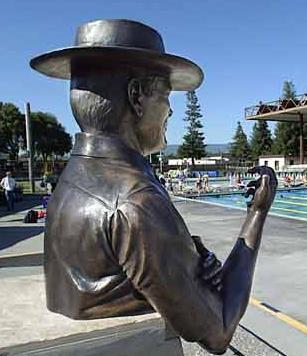 Haines, poolside eternally.[/caption]
Haines is a certified legend in the sport, and helmed the Santa Clara program for the first 23 years of its existence from 1950 when he founded it, to 1973 before moving on to UCLA and later Stanford.
But it was his time in Santa Clara for which he will be remembered most. He sent 7 of his own swimmers to the 1960 Olympics in Tokyo (where he would also coach the US team), including Don Schollander, who won 4 gold medals and broke 3 world records.
In all while at SCSC he would send 26 swimmers to the Olympics. Today you can find a bronze statue of the famed coach next to the pool at the Santa Clara Swim Center.
Here is the video, enjoy, and if you like it, feel free to share!
]]>
Haines, poolside eternally.[/caption]
Haines is a certified legend in the sport, and helmed the Santa Clara program for the first 23 years of its existence from 1950 when he founded it, to 1973 before moving on to UCLA and later Stanford.
But it was his time in Santa Clara for which he will be remembered most. He sent 7 of his own swimmers to the 1960 Olympics in Tokyo (where he would also coach the US team), including Don Schollander, who won 4 gold medals and broke 3 world records.
In all while at SCSC he would send 26 swimmers to the Olympics. Today you can find a bronze statue of the famed coach next to the pool at the Santa Clara Swim Center.
Here is the video, enjoy, and if you like it, feel free to share!
]]> 2. When someone in your lane keeps touching your toes but refuses to pass you...
 3. When coach says that it's "starts and turns" day at practice...
 4. The difference between a great dive and a bad dive are just a few degrees…
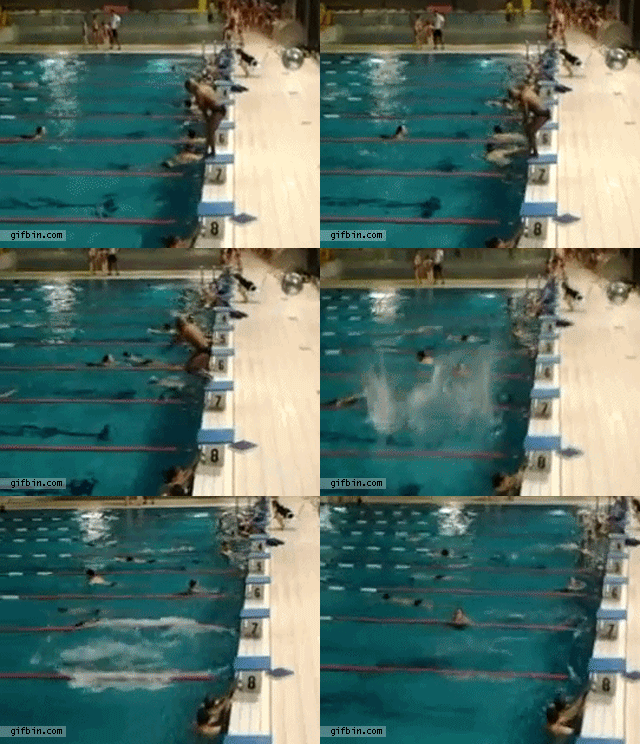 5. There is nothing quite like getting a lane all to yourself...
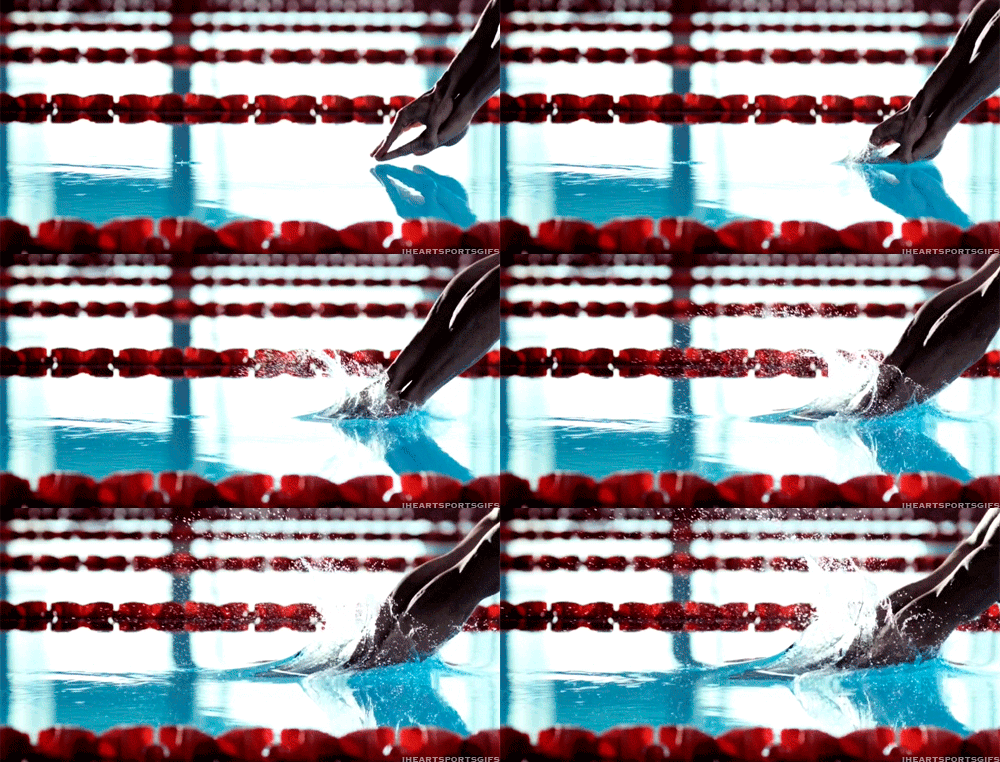 6. That it will take a natural disaster for coach to cancel practice...
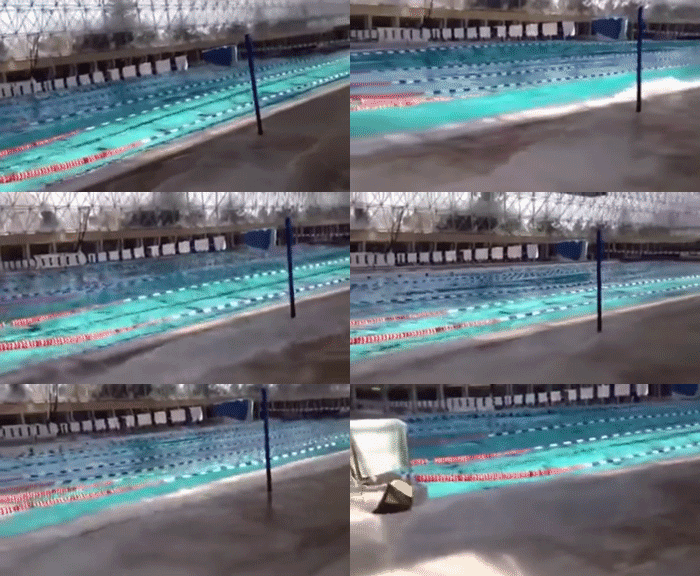 7. That the most decorated athlete in the history of the Olympic Games is a skinny swimmer from Baltimore...
 8. While we may have different backgrounds, goals, and events, our fears in the pool are universally the same...
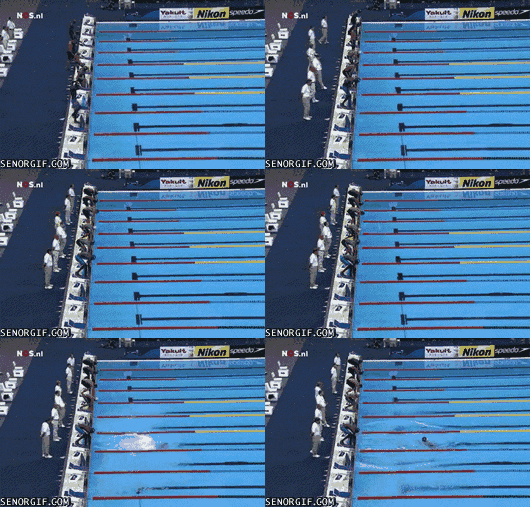 9. We are unafraid to show a little skin...
 10. Even though we have trained in the vicinity of the synchro team on occasion over the years we still don’t completely understand what is going on over there with all the spoon banging and costumes…
 11. Even our ideas of romance and love involve the water...
 12. We like to think that our swimming is usually done as beautifully and gracefully as this…
 13. The satisfaction that comes from nailing your swimming taper just right...
 14. Crushing that best time...
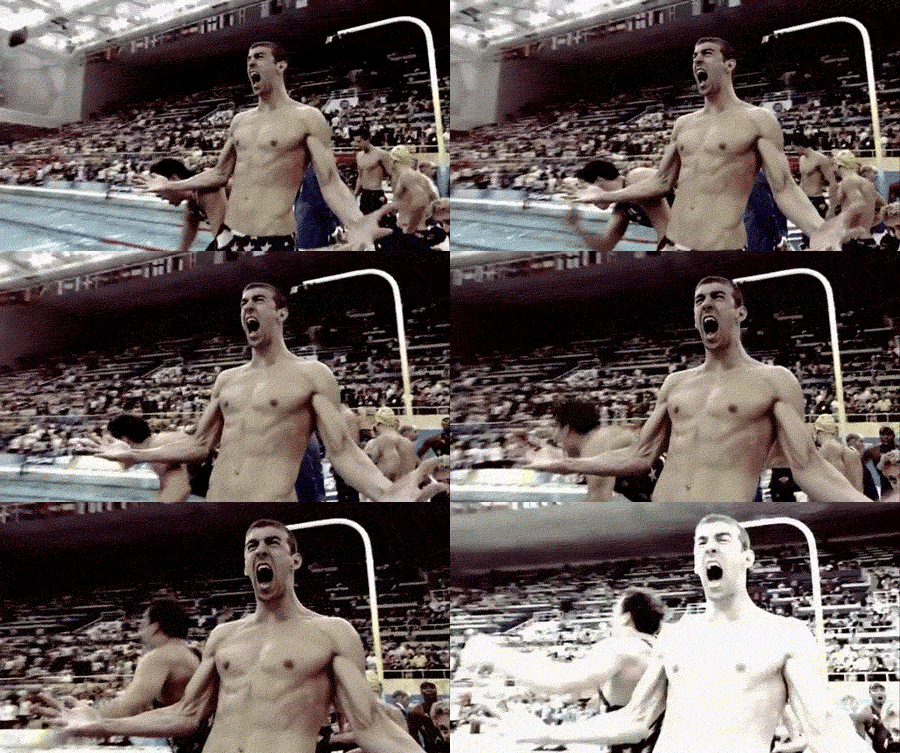 15. And the best feeling of all, swimming faster than you ever thought imaginable:
 YourSwimBook is a log book and goal setting guide designed specifically for competitive swimmers. It includes a ten month log book, comprehensive goal setting section, monthly evaluations to be filled out with your coach, and more. Learn 8 more reasons why this tool kicks butt.
Note: We now have motivational swimming posters. Five of ’em, actually.
Join the YourSwimBook weekly newsletter group and get motivational tips and more straight to your inbox. Sign up for free here.
]]>YourSwimBook is a log book and goal setting guide designed specifically for competitive swimmers. It includes a ten month log book, comprehensive goal setting section, monthly evaluations to be filled out with your coach, and more. Learn 8 more reasons why this tool kicks butt.
Note: We now have motivational swimming posters. Five of ’em, actually.
Join the YourSwimBook weekly newsletter group and get motivational tips and more straight to your inbox. Sign up for free here.
]]>
YourSwimBook is a log book and goal setting guide designed specifically for competitive swimmers. It includes a ten month log book, comprehensive goal setting section, monthly evaluations to be filled out with your coach, and more. Learn 8 more reasons why this tool kicks butt.
Note: We now have motivational swimming posters. Five of ’em, actually.
Join the YourSwimBook weekly newsletter group and get motivational tips and more straight to your inbox. Sign up for free here.
]]>YourSwimBook is a log book and goal setting guide designed specifically for competitive swimmers. It includes a ten month log book, comprehensive goal setting section, monthly evaluations to be filled out with your coach, and more. Learn 8 more reasons why this tool kicks butt.
Note: We now have motivational swimming posters. Five of ’em, actually.
Join the YourSwimBook weekly newsletter group and get motivational tips and more straight to your inbox. Sign up for free here.
]]> Any questions?[/caption]
On top of the avalanche of brackets, shorthand and staggered intervals that litters the workout, there is also the constant mental processing we are doing over the course of our practice.
Mid-swim we are usually counting strokes, counting fly kicks off the wall, breathing patterns, while also keeping an eye on the pace clock and determining how fast we went out, versus how fast we need to get back.
All of that race-splitting, counting, dividing, and extended bouts of focus required over the course of long workouts can’t not make us smarter, right?
While the evidence for more experienced swimmers is still left to anecdotal and gut feeling, research done on younger swimmers showed that toddlers who get into learn to swim programs earlier than their peers do see significant improvements in motor skill development.
A three year study based out of Australia that followed some 7,000 five and unders from Australia, New Zealand and the United States showed that children who began swimming lessons earlier were more advanced in motor skills—sometimes as far ahead as two years advanced of where “normal” kids ranked and physical milestones.
Any questions?[/caption]
On top of the avalanche of brackets, shorthand and staggered intervals that litters the workout, there is also the constant mental processing we are doing over the course of our practice.
Mid-swim we are usually counting strokes, counting fly kicks off the wall, breathing patterns, while also keeping an eye on the pace clock and determining how fast we went out, versus how fast we need to get back.
All of that race-splitting, counting, dividing, and extended bouts of focus required over the course of long workouts can’t not make us smarter, right?
While the evidence for more experienced swimmers is still left to anecdotal and gut feeling, research done on younger swimmers showed that toddlers who get into learn to swim programs earlier than their peers do see significant improvements in motor skill development.
A three year study based out of Australia that followed some 7,000 five and unders from Australia, New Zealand and the United States showed that children who began swimming lessons earlier were more advanced in motor skills—sometimes as far ahead as two years advanced of where “normal” kids ranked and physical milestones.
As well as achieving physical milestones faster, children also scored significantly better in visual-motor skills such as cutting paper, colouring in and drawing lines and shapes, and many mathematically-related tasks. Their oral expression was also better as well as in the general areas of literacy and numeracy.It goes without saying that these types of skills are massively important and valuable as these youngsters shift into school. Additionally, it showed that there were significant differences between the swimmer group and the non-swimmer that was indifferent to the family’s socioeconomic status. Legendary Australian swim coach Laurie Lawrence, who coached Olympians Duncan Armstrong, Tracey Wickham and Jon Sieben, has been passionate about advocating swimming’s benefits for the overall health of young people:
“It’s been a dream of mine for a long, long time to prove that children who start lessons early, it builds their social, emotional, physical and intellectual capital. They’re smarter, they’re better coordinated, all those things.”
YourSwimBook is a log book and goal setting guide designed specifically for competitive swimmers. It includes a ten month log book, comprehensive goal setting section, monthly evaluations to be filled out with your coach, and more. Learn 8 more reasons why this tool kicks butt.
Note: We now have motivational swimming posters. Five of ’em, actually.
Join the YourSwimBook weekly newsletter group and get motivational tips and more straight to your inbox. Sign up for free here.
]]> YourSwimBook is a log book and goal setting guide designed specifically for competitive swimmers. It includes a ten month log book, comprehensive goal setting section, monthly evaluations to be filled out with your coach, and more. Learn 8 more reasons why this tool kicks butt.
Note: We now have motivational swimming posters. Five of ’em, actually.
Join the YourSwimBook weekly newsletter group and get motivational tips and more straight to your inbox. Sign up for free here.
]]>
YourSwimBook is a log book and goal setting guide designed specifically for competitive swimmers. It includes a ten month log book, comprehensive goal setting section, monthly evaluations to be filled out with your coach, and more. Learn 8 more reasons why this tool kicks butt.
Note: We now have motivational swimming posters. Five of ’em, actually.
Join the YourSwimBook weekly newsletter group and get motivational tips and more straight to your inbox. Sign up for free here.
]]> The man... The legend...The patience.[/caption]
He wanted to win the Olympics when the whole world was there.
So he continued training. Kept at it.
Continued plotting and planning for Olympic gold.
In 1984 the Soviets, and 14 other Eastern Bloc countries followed up the ’80 boycott with one of their own, refusing to send their athletes to the Los Angeles Olympics.
Again, Salnikov would not get his chance to compete against the best in the world.
So what did he do?
He continued training. Kept at it.
In the years between ’84 and ’88 the iron grip that Salnikov had on the mile began to loosen. At the 1986 world championships he placed outside of the medals. In 1987 at the European championships he didn’t even advance to the final.
If not for a last minute intervention by the Soviet sports ministry Salnikov would have been left off the team heading to Seoul entirely.
After going unbeaten in the event for nearly 10 years, and at age 28-- well past what was considered at the time to be his prime—Salnikov was considered washed up.
The man... The legend...The patience.[/caption]
He wanted to win the Olympics when the whole world was there.
So he continued training. Kept at it.
Continued plotting and planning for Olympic gold.
In 1984 the Soviets, and 14 other Eastern Bloc countries followed up the ’80 boycott with one of their own, refusing to send their athletes to the Los Angeles Olympics.
Again, Salnikov would not get his chance to compete against the best in the world.
So what did he do?
He continued training. Kept at it.
In the years between ’84 and ’88 the iron grip that Salnikov had on the mile began to loosen. At the 1986 world championships he placed outside of the medals. In 1987 at the European championships he didn’t even advance to the final.
If not for a last minute intervention by the Soviet sports ministry Salnikov would have been left off the team heading to Seoul entirely.
After going unbeaten in the event for nearly 10 years, and at age 28-- well past what was considered at the time to be his prime—Salnikov was considered washed up.
 But he kept at it. Kept going.
At the Seoul Olympics, Salnikov would hang with the field until the 700m mark, at which point he began to surge ahead.
With the crowd at his back, the “Monster of the Waves” (that was his nickname—how awesome and intimidating is that!) powered on, touching first in 15:00.40.
Finally, after 8 years of waiting and training, of being doubted, of being “washed up”…
Salnikov had finally won his gold medal with the whole world present.
That night when he walked into the cafeteria in the Olympic village all of the athletes stood up and gave him a standing ovation.
Athletes of every country, from every sport, they all rose to honor the incredible patience and grit of the legendary Russian swimmer.
Salnikov had the ability to not only stay at the top of the game in the most taxing race on the Olympic swimming program, but he had the patience to wait out the years of boycotts and doubt.
Will you have the ability to play the long game?
To see beyond the current struggle in order to gain a greater victory?
YourSwimBook is a log book and goal setting guide designed specifically for competitive swimmers. It includes a ten month log book, comprehensive goal setting section, monthly evaluations to be filled out with your coach, and more. Learn 8 more reasons why this tool kicks butt.
Note: We now have motivational swimming posters. Five of ’em, actually.
Join the YourSwimBook weekly newsletter group and get motivational tips and more straight to your inbox. Sign up for free here.]]>YourSwimBook is a log book and goal setting guide designed specifically for competitive swimmers. It includes a ten month log book, comprehensive goal setting section, monthly evaluations to be filled out with your coach, and more. Learn 8 more reasons why this tool kicks butt.
Note: We now have motivational swimming posters. Five of ’em, actually.
Join the YourSwimBook weekly newsletter group and get motivational tips and more straight to your inbox. Sign up for free here.
]]>
But he kept at it. Kept going.
At the Seoul Olympics, Salnikov would hang with the field until the 700m mark, at which point he began to surge ahead.
With the crowd at his back, the “Monster of the Waves” (that was his nickname—how awesome and intimidating is that!) powered on, touching first in 15:00.40.
Finally, after 8 years of waiting and training, of being doubted, of being “washed up”…
Salnikov had finally won his gold medal with the whole world present.
That night when he walked into the cafeteria in the Olympic village all of the athletes stood up and gave him a standing ovation.
Athletes of every country, from every sport, they all rose to honor the incredible patience and grit of the legendary Russian swimmer.
Salnikov had the ability to not only stay at the top of the game in the most taxing race on the Olympic swimming program, but he had the patience to wait out the years of boycotts and doubt.
Will you have the ability to play the long game?
To see beyond the current struggle in order to gain a greater victory?
YourSwimBook is a log book and goal setting guide designed specifically for competitive swimmers. It includes a ten month log book, comprehensive goal setting section, monthly evaluations to be filled out with your coach, and more. Learn 8 more reasons why this tool kicks butt.
Note: We now have motivational swimming posters. Five of ’em, actually.
Join the YourSwimBook weekly newsletter group and get motivational tips and more straight to your inbox. Sign up for free here.]]>YourSwimBook is a log book and goal setting guide designed specifically for competitive swimmers. It includes a ten month log book, comprehensive goal setting section, monthly evaluations to be filled out with your coach, and more. Learn 8 more reasons why this tool kicks butt.
Note: We now have motivational swimming posters. Five of ’em, actually.
Join the YourSwimBook weekly newsletter group and get motivational tips and more straight to your inbox. Sign up for free here.
]]> Even for more taxing races such as the 200m butterfly or the 400IM we are seeing swimmers break out further and further out, and even the top sprinters in the world-- Cesar Cielo, Manaudou, and Roland Schoeman to name a few-- kick out to the maximum distance allowed in the fastest event on the Olympic program, the 50m freestyle.
]]>
Even for more taxing races such as the 200m butterfly or the 400IM we are seeing swimmers break out further and further out, and even the top sprinters in the world-- Cesar Cielo, Manaudou, and Roland Schoeman to name a few-- kick out to the maximum distance allowed in the fastest event on the Olympic program, the 50m freestyle.
]]> Here is how the exchange went from there:
Taylor: Five hundred.
Brucker (spits chew at Taylor’s feet): Five hundred what, dirtbag?
Taylor: Five hundred fights. That’s the number I figured when I was a kid. 5 hundred street fights and you could consider yourself a legitimate tough guy. You need them for experience to develop leather skin, so I got started. Along the way you forget about being tough and all that, it stops being the point. You look past the silliness of it all but then you realize that’s what you are.
And what happens next? Vin Diesel’s character kicks the dude’s butt all over the place.
(It’s Vin Diesel, of course that would happen.)
So why am I telling you about this?
There is a very important takeaway from this scene that you can directly apply to your swimming.
(Or anything else you want to achieve for that matter...)
To get good at anything, whether it is punching dudes in the face or crushing your best times, you need to get your reps in.
Period.
You can read about the best way to swim fast, watch swimming technique videos on YouTube until your data goes broke, but without getting your hands dirty and doing the thing, you will never become that thing.
Vin Diesel’s character understood that in order to be the toughest guy on the block he would have to get into 500 street fights.
He would have to get his reps in.
This is no different for you and the things you want to achieve in the pool.
After all…
YourSwimBook is a log book and goal setting guide designed specifically for competitive swimmers. It includes a ten month log book, comprehensive goal setting section, monthly evaluations to be filled out with your coach, and more. Learn 8 more reasons why this tool kicks butt.
Note: We now have motivational swimming posters. Five of ’em, actually.
Join the YourSwimBook weekly newsletter group and get motivational tips and more straight to your inbox. Sign up for free here.]]>
Vin Diesel’s character kicks the dude’s butt all over the place.
(It’s Vin Diesel, of course that would happen.)
So why am I telling you about this?
There is a very important takeaway from this scene that you can directly apply to your swimming.
(Or anything else you want to achieve for that matter...)
To get good at anything, whether it is punching dudes in the face or crushing your best times, you need to get your reps in.
Period.
You can read about the best way to swim fast, watch swimming technique videos on YouTube until your data goes broke, but without getting your hands dirty and doing the thing, you will never become that thing.
Vin Diesel’s character understood that in order to be the toughest guy on the block he would have to get into 500 street fights.
He would have to get his reps in.
This is no different for you and the things you want to achieve in the pool.
After all…
YourSwimBook is a log book and goal setting guide designed specifically for competitive swimmers. It includes a ten month log book, comprehensive goal setting section, monthly evaluations to be filled out with your coach, and more. Learn 8 more reasons why this tool kicks butt.
Note: We now have motivational swimming posters. Five of ’em, actually.
Join the YourSwimBook weekly newsletter group and get motivational tips and more straight to your inbox. Sign up for free here.]]>SEE ALSO: How to Develop an Awesome Underwater Dolphin Kick (Guide)
On top of being the undisputed champ in the 200 fly, earlier that week in Sydney she had also won the 200m freestyle, further catapulting the home nation’s hopes of butterfly gold. In the final that night O’Neill qualified first, with countrywoman Petria Thomas above her lane 5. With all eyes on the Aussies—the thundering ovation O’Neill received when introduced left no doubt to who the sell out crowd was backing—it was easy to overlook the smiling American in lane 6.SEE ALSO: Michael Phelps' Underwater Dolphin Kick Training (Video)
While most swimmers nowadays accept that the UDK is part-and-parcel with every event from the 50m splash-and-dash to the distance events, back then it wasn’t. Even in the butterfly events. Hyman had been a practitioner of the extended underwater dolphin kicking since 1993, emulating some of the other top butterfliers in the world, including Mel Stewart and Denis Pankratov.
Inspired by an article in Scientific American that showed fish could used spinning eddies to increase the velocity they attained under the water, Hyman’s coach Bob Gillette at the Arizona Desert Fox Swim Team applied this to Hyman’s dolphin kick and had her turn on her side.
It didn’t come without difficulty, however, taking her about a year to get used to kicking on her side, especially trying to maintain a straight line as there was no black line to stare at as a point of reference.
To build up the powerful legs required to maintain the power and velocity—particularly for the grueling 200m long course distance—Hyman worked relentlessly doing underwater work with and without a monofin.
In defending the emphasis on the underwater kick, Hyman explained herself well:
Hyman had been a practitioner of the extended underwater dolphin kicking since 1993, emulating some of the other top butterfliers in the world, including Mel Stewart and Denis Pankratov.
Inspired by an article in Scientific American that showed fish could used spinning eddies to increase the velocity they attained under the water, Hyman’s coach Bob Gillette at the Arizona Desert Fox Swim Team applied this to Hyman’s dolphin kick and had her turn on her side.
It didn’t come without difficulty, however, taking her about a year to get used to kicking on her side, especially trying to maintain a straight line as there was no black line to stare at as a point of reference.
To build up the powerful legs required to maintain the power and velocity—particularly for the grueling 200m long course distance—Hyman worked relentlessly doing underwater work with and without a monofin.
In defending the emphasis on the underwater kick, Hyman explained herself well:
I'm not six feet tall, and for me to compete, I have to do it the best way for me. Skill and innovation were what got me to this level. My coach and I developed this and we're not breaking any rules. In fact, lots of people are doing the underwater. I think it would be a shame if they changed the rule (to limit the distance of the underwater kick) but if they did I would just have to change my training.In the winter of 1996 Hyman put her powerhouse legs to work, dropping nearly half a second off of the world record in the 100m butterfly (SCM) in Sainte-Foy, Quebec, using her trademark kick. Despite this performance, there weren’t many who were expecting Hyman to dethrone the reigning Queen of the butterfly that September in Australia. Especially not in Sydney. Especially not in a long course pool, where the effect of Hyman’s superior underwaters would be halved compared to the short course pool. And especially not in the taxing distance of the 200m butterfly.
SEE ALSO: 5 Reasons to Work On Your Underwater Dolphin Kick
It was clear to see that any dent that O’Neill tried to make in between walls was quickly negated by Hyman’s powerful breakouts. With O’Neill charging hard on the last 50m, Hyman didn’t relent, surfing into the wall in a time of 2:05.88, just 7/100’s off of O’Neill’s world record mark, but good enough to shave over a second off the former world record holder’s (Meagher) mark of 2:06.90. For Hyman, who had battled the naysaying that comes with being viewed as a one-trick pony, and who had overcome the implementation of the 15m limit to how far swimmers could perform the kick underwater, the victory was nothing short of overwhelming. The surprise, shock and joy that envelops her face as she realizes that she has won is a welcome surprise when most athletes would prefer to thump their chest or react with stoic blandness. As she would recount after the race,I've played it over so many times in my head, but I never thought it would come true.Here is the race video from Sydney:
]]>Gonna keep this Wednesday email short, succinct, and totally free range.
There will be moments over the course of the long haul of a season where you find your commitment wavering.
Where the shortcuts begin to look extra enticing. When rolling over and ignoring that morning alarm becomes easy to the point of normal.
While experiencing these dips is common, staying the course and achieving greatness isn’t.
Greatness, in the most fundamental sense, is abnormal.
It's weird.
It requires an abnormal amount of effort, dedication and commitment.
To do something you have never done before, that nobody else has done before, requires a certain amount of stubborness and a rageful self-belief in your mission that for most will seem mad.
Escaping the mental lockstep of what is normal, the patterns and expectations of what is supposed to be conventional requires you to be a little mad, a little crazy, and a little stubborn.
Greatness is a choice.
Many of us are under the impression that greatness is something that is bestowed upon us.
And while talent does play an undeniable role, how far you get both in life and in the pool will rely much more on your tenacity and willingness to be great.
Choosing greatness seems like a no brainer—after all, who wouldn’t want to dunk themselves in the pool of greatness on a daily basis?
But how many will actually make the decision day in and day out to be great?
Will you?
Greatness is one part learning, nine parts doing.
Reading and learning about what it takes to be great is easy.
It might even be considered fun.
And it is definitely safe.
Don't confuse learning about what it takes to be great with making concrete and meaningful action. One has the illusion of progress, while the other is progress.
When you are ready to be great...
And to up your game in the pool...
And max out your talents and skills...
You know where to go to take the next step.
See ya at the pool,
Olivier
P.S. Want a simple reminder to stay great in the pool every day? Then check out our exclusive "Unleash Greatness" poster. It is exclusive to YourSwimBook.com, and was designed for the elite-minded swimmer.
]]>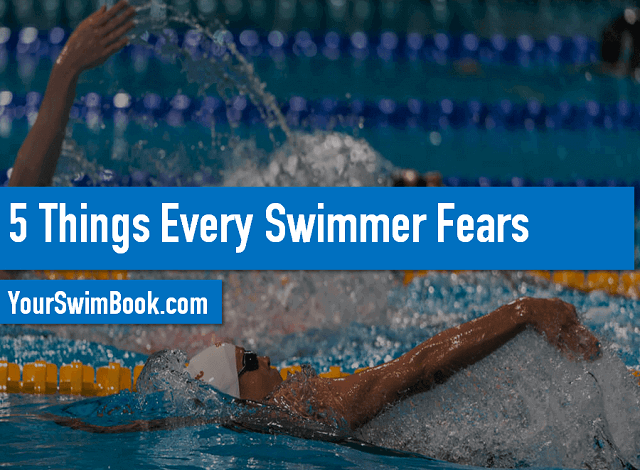 It’s what we have nightmares about at night. It’s what we think about when our brain races to find the WPO (worst possible outcome), and when they do come to pass, they send us scrambling into full blown panic mode.
Here are five universal fears that every swimmer dreads:
It’s what we have nightmares about at night. It’s what we think about when our brain races to find the WPO (worst possible outcome), and when they do come to pass, they send us scrambling into full blown panic mode.
Here are five universal fears that every swimmer dreads:
 Oopsie...[/caption]
Ian Thorpe experienced this at the 2004 Australian Olympic Trials, false starting in his best event, the 400m freestyle, showing that losing focus for even a moment on the blocks can happen to even the fastest swimmers on the planet.
(He would be reinstated after teammate Craig Stevens stepped down so that Thorpey could swim the race in Athens.)
YourSwimBook is a log book and goal setting guide designed specifically for competitive swimmers. It includes a ten month log book, comprehensive goal setting section, monthly evaluations to be filled out with your coach, and more. Learn 8 more reasons why this tool kicks butt.
Note: We now have motivational swimming posters. Five of ’em, actually.
Join the YourSwimBook weekly newsletter group and get motivational tips and more straight to your inbox. Sign up for free here.]]>
Oopsie...[/caption]
Ian Thorpe experienced this at the 2004 Australian Olympic Trials, false starting in his best event, the 400m freestyle, showing that losing focus for even a moment on the blocks can happen to even the fastest swimmers on the planet.
(He would be reinstated after teammate Craig Stevens stepped down so that Thorpey could swim the race in Athens.)
YourSwimBook is a log book and goal setting guide designed specifically for competitive swimmers. It includes a ten month log book, comprehensive goal setting section, monthly evaluations to be filled out with your coach, and more. Learn 8 more reasons why this tool kicks butt.
Note: We now have motivational swimming posters. Five of ’em, actually.
Join the YourSwimBook weekly newsletter group and get motivational tips and more straight to your inbox. Sign up for free here.]]> (Hint: it’s because if you want to swim really, really fast you need to train hard and smart. Despite what the interwebs and glossed out advertisements might tell you, there is no outsmarting hard work done intelligently.)
That being said, here are a few of the more immediate upsides you experience when you work your butt off at practice:
(Hint: it’s because if you want to swim really, really fast you need to train hard and smart. Despite what the interwebs and glossed out advertisements might tell you, there is no outsmarting hard work done intelligently.)
That being said, here are a few of the more immediate upsides you experience when you work your butt off at practice:
 YourSwimBook is a log book and goal setting guide designed specifically for competitive swimmers. It includes a ten month log book, comprehensive goal setting section, monthly evaluations to be filled out with your coach, and more. Learn 8 more reasons why this tool kicks butt.
Note: We now have motivational swimming posters. Five of ’em, actually.
Join the YourSwimBook weekly newsletter group and get motivational tips and more straight to your inbox. Sign up for free here.]]>
YourSwimBook is a log book and goal setting guide designed specifically for competitive swimmers. It includes a ten month log book, comprehensive goal setting section, monthly evaluations to be filled out with your coach, and more. Learn 8 more reasons why this tool kicks butt.
Note: We now have motivational swimming posters. Five of ’em, actually.
Join the YourSwimBook weekly newsletter group and get motivational tips and more straight to your inbox. Sign up for free here.]]>How to Get Recruited for College Swimming. For many high school athletes it’s the dream – getting their post-secondary education paid for while competing for a top-tier university program. Gone will be the days where you had to fundraise to go to meets, car-pool in your buddy’s rusty old wagon to get to meets, and into the days of luxury transportation (coach bus?), free gear and the chance to compete at the NCAA Championships, one of the fastest competitions on the planet. The reality, of course, is a little more muddled.
6 Common College Recruiting Myths. There are a heap of college swimming recruiting myths floating out there. From having your entire education + spending money being paid for, to the number of scholarships out there, to the very act of how you should go about getting one.
10 First Time Questions to Ask a College Coach. The following is a list of questions to ask your prospective college swim coach. Getting as thorough a picture as possible of what the team atmosphere and the coach’s philosophy is before you commit to a school for four years is understandably critical.
How to Write a Solid College Recruitment Letter. We have all felt the horror of staring at an empty word processing document, the cursor slowly blinking, quietly judging as we sink deeper into a paralyzing case of writer’s block. When it comes to writing a college recruitment letter, the pressure and expectations rise ten-fold.
In a recurring series on YourSwimBook.com we have been reaching out to college coaches for their advice and tips on how to be recruited. Here are a few from coaches who stopped by to share their experience:
Petra Martin, Head Coach of Bowling Green Swimming, Discusses Common Recruiting Mistakes. Petra Martin, head coach of the women’s swim team at Bowling Green State University, a Division I program based out of Bowling Green, Ohio, drops by to answer a few quick questions on the recruiting process.
Brenau University Swimming Head Coach Blaire Bachman Shares Recruiting Advice. Blaire Bachman, head coach at Brenau University’s Swimming & Diving program drops by to share some insight and tips on taking your swimming to the collegiate level. Brenau University’s program competes in the NAIA, where this past month they placed 4th nationally, while Bachman also shared NAIA’s Women’s Coach of the Year award.
Boston College Swimming’s Head Coach Tom Groden Discusses Recruiting. Boston College Swimming’s head coach Tom Groden shares some recruiting and planning advice for prospective student athletes (PSA) looking to extend their swimming career into their college years.
Brandeis University’s Mike Kotch Shares Recruiting Advice for Swimmers. Mike Kotch, head coach of the Brandeis University swim program drops by to share some recruiting advice for swimmers looking to taking their swimming prowess from high school to the collegiate level. Coach Kotch has been with the Brandeis University Judges (how cool of a team name is that?) since 2011.
Not too sure what to expect from your college swimming career? Here are a selection of videos that go "behind the scenes" with a select number of programs across the United States:
Wanna Know What It’s Like to Swim on the Collegiate Level? Hannah Freyman from North Carolina State’s swim and diving program put together a 9-minute documentary that outlines a typical day of training and schooling at the ACC school.
Stanford Swimming's "Beyond the Pool." Stanford Swimming has a long, proud history. Jenny Thompson, Janet Evans, Misty Hyman and Summer Sanders all swam for the Cardinal and went on to the Olympics.
Behind the Scenes of the UIC Flames Dryland Program. In this video we get a behind the scenes look at the UIC Flames dryland training regimen. The UIC Flames are the athletic teams that represent the University of Illinois at Chicago.
Harvard Swimming Shows Off Their Dryland Training (Video) Harvard might be better known for its academic traditions, but the Crimson have a fine swimming heritage as well. David Berkoff, multi-Olympic gold medalist and former world record holder in the 100m backstroke went to school and trained here during the late 1980’s.
Behind the Scenes of the Cal Lady Bears Holiday Training Camp Over the holiday break between 2013 and 2014 the top ranked University of California-Berkeley Bears traveled to Hawaii to train for a couple weeks in the Aloha State. Below are two videos showing the lady bears, who are coached by Teri McKeever, both at play and at work.
Arizona State Swimming’s Dryland Training (Video) Anyone that has been lucky enough to swim at the collegiate level in the United States understands how world class their facilities are, particularly among the NCAA Division 1 schools.
[divider type="thin"]YourSwimBook is a log book and goal setting guide designed specifically for competitive swimmers. It includes a ten month log book, comprehensive goal setting section, monthly evaluations to be filled out with your coach, and more. Learn 8 more reasons why this tool kicks butt.
Note: We now have motivational swimming posters. Five of ’em, actually.
Join the YourSwimBook weekly newsletter group and get motivational tips and more straight to your inbox. Sign up for free here.]]> In other words, are you doing the things on a day-to-day basis that give credence to the high expectations you have for your swimming?
Or are you hoping that you can get by with marginal training habits on genetics, talent and entitlement alone?
After all, if you have the following sucky training habits you are leaving a whole lot of untapped potential go to waste:
In other words, are you doing the things on a day-to-day basis that give credence to the high expectations you have for your swimming?
Or are you hoping that you can get by with marginal training habits on genetics, talent and entitlement alone?
After all, if you have the following sucky training habits you are leaving a whole lot of untapped potential go to waste:


 When you are on the last lap of that 200 yard freestyle and your lungs and muscles are burning, your body will lean on the habits that you have developed over months and months of practice.
Say it together now...
The way I train is the way I race.
When you are on the last lap of that 200 yard freestyle and your lungs and muscles are burning, your body will lean on the habits that you have developed over months and months of practice.
Say it together now...
The way I train is the way I race.
 [divider type="thin"]
YourSwimBook is a log book and goal setting guide designed specifically for competitive swimmers. It includes a ten month log book, comprehensive goal setting section, monthly evaluations to be filled out with your coach, and more. Learn 8 more reasons why this tool kicks butt.
Note: We now have motivational swimming posters. Five of ’em, actually.
Join the YourSwimBook weekly newsletter group and get motivational tips and more straight to your inbox. Sign up for free here.]]>
[divider type="thin"]
YourSwimBook is a log book and goal setting guide designed specifically for competitive swimmers. It includes a ten month log book, comprehensive goal setting section, monthly evaluations to be filled out with your coach, and more. Learn 8 more reasons why this tool kicks butt.
Note: We now have motivational swimming posters. Five of ’em, actually.
Join the YourSwimBook weekly newsletter group and get motivational tips and more straight to your inbox. Sign up for free here.]]>
 Swimmers shouldn’t be of the mind that they need to have specialized turn time to work on them, but that they should be taking advantage of the opportunities already being presented to them to make their turns as fast and as awesome as possible.
(Side note: not only should you be doing quality turns, but you should also be doing turns at race-like speed to acclimatize yourself for competition. This is something covered in “3 Sneaky Training Tips for a Faster Sprint Freestyle.”)
Swimmers shouldn’t be of the mind that they need to have specialized turn time to work on them, but that they should be taking advantage of the opportunities already being presented to them to make their turns as fast and as awesome as possible.
(Side note: not only should you be doing quality turns, but you should also be doing turns at race-like speed to acclimatize yourself for competition. This is something covered in “3 Sneaky Training Tips for a Faster Sprint Freestyle.”)

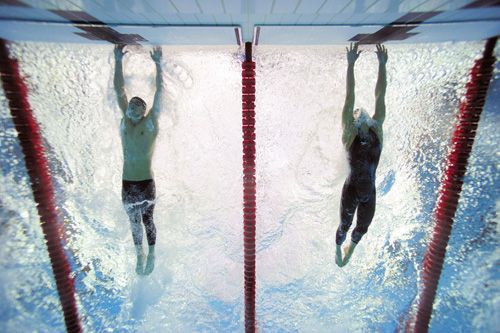 Phelps: left, Cavic: right.[/caption]
The finishing order would stand, and Phelps, in looking at the race later that year with Anderson Cooper of 60 Minutes would reflect,
Phelps: left, Cavic: right.[/caption]
The finishing order would stand, and Phelps, in looking at the race later that year with Anderson Cooper of 60 Minutes would reflect,
“He’s (Cavic) picking his head up before he is finishing…It’s acting as a speed bump…That’s the difference in the race.”If you look in the still frame above from the race video you can clearly see Phelps charging in with his head down, while Cavic (on the right), picks his head up into the wall. Yes, we aren’t all swimming for gold at the Olympics, but when races come down to those photo-finishes you want to be the swimmer that finishes. Put your head down and finish like a boss.
 YourSwimBook is a log book and goal setting guide designed specifically for competitive swimmers. It includes a ten month log book, comprehensive goal setting section, monthly evaluations to be filled out with your coach, and more.
Learn 8 more reasons why this tool kicks butt now.
Join the YourSwimBook weekly newsletter group and get motivational tips and more straight to your inbox. Sign up for free here.]]>
YourSwimBook is a log book and goal setting guide designed specifically for competitive swimmers. It includes a ten month log book, comprehensive goal setting section, monthly evaluations to be filled out with your coach, and more.
Learn 8 more reasons why this tool kicks butt now.
Join the YourSwimBook weekly newsletter group and get motivational tips and more straight to your inbox. Sign up for free here.]]>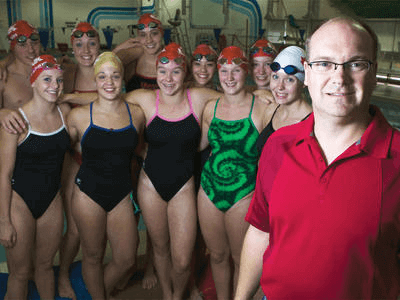 Coach Baker has been coaching at a high level since the 1990's, and has placed numerous athletes on international teams of all stripes, including the Olympics and World Championships (where one of his charges won an individual bronze medal in the women's 200m breaststroke in 1997).
At the most recent Canadian Olympic Trials OAK sent nearly 30 athletes to the meet, while also capturing a Canadian Age Group Championship title that summer, while also placing second amongst clubs at Canadian Summer Nationals.
On the back of these achievements Baker was awarded national club coach of the year honors for 2012.
Here are the four kick-centric sets, including some of the times posted by one of his current swimmers, Evan White (who swam a 1:59 200IM LCM last summer at the Canadian Swimming Trials to win his first senior national championship).
As you can see from the results that White throws down on the final set, in order to swim fast you must have a fast kick.
Coach Baker has been coaching at a high level since the 1990's, and has placed numerous athletes on international teams of all stripes, including the Olympics and World Championships (where one of his charges won an individual bronze medal in the women's 200m breaststroke in 1997).
At the most recent Canadian Olympic Trials OAK sent nearly 30 athletes to the meet, while also capturing a Canadian Age Group Championship title that summer, while also placing second amongst clubs at Canadian Summer Nationals.
On the back of these achievements Baker was awarded national club coach of the year honors for 2012.
Here are the four kick-centric sets, including some of the times posted by one of his current swimmers, Evan White (who swam a 1:59 200IM LCM last summer at the Canadian Swimming Trials to win his first senior national championship).
As you can see from the results that White throws down on the final set, in order to swim fast you must have a fast kick.
SEE ALSO: How to Improve Your Underwater Dolphin Kick
Alex Popov had a lightning fast kick (:27 seconds for a 50 long course), and other sprinters from Nathan Adrian, Cesar Cielo and more have all extolled the necessity of having a thunderous kick powering your swimming. Here are the sets:SEE ALSO: 3 Drills for a Faster Freestyle Kick
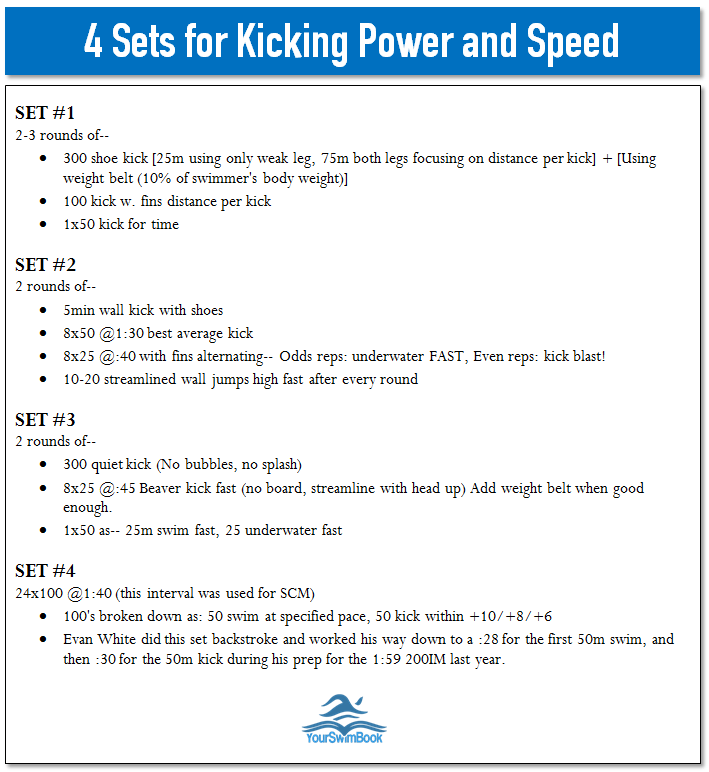 [divider type="thin"]
YourSwimBook is a log book and goal setting guide designed specifically for competitive swimmers. It includes a ten month log book, comprehensive goal setting section, monthly evaluations to be filled out with your coach, and more.
Learn 8 more reasons why this tool kicks butt now.
Join the YourSwimBook weekly newsletter group and get motivational tips and more straight to your inbox. Sign up for free here.
]]>
[divider type="thin"]
YourSwimBook is a log book and goal setting guide designed specifically for competitive swimmers. It includes a ten month log book, comprehensive goal setting section, monthly evaluations to be filled out with your coach, and more.
Learn 8 more reasons why this tool kicks butt now.
Join the YourSwimBook weekly newsletter group and get motivational tips and more straight to your inbox. Sign up for free here.
]]>
 YourSwimBook is a log book and goal setting guide designed specifically for competitive swimmers. It includes a ten month log book, comprehensive goal setting section, monthly evaluations to be filled out with your coach, and more.
Learn 8 more reasons why this tool kicks butt now.
Join the YourSwimBook weekly newsletter group and get motivational tips and more straight to your inbox. Sign up for free here.
]]>
YourSwimBook is a log book and goal setting guide designed specifically for competitive swimmers. It includes a ten month log book, comprehensive goal setting section, monthly evaluations to be filled out with your coach, and more.
Learn 8 more reasons why this tool kicks butt now.
Join the YourSwimBook weekly newsletter group and get motivational tips and more straight to your inbox. Sign up for free here.
]]> Subtraction is the simplest manner to be more efficient, more awesome, and ultimately, more better looking.
(Not totally sure on that last one, but let’s just say that’s the case for argument’s sake...)
If you want to break down success to it’s most simple, most basic form, here is what it looks like:
Performance = potential – interferences
Now, this looks deceptively simple, and I think that is the problem people have with it.
Subtraction is the simplest manner to be more efficient, more awesome, and ultimately, more better looking.
(Not totally sure on that last one, but let’s just say that’s the case for argument’s sake...)
If you want to break down success to it’s most simple, most basic form, here is what it looks like:
Performance = potential – interferences
Now, this looks deceptively simple, and I think that is the problem people have with it.
“But…but…what about talent? What about technique? What about how I bend my arms during my recovery? Blah blah blah.”Our first instinct when we want to accomplish big ole things in the pool is to look for the big swings. The big change.
 What can you eliminate from your training or from your life right now that would give your training a boost?
Writing up a big, greasy “to do” list is easy, and often leads us to frustration because adding habits is hard.
Really hard.
But manipulating the ones you already have, well, that is a whole lot easier.
What are the things you are doing right now that are hamstringing your success?
YourSwimBook is a log book and goal setting guide designed specifically for competitive swimmers. It includes a ten month log book, comprehensive goal setting section, monthly evaluations to be filled out with your coach, and more.
Learn 8 more reasons why this tool kicks butt now.
Join the YourSwimBook weekly newsletter group and get motivational tips and more straight to your inbox. Sign up for free here.]]>
What can you eliminate from your training or from your life right now that would give your training a boost?
Writing up a big, greasy “to do” list is easy, and often leads us to frustration because adding habits is hard.
Really hard.
But manipulating the ones you already have, well, that is a whole lot easier.
What are the things you are doing right now that are hamstringing your success?
YourSwimBook is a log book and goal setting guide designed specifically for competitive swimmers. It includes a ten month log book, comprehensive goal setting section, monthly evaluations to be filled out with your coach, and more.
Learn 8 more reasons why this tool kicks butt now.
Join the YourSwimBook weekly newsletter group and get motivational tips and more straight to your inbox. Sign up for free here.]]>
 YourSwimBook is a log book and goal setting guide designed specifically for competitive swimmers. It includes a ten month log book, comprehensive goal setting section, monthly evaluations to be filled out with your coach, and more.
Learn 8 more reasons why this tool kicks butt now.
Join the YourSwimBook weekly newsletter group and get motivational tips and more straight to your inbox. Sign up for free here.]]>
YourSwimBook is a log book and goal setting guide designed specifically for competitive swimmers. It includes a ten month log book, comprehensive goal setting section, monthly evaluations to be filled out with your coach, and more.
Learn 8 more reasons why this tool kicks butt now.
Join the YourSwimBook weekly newsletter group and get motivational tips and more straight to your inbox. Sign up for free here.]]>
Using Velocity Meter, we measure propulsion & drag forces of a swimmer in each stroke http://t.co/4ytsu0o0M9 pic.twitter.com/xDmuYybbCe
— The Race Club (@theraceclub) June 8, 2015
3 Exercises to Help You Avoid Injury in High-Risk Areas | BridgeAthletic http://t.co/DNeRbBRsjX #AthleticPerformance pic.twitter.com/Y132Yig56h — BridgeAthletic (@BridgeAthletic) January 15, 2015
Morning set for Trojan swim club pic.twitter.com/hAkt9Bbyra
— Dave Salo (@Sprintsalo) December 23, 2014
Today's sprint workout. 4 rounds. Love hearing about how hard they work when I'm out of town. @AuburnSwimmingpic.twitter.com/D14XwR5WkQ — Brett Hawke (@BrettHawke) May 2, 2015
Dryland Mistake: Band Bent-Over Row: http://t.co/lzhUkjDCqU @alphill4305 @SwimmerStrength @kkrirsh pic.twitter.com/VrgzZjN76s
— Swimming Science (@swimmingscience) June 11, 2015
Part time results in the pool come with part time efforts: http://t.co/J3jjT5VK6g pic.twitter.com/xOw203Uec5
— YourSwimBook.com (@YourSwimBook) June 19, 2015
[divider type="thin"]
YourSwimBook is a log book and goal setting guide designed specifically for competitive swimmers. It includes a ten month log book, comprehensive goal setting section, monthly evaluations to be filled out with your coach, and more.
Learn 8 more reasons why this tool kicks butt now.
Join the YourSwimBook weekly newsletter group and get motivational tips and more straight to your inbox. Sign up for free here.
]]> ]]>
]]> YourSwimBook is a log book and goal setting guide designed specifically for competitive swimmers. It includes a ten month log book, comprehensive goal setting section, monthly evaluations to be filled out with your coach, and more.
Learn 8 more reasons why this tool kicks butt now.
Join the YourSwimBook weekly newsletter group and get motivational tips and more straight to your inbox. Sign up for free here.]]>
YourSwimBook is a log book and goal setting guide designed specifically for competitive swimmers. It includes a ten month log book, comprehensive goal setting section, monthly evaluations to be filled out with your coach, and more.
Learn 8 more reasons why this tool kicks butt now.
Join the YourSwimBook weekly newsletter group and get motivational tips and more straight to your inbox. Sign up for free here.]]> YourSwimBook is a log book and goal setting guide designed specifically for competitive swimmers. It includes a ten month log book, comprehensive goal setting section, monthly evaluations to be filled out with your coach, and more.
Learn 8 more reasons why this tool kicks butt now.
Join the YourSwimBook weekly newsletter group and get motivational tips and more straight to your inbox. Sign up for free here.
]]>
YourSwimBook is a log book and goal setting guide designed specifically for competitive swimmers. It includes a ten month log book, comprehensive goal setting section, monthly evaluations to be filled out with your coach, and more.
Learn 8 more reasons why this tool kicks butt now.
Join the YourSwimBook weekly newsletter group and get motivational tips and more straight to your inbox. Sign up for free here.
]]>SEE ALSO: 5 Tricks for a Better Swim Start
Even though the field would reel him in, with Tandy placing fourth in a time of 22.28, you can’t help but feel awed at the sheer power he demonstrates over the first 25m of the race. Tandy, who stands at 6’3 popped up and significantly ahead of Adrian, who has one of the most powerful starts in the business. Not too mention that Adrian has a 3-4 inch height advantage on the Wildcat, who is originally from South Africa. Off the start you notice a couple things with Tandy:YourSwimBook is a log book and goal setting guide designed specifically for competitive swimmers. It includes a ten month log book, comprehensive goal setting section, monthly evaluations to be filled out with your coach, and more.
Learn 8 more reasons why this tool kicks butt now.
Join the YourSwimBook weekly newsletter group and get motivational tips and more straight to your inbox. Sign up for free here.
]]>
 But if it is something you really want, something you are unendingly passionate about…
Than it deserves your full and complete effort.
Yes, waiting for the rewards of your hard work is trying. Especially on days where you feel like you are stuck in place, or even sliding backwards.
But the regret of not giving it your full effort will hurt much more than the frustration of not seeing enough progress.
For this reason, don’t give up.
[divider type="thin"]
YourSwimBook is a log book and goal setting guide designed specifically for competitive swimmers. It includes a ten month log book, comprehensive goal setting section, monthly evaluations to be filled out with your coach, and more.
Learn 8 more reasons why this tool kicks butt now.
Join the YourSwimBook weekly newsletter group and get motivational tips and more straight to your inbox. Sign up for free here.]]>
But if it is something you really want, something you are unendingly passionate about…
Than it deserves your full and complete effort.
Yes, waiting for the rewards of your hard work is trying. Especially on days where you feel like you are stuck in place, or even sliding backwards.
But the regret of not giving it your full effort will hurt much more than the frustration of not seeing enough progress.
For this reason, don’t give up.
[divider type="thin"]
YourSwimBook is a log book and goal setting guide designed specifically for competitive swimmers. It includes a ten month log book, comprehensive goal setting section, monthly evaluations to be filled out with your coach, and more.
Learn 8 more reasons why this tool kicks butt now.
Join the YourSwimBook weekly newsletter group and get motivational tips and more straight to your inbox. Sign up for free here.]]> Staying motivated over the course of a long swimming season can be a challenge.
Between the two-a-days, the long weeks of training and the grind of the season it can be tough to stay focused on your goals.
Look:
Whether it is crushing your best times, making a cut, or breaking a state record elite swimmers understand the importance of staying motivated.
That’s exactly where this 5-pack of motivational swimming posters comes in.
Designed by swimmers for swimmers, they are designed specifically for elite swimming.
Staying motivated over the course of a long swimming season can be a challenge.
Between the two-a-days, the long weeks of training and the grind of the season it can be tough to stay focused on your goals.
Look:
Whether it is crushing your best times, making a cut, or breaking a state record elite swimmers understand the importance of staying motivated.
That’s exactly where this 5-pack of motivational swimming posters comes in.
Designed by swimmers for swimmers, they are designed specifically for elite swimming.
 1. Unleash Greatness.
 2. I Only Fear Not Trying.
 3. Challenges Are the Doorways to Excellence.
 4. Dream Bigger.
 5. Decide What You Want.
[To order these posters individually visit our online shop by clicking here.]
]]> Le Jingy (CHN); Baby got back.[/caption]
Led by Le Jingy’s rabid 50m freestyle performance, where she would win by over half a second, the Chinese women dominated the podium in every stroke except for the breast.
In the relays the Chinese were so far ahead that silver would be at least 4 seconds off—in all three races.
The exceptions?
Janet Evans would win the 800m freestyle.
Samantha Riley of Australia would capture both breaststroke titles, with a world record in the 100.
(Riley would have her own little doping controversy the following year when her coach, Scott Volker, claimed to have thought to have given her pill for a headache, but which actually contained a bad-bad substance.)
And after placing 9th in heats and then essentially having her teammate Sandra Volker paid off to scratch, Germany’s Franziska Van Almsick had one of the swims of the meet, breaking the 200m freestyle world record in a time of 1:56.78.
There was some fast swimming on the men’s side, albeit with less controversy.
Alex Popov continued his streak of domination of the men’s sprint events, while Kieren Perkins did the distance double (no 800’s at this meet at this point), doing the 400m free in WR time (3:43.80).
Tom Dolan of the USA would break the other 400m world record (individual medley), while Finland’s Jani Sievinen would also break the 200m IM world record.
YourSwimBook is a log book and goal setting guide designed specifically for competitive swimmers. It includes a ten month log book, comprehensive goal setting section, monthly evaluations to be filled out with your coach, and more.
Learn 8 more reasons why this tool kicks butt now.
Join the YourSwimBook weekly newsletter group and get motivational tips and more straight to your inbox. Sign up for free here.]]>
Le Jingy (CHN); Baby got back.[/caption]
Led by Le Jingy’s rabid 50m freestyle performance, where she would win by over half a second, the Chinese women dominated the podium in every stroke except for the breast.
In the relays the Chinese were so far ahead that silver would be at least 4 seconds off—in all three races.
The exceptions?
Janet Evans would win the 800m freestyle.
Samantha Riley of Australia would capture both breaststroke titles, with a world record in the 100.
(Riley would have her own little doping controversy the following year when her coach, Scott Volker, claimed to have thought to have given her pill for a headache, but which actually contained a bad-bad substance.)
And after placing 9th in heats and then essentially having her teammate Sandra Volker paid off to scratch, Germany’s Franziska Van Almsick had one of the swims of the meet, breaking the 200m freestyle world record in a time of 1:56.78.
There was some fast swimming on the men’s side, albeit with less controversy.
Alex Popov continued his streak of domination of the men’s sprint events, while Kieren Perkins did the distance double (no 800’s at this meet at this point), doing the 400m free in WR time (3:43.80).
Tom Dolan of the USA would break the other 400m world record (individual medley), while Finland’s Jani Sievinen would also break the 200m IM world record.
YourSwimBook is a log book and goal setting guide designed specifically for competitive swimmers. It includes a ten month log book, comprehensive goal setting section, monthly evaluations to be filled out with your coach, and more.
Learn 8 more reasons why this tool kicks butt now.
Join the YourSwimBook weekly newsletter group and get motivational tips and more straight to your inbox. Sign up for free here.]]>
Those who cannot remember the past are condemned to repeat it. – George Santayana
SEE ALSO: How to Prevent Swimmer's Shoulder
Similarly, those blocks of time in the school year where you are getting hammered with assignments and tests aren’t typically a surprise. Will you go play it day-by-day and hope that you are able to find the time to both study and training? Or will you plan for those periods of time when your time is at a premium by preparing and studying in advance? If you are unsure about the “sticky” points of the season where most swimmers tend to fall off or experience difficulty staying on track with the training regimen sit down with your coach and have an honest conversation about what you can do to prepare for those trying moments.YourSwimBook is a log book and goal setting guide designed specifically for competitive swimmers. It includes a ten month log book, comprehensive goal setting section, monthly evaluations to be filled out with your coach, and more.
Learn 8 more reasons why this tool kicks butt now.
Join the YourSwimBook weekly newsletter group and get motivational tips and more straight to your inbox. Sign up for free here.]]>
 [divider type="thin"]
YourSwimBook is a log book and goal setting guide designed specifically for competitive swimmers. It includes a ten month log book, comprehensive goal setting section, monthly evaluations to be filled out with your coach, and more.
Learn 8 more reasons why this tool kicks butt now.
Join the YourSwimBook weekly newsletter group and get motivational tips and more straight to your inbox. Sign up for free here.]]>
[divider type="thin"]
YourSwimBook is a log book and goal setting guide designed specifically for competitive swimmers. It includes a ten month log book, comprehensive goal setting section, monthly evaluations to be filled out with your coach, and more.
Learn 8 more reasons why this tool kicks butt now.
Join the YourSwimBook weekly newsletter group and get motivational tips and more straight to your inbox. Sign up for free here.]]> If you are only willing to give a great effort at practice when everything is going 100% your way, than you will expect and require the same level of perfect circumstances in competition to perform your best.
But if you can still set an in-practice best time at the end of a long week of training when you are bagged, or if you can hammer out the main set on a bad night of sleep, or with an extra draggy drag suit, or in a pool that has 9 other swimmers in your lane, than you begin to develop the type of resiliency and mental toughness that becomes so important when you step up on the blocks.
Don’t shy away from the challenging stuff in practice.
Be the swimmer that is not only willing to take on the hard sets, but be the swimmer that will do it when circumstances aren’t perfect, ideal, or even close to either.
If you are only willing to give a great effort at practice when everything is going 100% your way, than you will expect and require the same level of perfect circumstances in competition to perform your best.
But if you can still set an in-practice best time at the end of a long week of training when you are bagged, or if you can hammer out the main set on a bad night of sleep, or with an extra draggy drag suit, or in a pool that has 9 other swimmers in your lane, than you begin to develop the type of resiliency and mental toughness that becomes so important when you step up on the blocks.
Don’t shy away from the challenging stuff in practice.
Be the swimmer that is not only willing to take on the hard sets, but be the swimmer that will do it when circumstances aren’t perfect, ideal, or even close to either.
 After all, if you are getting lost in what the competition is doing, in the conditions of the meet, or on the high expectations of yourself for your performance, than you lose the relaxation and “mindfulness” that comes with focusing on the present.
Being ready to race means being relaxed (mentally, if not physically).
Think back to the last time you destroyed your best time in a 100-200 event.
How would you describe the way you felt in the water? Relaxed? Like you almost could have gone faster?
When you are relaxed, with slow and deep breaths, relaxed muscles, and a low heart rate you not only help ward off excess anxiety, you give your body a chance to perform in competition what you have been working on in practice.
After all, if you are getting lost in what the competition is doing, in the conditions of the meet, or on the high expectations of yourself for your performance, than you lose the relaxation and “mindfulness” that comes with focusing on the present.
Being ready to race means being relaxed (mentally, if not physically).
Think back to the last time you destroyed your best time in a 100-200 event.
How would you describe the way you felt in the water? Relaxed? Like you almost could have gone faster?
When you are relaxed, with slow and deep breaths, relaxed muscles, and a low heart rate you not only help ward off excess anxiety, you give your body a chance to perform in competition what you have been working on in practice.
SEE ALSO: The Swimming Taper: How to Swim Fast When It Matters Most
YourSwimBook is a log book and goal setting guide designed specifically for competitive swimmers. It includes a ten month log book, comprehensive goal setting section, monthly evaluations to be filled out with your coach, and more.
Learn 8 more reasons why this tool kicks butt now.
Join the YourSwimBook weekly newsletter group and get motivational tips and more straight to your inbox. Sign up for free here.]]>SEE ALSO: 5 Motivational Swimming Posters to Get You Fired Up
There is always going to be a kajillion little things you can do to be better. And getting caught up in this is dangerous… Because soon enough that list will be so long, so unbelievably impossible, so overwhelming in scope and size, that you can’t help but grow discouraged and disheartened.
“It’s days like today you see how important it is to not do certain things.”If there is one thing you can take away from this (besides not eating junk food and being out late at night with your friends when you are training the next morning), it’s this… Being successful in the pool doesn’t necessarily mean being great at 100 different things. You don’t even need to be great at 10 or 20 things. In fact, the big thing that is standing between you and the next level in your swimming isn’t a laundry list of things you need to do…
YourSwimBook is a log book and goal setting guide designed specifically for competitive swimmers. It includes a ten month log book, comprehensive goal setting section, monthly evaluations to be filled out with your coach, and more.
Learn 8 more reasons why this tool kicks butt now.
Join the YourSwimBook weekly newsletter group and get motivational tips and more straight to your inbox. Sign up for free here.]]>“You can only measure one’s potential after his career.” – Gianluigi BuffonI wish I could give a one-size-fits-all answer, but there is not one. The answer for each swimmer is as unique as their swimming abilities and circumstance. At the end of the day, if you are passionate about the sport, love the day-to-day activities associated with it, and wouldn’t rather do anything else, than why not continue swimming?
 YourSwimBook is a log book and goal setting guide designed specifically for competitive swimmers. It includes a ten month log book, comprehensive goal setting section, monthly evaluations to be filled out with your coach, and more.
Learn 8 more reasons why this tool kicks butt now.
Join the YourSwimBook weekly newsletter group and get motivational tips and more straight to your inbox. Sign up for free here.]]>
YourSwimBook is a log book and goal setting guide designed specifically for competitive swimmers. It includes a ten month log book, comprehensive goal setting section, monthly evaluations to be filled out with your coach, and more.
Learn 8 more reasons why this tool kicks butt now.
Join the YourSwimBook weekly newsletter group and get motivational tips and more straight to your inbox. Sign up for free here.]]> Improving your kick should fit in the overall plan to becoming a faster swimmer.
For many swimmers the legs are just two pieces of driftwood that trail their over-worked upper body and arms, and whether it is because they feel they are forever destined to have a mediocre kick, or whether they avoid it because they don’t like not being good at something, these swimmers are missing out on a powerful range of benefits that a good kick provides.
YourSwimBook is a log book and goal setting guide designed specifically for competitive swimmers. It includes a ten month log book, comprehensive goal setting section, monthly evaluations to be filled out with your coach, and more.
Learn 8 more reasons why this tool kicks butt now.
Join the YourSwimBook weekly newsletter group and get motivational tips and more straight to your inbox. Sign up for free here.]]>
Improving your kick should fit in the overall plan to becoming a faster swimmer.
For many swimmers the legs are just two pieces of driftwood that trail their over-worked upper body and arms, and whether it is because they feel they are forever destined to have a mediocre kick, or whether they avoid it because they don’t like not being good at something, these swimmers are missing out on a powerful range of benefits that a good kick provides.
YourSwimBook is a log book and goal setting guide designed specifically for competitive swimmers. It includes a ten month log book, comprehensive goal setting section, monthly evaluations to be filled out with your coach, and more.
Learn 8 more reasons why this tool kicks butt now.
Join the YourSwimBook weekly newsletter group and get motivational tips and more straight to your inbox. Sign up for free here.]]>
 YourSwimBook is a log book and goal setting guide designed specifically for competitive swimmers. It includes a ten month log book, comprehensive goal setting section, monthly evaluations to be filled out with your coach, and more.
Learn 8 more reasons why this tool kicks butt now.
Join the YourSwimBook weekly newsletter group and get motivational tips and more straight to your inbox. Sign up for free here.]]>
YourSwimBook is a log book and goal setting guide designed specifically for competitive swimmers. It includes a ten month log book, comprehensive goal setting section, monthly evaluations to be filled out with your coach, and more.
Learn 8 more reasons why this tool kicks butt now.
Join the YourSwimBook weekly newsletter group and get motivational tips and more straight to your inbox. Sign up for free here.]]>
Gonna give this Auburn sprint set a rip today. How hungry am I going to be after this set @BrettHawke? pic.twitter.com/YE9bFPNr7Q
— YourSwimBook.com (@YourSwimBook) July 27, 2015
To which Coach Hawke replied:
Very! 🍌🍞🍗🍮 https://t.co/ZApAUKxhOD
— Brett Hawke (@BrettHawke) July 27, 2015
Here is how the set was laid out:
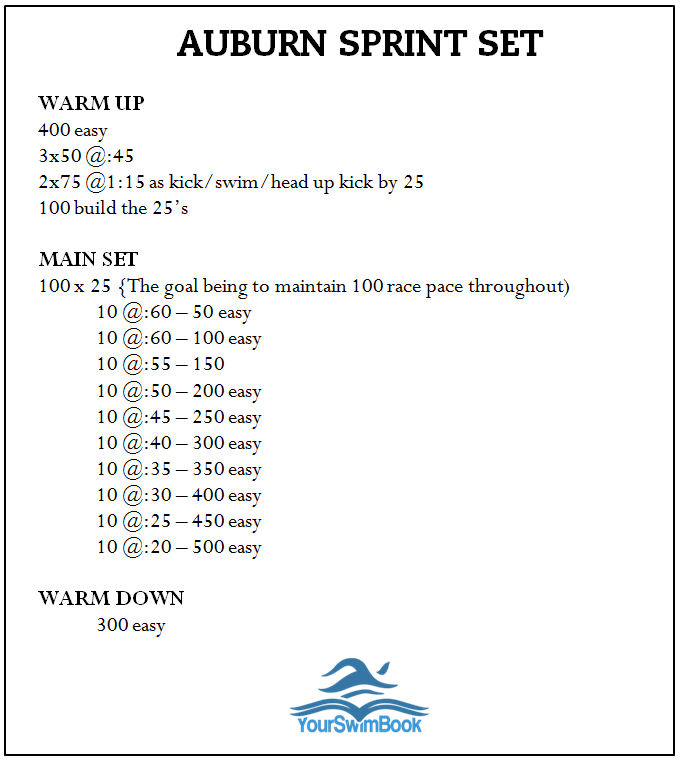 Unfortunately, I had to make a couple alterations to the set:
YourSwimBook is a log book and goal setting guide designed specifically for competitive swimmers. It includes a ten month log book, comprehensive goal setting section, monthly evaluations to be filled out with your coach, and more.
Learn 8 more reasons why this tool kicks butt now.
Join the YourSwimBook weekly newsletter group and get motivational tips and more straight to your inbox. Sign up for free here.]]>
Unfortunately, I had to make a couple alterations to the set:
YourSwimBook is a log book and goal setting guide designed specifically for competitive swimmers. It includes a ten month log book, comprehensive goal setting section, monthly evaluations to be filled out with your coach, and more.
Learn 8 more reasons why this tool kicks butt now.
Join the YourSwimBook weekly newsletter group and get motivational tips and more straight to your inbox. Sign up for free here.]]> It’s easy to go crazy and write out a list of 29 different things you want to improve in the water, but often these huge lists leave us feeling overwhelmed.
And even when we do kick off down the path of smarter swimming, we create circumstances that are designed to make us fail and ultimately have us feeling underwhelmed and discouraged with the process.
Here is how to start fixing your training habits in the pool so that you can punch those best times in the face at your next meet:
It’s easy to go crazy and write out a list of 29 different things you want to improve in the water, but often these huge lists leave us feeling overwhelmed.
And even when we do kick off down the path of smarter swimming, we create circumstances that are designed to make us fail and ultimately have us feeling underwhelmed and discouraged with the process.
Here is how to start fixing your training habits in the pool so that you can punch those best times in the face at your next meet:
They must have superhuman levels of willpower. That’s how they do it!As a result we figure that we need to lean exclusively on willpower to get us through those first few attempts at doing the right thing. But then when we stumble or drop the ball on the new habit, we immediately punish ourselves mentally:
See, knew you couldn’t do it. Obviously you don’t have as much willpower as Gary, so of course you couldn’t stick with it.Willpower is a tool that you can use, yes, but standing alone it is weak in the face of your pre-existing habits and behaviors. Level the odds by making the environment more supportive of your goals. Making morning workouts is an easy example. If you’re trying to get into the habit of making 100% of them, make getting up at the ungodly hour of 5am as easy as possible. Lay out your gear the night before, pre-pack your bag, and put together a morning routine that increases the likelihood you will get your butt out of bed early. Another is surrounding yourself with positive teammates and influences. We all have those people in our lives that make building new habits more difficult. The teammate that encourages you to take shortcuts over the course of a workout. The friend who derides your goals in the pool, telling you that it is only “one practice, what’s the big deal?” Having people in your environment can make a massive difference in whether those changes stick or not. Do everything you can to manipulate the environment so that it promotes and supports your goals. It’s crazy to think how often we gloss over trying to make the environment more supportive of our goals and instead stubbornly lean on the fickleness of willpower.
I am going to give 100% effort, 100% of the time! I am going to do 10 underwater dolphin kicks off of every wall, forever! I am going to swim every stroke with absolutely perfect technique, until the end of the time!These goals and habits are great. Well-intentioned, to be sure. But depending on where you are starting, they can be wholly unrealistic. If you are having trouble getting 2-3 underwater dolphin kicks off of each wall presently, and you try to level up to doing 10, than you might be able to stick to it for a little while, a few walls at least, but then what? You miss one, and then suddenly the whole idea of habit change collapses in on itself.
See, knew I couldn’t do it!(It’s infuriating how some of our self-talk can be indescribably not nice.) The solution? Start smaller. Yes, this might drive some of you nuts, especially those who expect long term results to happen in the short term. But doing an extra two dolphin kicks per wall every day for 6 months will always trump doing 10 dolphin kicks off every wall for one week.
 The strongest aspect of starting small, of taking tiny, but incremental steps, is that it isn’t jarring or overwhelming.
The discomfort of change isn’t so scary that the moment you stumble it doesn’t send you crashing back to earth, and as a result, it is much more sustainable.
Which transitions quite neatly into…
YourSwimBook is a log book and goal setting guide designed specifically for competitive swimmers. It includes a ten month log book, comprehensive goal setting section, monthly evaluations to be filled out with your coach, and more.
Learn 8 more reasons why this tool kicks butt now.
Join the YourSwimBook weekly newsletter group and get motivational tips and more straight to your inbox. Sign up for free here.]]>YourSwimBook is a log book and goal setting guide designed specifically for competitive swimmers. It includes a ten month log book, comprehensive goal setting section, monthly evaluations to be filled out with your coach, and more.
Learn 8 more reasons why this tool kicks butt now.
Join the YourSwimBook weekly newsletter group and get motivational tips and more straight to your inbox. Sign up for free here.]]>
The strongest aspect of starting small, of taking tiny, but incremental steps, is that it isn’t jarring or overwhelming.
The discomfort of change isn’t so scary that the moment you stumble it doesn’t send you crashing back to earth, and as a result, it is much more sustainable.
Which transitions quite neatly into…
YourSwimBook is a log book and goal setting guide designed specifically for competitive swimmers. It includes a ten month log book, comprehensive goal setting section, monthly evaluations to be filled out with your coach, and more.
Learn 8 more reasons why this tool kicks butt now.
Join the YourSwimBook weekly newsletter group and get motivational tips and more straight to your inbox. Sign up for free here.]]>YourSwimBook is a log book and goal setting guide designed specifically for competitive swimmers. It includes a ten month log book, comprehensive goal setting section, monthly evaluations to be filled out with your coach, and more.
Learn 8 more reasons why this tool kicks butt now.
Join the YourSwimBook weekly newsletter group and get motivational tips and more straight to your inbox. Sign up for free here.]]>
SEE ALSO: 8 Reasons a Swim Log Will Help You Swim Faster This Season
 YourSwimBook is a log book and goal setting guide designed specifically for competitive swimmers. It includes a ten month log book, comprehensive goal setting section, monthly evaluations to be filled out with your coach, and more.
Learn 8 more reasons why this tool kicks butt now.
Join the YourSwimBook weekly newsletter and get motivational tips and more straight to your inbox. Sign up for free here.]]>
YourSwimBook is a log book and goal setting guide designed specifically for competitive swimmers. It includes a ten month log book, comprehensive goal setting section, monthly evaluations to be filled out with your coach, and more.
Learn 8 more reasons why this tool kicks butt now.
Join the YourSwimBook weekly newsletter and get motivational tips and more straight to your inbox. Sign up for free here.]]>SEE ALSO: 5 Tricks for a Faster Swim Start
But in 1998, in Perth, he would blast out with an absolutely unbelievable start that leveled the field, leaving everyone to try and play catch up. Pilczuk would win in 22.29 ahead of Popov and hometown favorite Michael Klim. Here is the video from that race: Former Auburn coach David Marsh glowed when recounting Pilczuk's journey a few months after that world championship win:It hasn’t been easy for Bill. It’s been something he’s had to work very hard at. He didn’t have the financial support and raw talent of the typical championship swimmer. If he doesn’t accomplish anything beyond winning a world title, he’s already beaten the odds.In researching the piece (which you can read here), there was repeated mention of Pilczuk working on his start a lot.
SEE ALSO: Brad Tandy's Start is Absolutely Ridiculous
When I asked him recently-- he is now a coach for the men's and women's program at Savannah College of Art and Design in Georgia-- what "a lot" meant, here is what he had to say:To give you a rough estimate of what working on starts a lot meant... Some days, when the 15m pool was open, they'd have to tell us to leave because we wanted to break the record of the pool in every stroke. Maybe 50 on those days. We would do at least 10 runners and 20 starts a day throughout a workout. Dean [Hutchinson-- he was team captain senior year at Auburn] and I would stay after and get about 10 on our own every single practice. We had to duck tape our back toes because the grip tape tore the skin off.Now a coach, I asked Pilczuk if he would like to share some tips on how the rest of us can improve our starts. Here are Bill Pilczuk's four tips for developing a more explosive start:
 ** A big thank you to Bill Pilczuk for taking the time to share this information. You can stay up to date with his program at the SCAD Athletics website.
[divider type="thin"]
YourSwimBook is a log book and goal setting guide designed specifically for competitive swimmers. It includes a ten month log book, comprehensive goal setting section, monthly evaluations to be filled out with your coach, and more.
Learn 8 more reasons why this tool kicks butt now.
Join the YourSwimBook weekly newsletter and get motivational tips and more straight to your inbox. Sign up for free here.]]>
** A big thank you to Bill Pilczuk for taking the time to share this information. You can stay up to date with his program at the SCAD Athletics website.
[divider type="thin"]
YourSwimBook is a log book and goal setting guide designed specifically for competitive swimmers. It includes a ten month log book, comprehensive goal setting section, monthly evaluations to be filled out with your coach, and more.
Learn 8 more reasons why this tool kicks butt now.
Join the YourSwimBook weekly newsletter and get motivational tips and more straight to your inbox. Sign up for free here.]]>
200 free kick with board Happy Feet
200 free kick with board single leg [alternate legs by 50]
<Rest-- :15 sec from the next :60 or :30>
4x50 swim cruise @1
YourSwimBook is a log book and goal setting guide designed specifically for competitive swimmers. It includes a ten month log book, comprehensive goal setting section, monthly evaluations to be filled out with your coach, and more.
Learn 8 more reasons why this tool kicks butt now.
Join the YourSwimBook weekly newsletter and get motivational tips and more straight to your inbox. Sign up for free here.]]>YourSwimBook is a log book and goal setting guide designed specifically for competitive swimmers. It includes a ten month log book, comprehensive goal setting section, monthly evaluations to be filled out with your coach, and more.
Learn 8 more reasons why this tool kicks butt now.
Join the YourSwimBook weekly newsletter and get motivational tips and more straight to your inbox. Sign up for free here.]]> Outside of total volume (which is not an accurate indicator of performance), here are some different ways to track and measure your swimming so that you not only stay focused and motivated, but ultimately swim faster:
YourSwimBook is a log book and goal setting guide designed specifically for competitive swimmers. It includes a ten month log book, comprehensive goal setting section, monthly evaluations to be filled out with your coach, and more.
Learn 8 more reasons why this tool kicks butt now.
Join the YourSwimBook weekly newsletter and get motivational tips and more straight to your inbox. Sign up for free here.]]>YourSwimBook is a log book and goal setting guide designed specifically for competitive swimmers. It includes a ten month log book, comprehensive goal setting section, monthly evaluations to be filled out with your coach, and more.
Learn 8 more reasons why this tool kicks butt now.
Join the YourSwimBook weekly newsletter and get motivational tips and more straight to your inbox. Sign up for free here.
]]>YourSwimBook is a log book and goal setting guide designed specifically for competitive swimmers. It includes a ten month log book, comprehensive goal setting section, monthly evaluations to be filled out with your coach, and more.
Learn 8 more reasons why this tool kicks butt now.
Join the YourSwimBook weekly newsletter and get motivational tips and more straight to your inbox. Sign up for free here.
]]>YourSwimBook is a log book and goal setting guide designed specifically for competitive swimmers. It includes a ten month log book, comprehensive goal setting section, monthly evaluations to be filled out with your coach, and more.
Learn 8 more reasons why this tool kicks butt now.
Join the YourSwimBook weekly newsletter and get motivational tips and more straight to your inbox. Sign up for free here.]]>
Outside of total volume (which is not an accurate indicator of performance), here are some different ways to track and measure your swimming so that you not only stay focused and motivated, but ultimately swim faster:
YourSwimBook is a log book and goal setting guide designed specifically for competitive swimmers. It includes a ten month log book, comprehensive goal setting section, monthly evaluations to be filled out with your coach, and more.
Learn 8 more reasons why this tool kicks butt now.
Join the YourSwimBook weekly newsletter and get motivational tips and more straight to your inbox. Sign up for free here.]]>YourSwimBook is a log book and goal setting guide designed specifically for competitive swimmers. It includes a ten month log book, comprehensive goal setting section, monthly evaluations to be filled out with your coach, and more.
Learn 8 more reasons why this tool kicks butt now.
Join the YourSwimBook weekly newsletter and get motivational tips and more straight to your inbox. Sign up for free here.
]]>YourSwimBook is a log book and goal setting guide designed specifically for competitive swimmers. It includes a ten month log book, comprehensive goal setting section, monthly evaluations to be filled out with your coach, and more.
Learn 8 more reasons why this tool kicks butt now.
Join the YourSwimBook weekly newsletter and get motivational tips and more straight to your inbox. Sign up for free here.
]]>YourSwimBook is a log book and goal setting guide designed specifically for competitive swimmers. It includes a ten month log book, comprehensive goal setting section, monthly evaluations to be filled out with your coach, and more.
Learn 8 more reasons why this tool kicks butt now.
Join the YourSwimBook weekly newsletter and get motivational tips and more straight to your inbox. Sign up for free here.]]>"The palest of ink is better than the clearest of memories." – Tommy Kono
YourSwimBook is a log book and goal setting guide designed specifically for competitive swimmers. It includes a ten month log book, comprehensive goal setting section, monthly evaluations to be filled out with your coach, and more.
Learn 8 more reasons why this tool kicks butt now.
Join the YourSwimBook weekly newsletter and get motivational tips and more straight to your inbox. Sign up for free here.]]>Doubt. The creeping sense that we are running out of time, that there aren’t enough remaining hours in the pool to help us push towards the goals we want to achieve. That perhaps our shade of greatness wasn’t meant for us.
Frustration. The anger and discouragement that comes with not being able to do what you hoped to do is common in our sport. We set goals that are unrealistic, and then get upset with ourselves for coming up short. We hope for full time results with part time effort, and get disheartened when things don’t pan out. When we put in effort and don’t see the expected results it makes us feel as though we are swimming in quicksand.
Insecurity. We wonder if it is us, that there is something lacking in us that would otherwise allow us to achieve greatness. We fret over whether we possess the latent talent, the physical prowess, and the technical skill to achieve the big things we hope to accomplish in the water.
Look: There always comes points in our swimming where we hit walls of frustration or outright failure. We aren’t seeing progress as fast as we would like. The things we want to accomplish seem to be outside of our reach. In times like this where you come up short, or are struggling through trying periods of training, where you feel like you are stuck alone in a whirlwind of insecurity and doubt. These emotions, while tough, are normal, and not only that, are part of the process. Every swimmer that has graced the top of the Olympic podium has experienced flashes of these feelings at some point during their ascent to elite-status, so don’t feel as though you are the first swimmer to feel this way. But once these feelings begin to pass a little bit, you will find that there are some surprisingly powerful benefits to coming up short:
 YourSwimBook is a log book and goal setting guide designed specifically for competitive swimmers. It includes a ten month log book, comprehensive goal setting section, monthly evaluations to be filled out with your coach, and more.
Learn 8 more reasons why this tool kicks butt now.
Join the YourSwimBook weekly newsletter and get motivational tips and more straight to your inbox. Sign up for free here.]]>
YourSwimBook is a log book and goal setting guide designed specifically for competitive swimmers. It includes a ten month log book, comprehensive goal setting section, monthly evaluations to be filled out with your coach, and more.
Learn 8 more reasons why this tool kicks butt now.
Join the YourSwimBook weekly newsletter and get motivational tips and more straight to your inbox. Sign up for free here.]]>
“Yeah, things suck right now, but at least I don’t have this other problem.”Cause, literally, it could always be worse.
YourSwimBook is a log book and goal setting guide designed specifically for competitive swimmers. It includes a ten month log book, comprehensive goal setting section, monthly evaluations to be filled out with your coach, and more.
Learn 8 more reasons why this tool kicks butt now.
Join the YourSwimBook weekly newsletter and get motivational tips and more straight to your inbox. Sign up for free here.]]> YourSwimBook is a log book and goal setting guide designed specifically for competitive swimmers. It includes a ten month log book, comprehensive goal setting section, monthly evaluations to be filled out with your coach, and more.
Learn 8 more reasons why this tool kicks butt now.
Join the YourSwimBook weekly newsletter and get motivational tips and more straight to your inbox. Sign up for free here.]]>
YourSwimBook is a log book and goal setting guide designed specifically for competitive swimmers. It includes a ten month log book, comprehensive goal setting section, monthly evaluations to be filled out with your coach, and more.
Learn 8 more reasons why this tool kicks butt now.
Join the YourSwimBook weekly newsletter and get motivational tips and more straight to your inbox. Sign up for free here.]]>SEE ALSO: How to Prevent Swimmer's Shoulder
 YourSwimBook is a log book and goal setting guide designed specifically for competitive swimmers. It includes a ten month log book, comprehensive goal setting section, monthly evaluations to be filled out with your coach, and more.
Learn 8 more reasons why this tool kicks butt now.
Join the YourSwimBook weekly newsletter and get motivational tips and more straight to your inbox. Sign up for free here.]]>
YourSwimBook is a log book and goal setting guide designed specifically for competitive swimmers. It includes a ten month log book, comprehensive goal setting section, monthly evaluations to be filled out with your coach, and more.
Learn 8 more reasons why this tool kicks butt now.
Join the YourSwimBook weekly newsletter and get motivational tips and more straight to your inbox. Sign up for free here.]]>
“When I do this, then this happens…”
The secret behind why this is so effective is that it bypasses the need to be “motivated” or “inspired.” Waiting for motivation to strike is a bit of a fool’s errand, and very often only comes after we have begun to start the activity we need to do. Rarely does it strike us out of the blue at 5am on a cold Wednesday morning, pushing us to get out of bed. That motivation and energy flows from action, from starting. Having a pre-workout routine helps launch you into those first few steps. For instance:
 When you focus solely on creating the daily habits and routines that will get you to your goals you unburden yourself of the pressure that comes with your goals.
Take a few minutes and write out the daily schedule you’d like to be able to carry out. The things you will need to do on a daily basis to excel. The things you will focus relentlessly on improving day-in and day-out.
The powerful part about this is that once you’ve got your routine in place, it will start to become habitual.
And that is where the real power of your routine will show itself.
YourSwimBook is a log book and goal setting guide designed specifically for competitive swimmers. It includes a ten month log book, comprehensive goal setting section, monthly evaluations to be filled out with your coach, and more.
Learn 8 more reasons why this tool kicks butt now.
Join the YourSwimBook weekly newsletter and get motivational tips and more straight to your inbox. Sign up for free here.]]>YourSwimBook is a log book and goal setting guide designed specifically for competitive swimmers. It includes a ten month log book, comprehensive goal setting section, monthly evaluations to be filled out with your coach, and more.
Learn 8 more reasons why this tool kicks butt now.
Join the YourSwimBook weekly newsletter and get motivational tips and more straight to your inbox. Sign up for free here.]]>
When you focus solely on creating the daily habits and routines that will get you to your goals you unburden yourself of the pressure that comes with your goals.
Take a few minutes and write out the daily schedule you’d like to be able to carry out. The things you will need to do on a daily basis to excel. The things you will focus relentlessly on improving day-in and day-out.
The powerful part about this is that once you’ve got your routine in place, it will start to become habitual.
And that is where the real power of your routine will show itself.
YourSwimBook is a log book and goal setting guide designed specifically for competitive swimmers. It includes a ten month log book, comprehensive goal setting section, monthly evaluations to be filled out with your coach, and more.
Learn 8 more reasons why this tool kicks butt now.
Join the YourSwimBook weekly newsletter and get motivational tips and more straight to your inbox. Sign up for free here.]]>YourSwimBook is a log book and goal setting guide designed specifically for competitive swimmers. It includes a ten month log book, comprehensive goal setting section, monthly evaluations to be filled out with your coach, and more.
Learn 8 more reasons why this tool kicks butt now.
Join the YourSwimBook weekly newsletter and get motivational tips and more straight to your inbox. Sign up for free here.]]>

 YourSwimBook is a log book and goal setting guide designed specifically for competitive swimmers. It includes a ten month log book, comprehensive goal setting section, monthly evaluations to be filled out with your coach, and more.
Learn 8 more reasons why this tool kicks butt now.
Join the YourSwimBook weekly newsletter and get motivational tips and more straight to your inbox. Sign up for free here.]]>
YourSwimBook is a log book and goal setting guide designed specifically for competitive swimmers. It includes a ten month log book, comprehensive goal setting section, monthly evaluations to be filled out with your coach, and more.
Learn 8 more reasons why this tool kicks butt now.
Join the YourSwimBook weekly newsletter and get motivational tips and more straight to your inbox. Sign up for free here.]]>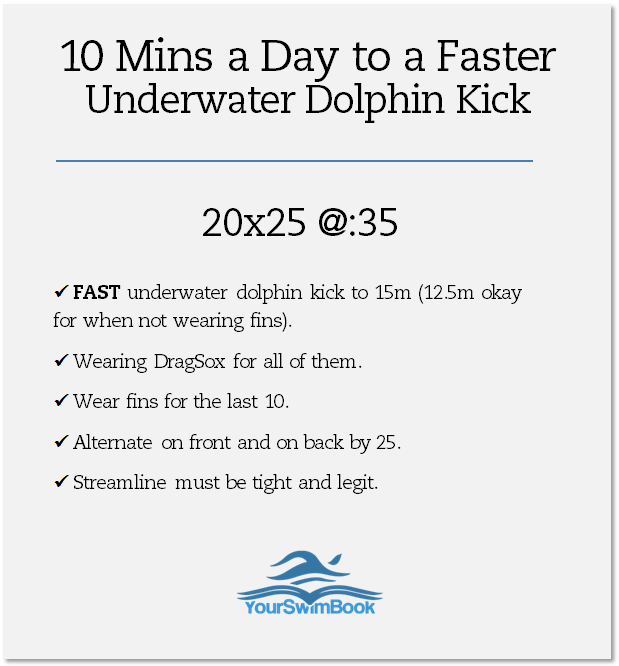 And that’s it.
Simple, really.
If you have never used DragSox before I couldn’t recommend them enough. The drag they add to your legs force them to work overtime in a form of resistance that is extremely swim-specific and hard to duplicate otherwise.
And more importantly, when you take them off and swim a lap at even moderately high speed you will feel like someone strapped a jetpack to your back.
Win!
And that’s it.
Simple, really.
If you have never used DragSox before I couldn’t recommend them enough. The drag they add to your legs force them to work overtime in a form of resistance that is extremely swim-specific and hard to duplicate otherwise.
And more importantly, when you take them off and swim a lap at even moderately high speed you will feel like someone strapped a jetpack to your back.
Win!
 Here are 5 simple fundamentals to work on this fall and winter as the swimming season rolls out:
YourSwimBook is a log book and goal setting guide designed specifically for competitive swimmers. It includes a ten month log book, comprehensive goal setting section, monthly evaluations to be filled out with your coach, and more.
Learn 8 more reasons why this tool kicks butt now.
Join the YourSwimBook weekly newsletter and get motivational tips and more straight to your inbox. Sign up for free here.]]>
Here are 5 simple fundamentals to work on this fall and winter as the swimming season rolls out:
YourSwimBook is a log book and goal setting guide designed specifically for competitive swimmers. It includes a ten month log book, comprehensive goal setting section, monthly evaluations to be filled out with your coach, and more.
Learn 8 more reasons why this tool kicks butt now.
Join the YourSwimBook weekly newsletter and get motivational tips and more straight to your inbox. Sign up for free here.]]>



 In Summary
Training is tough stuff.
Daily we are asked to push ourselves to levels that we consider difficult or impossible, and then are asked to come back and do it again the following day.
It’s challenging, but it doesn’t have to be full of misery or frustration.
This season be the athlete that masters practice, masters the process, and subsequently masters the podium.
YourSwimBook is a log book and goal setting guide designed specifically for competitive swimmers. It includes a ten month log book, comprehensive goal setting section, monthly evaluations to be filled out with your coach, and more.
Learn 8 more reasons why this tool kicks butt now.
Join the YourSwimBook weekly newsletter and get motivational tips and more straight to your inbox. Sign up for free here.]]>YourSwimBook is a log book and goal setting guide designed specifically for competitive swimmers. It includes a ten month log book, comprehensive goal setting section, monthly evaluations to be filled out with your coach, and more.
Learn 8 more reasons why this tool kicks butt now.
Join the YourSwimBook weekly newsletter and get motivational tips and more straight to your inbox. Sign up for free here.]]>
In Summary
Training is tough stuff.
Daily we are asked to push ourselves to levels that we consider difficult or impossible, and then are asked to come back and do it again the following day.
It’s challenging, but it doesn’t have to be full of misery or frustration.
This season be the athlete that masters practice, masters the process, and subsequently masters the podium.
YourSwimBook is a log book and goal setting guide designed specifically for competitive swimmers. It includes a ten month log book, comprehensive goal setting section, monthly evaluations to be filled out with your coach, and more.
Learn 8 more reasons why this tool kicks butt now.
Join the YourSwimBook weekly newsletter and get motivational tips and more straight to your inbox. Sign up for free here.]]>YourSwimBook is a log book and goal setting guide designed specifically for competitive swimmers. It includes a ten month log book, comprehensive goal setting section, monthly evaluations to be filled out with your coach, and more.
Learn 8 more reasons why this tool kicks butt now.
Join the YourSwimBook weekly newsletter and get motivational tips and more straight to your inbox. Sign up for free here.]]>SEE ALSO: 8 Reasons a Swim Log Will Help You Swim Faster
Things like...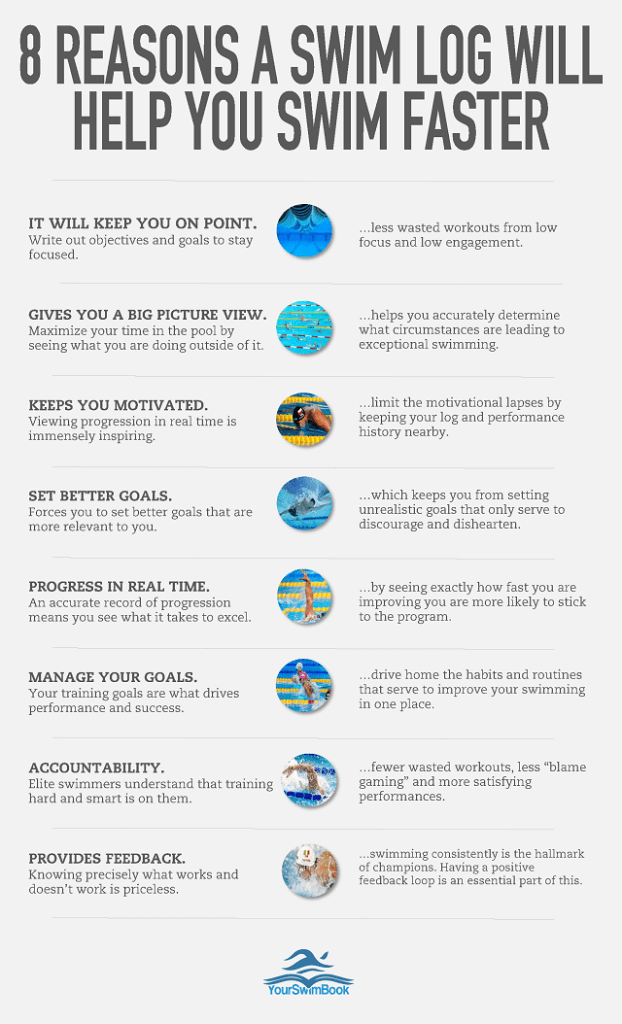 YourSwimBook is a log book and goal setting guide designed specifically for competitive swimmers. It includes a ten month log book, comprehensive goal setting section, monthly evaluations to be filled out with your coach, and more.
Learn 8 more reasons why this tool kicks butt now.
Join the YourSwimBook weekly newsletter and get motivational tips and more straight to your inbox. Sign up for free here.]]>YourSwimBook is a log book and goal setting guide designed specifically for competitive swimmers. It includes a ten month log book, comprehensive goal setting section, monthly evaluations to be filled out with your coach, and more.
Learn 8 more reasons why this tool kicks butt now.
Join the YourSwimBook weekly newsletter and get motivational tips and more straight to your inbox. Sign up for free here.]]>
YourSwimBook is a log book and goal setting guide designed specifically for competitive swimmers. It includes a ten month log book, comprehensive goal setting section, monthly evaluations to be filled out with your coach, and more.
Learn 8 more reasons why this tool kicks butt now.
Join the YourSwimBook weekly newsletter and get motivational tips and more straight to your inbox. Sign up for free here.]]>YourSwimBook is a log book and goal setting guide designed specifically for competitive swimmers. It includes a ten month log book, comprehensive goal setting section, monthly evaluations to be filled out with your coach, and more.
Learn 8 more reasons why this tool kicks butt now.
Join the YourSwimBook weekly newsletter and get motivational tips and more straight to your inbox. Sign up for free here.]]>
SEE ALSO: 5 Motivational Swimming Posters for Swimmers
It pushes you to being a better teammate (and ultimately, swimmer) by understanding the trials and tribulations the swimmers around you are going through.YourSwimBook is a log book and goal setting guide designed specifically for competitive swimmers. It includes a ten month log book, comprehensive goal setting section, monthly evaluations to be filled out with your coach, and more.
Learn 8 more reasons why this tool kicks butt now.
Join the YourSwimBook weekly newsletter and get motivational tips and more straight to your inbox. Sign up for free here.]]>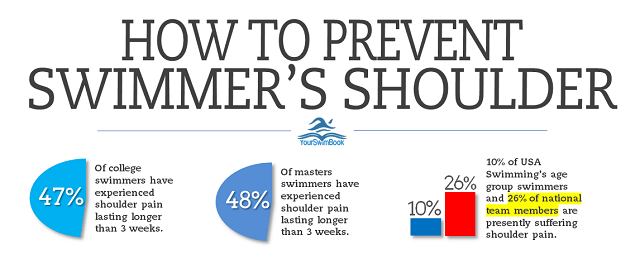
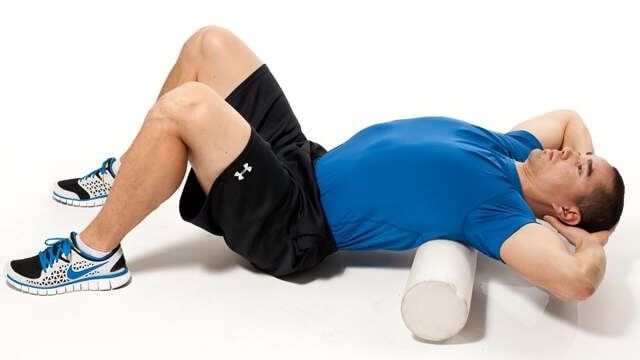 Quadruped t-spine rotation. On all fours put a hand behind your head and dip below your opposing shoulder, leading with your elbow. Keeping your head straight and hips stable—don’t twist your hips, in other words—leading with your elbow, rotate your shoulders so that your elbow ends pointing at the ceiling.
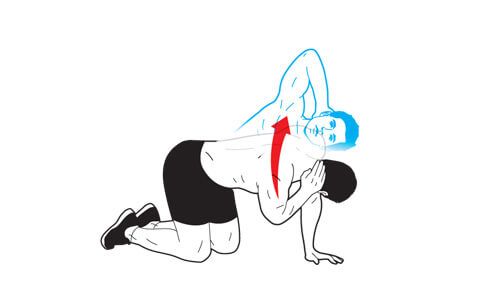
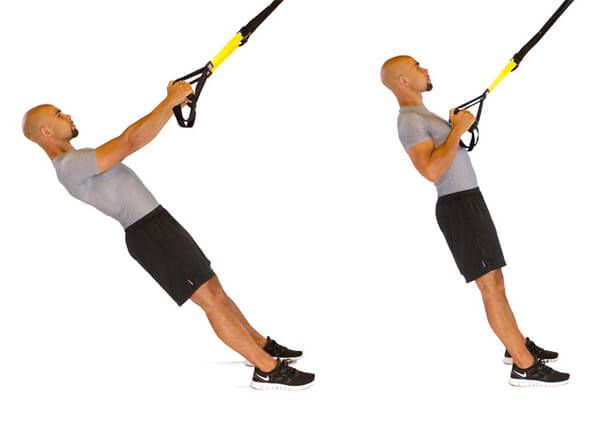
"Aww yeah, shoulder is acting up. Gotta get back on the internal and external rotators."
A word of caution with doing endless sets of rotator cuff strengthening exercises, however. Performing work on the rotator cuff isn’t a cure all for shoulder issues. It should be used as a preventative tool, and one that is lower on the totem pole than having overall mobility in your t-spine and stability. Dr. Erik DeRoche, USA Swimming’s team chiropractor on the 2012 and 2014 World Championship teams as well as the University of Michigan’s team chiropractor at NCAA’s in 2012, backs this up:“Commonly, I see swimmers performing rotator cuff strengthening exercises as a fix for shoulder pain.
This, while a part of therapy, is one of the last things I do on the continuum of care.
Establishing mechanical deficits is primary…”
Which transitions into probably the most critical preventative measure you can take against shoulder injury…“Poor swimming mechanics is what I see most commonly creating shoulder ‘issues’ in any swimmer.
The primary factor which contributes to impingement syndromes that I see in my office is a thumb first hand entry in the crawl/freestyle stroke.
What this hand entry creates is internal rotation of the arm/hand and ‘closes’ off/pinches the soft tissues on the inside (medial) arm and disallows for adequate reach and therefore a less than optimal catch.”
Russell Mark, high performance consultant to USA Swimming, agrees (emphasis mine):“Repetition alone isn't enough to injure your shoulder. Repetition of bad technique is. It's so easy - and incorrect - to swing your arm behind your body when you swim.
If you have shoulder pain, talk to your coach and see a physician. Try and identify exactly what part of the stroke the pain occurs and make an adjustment! Pain is when your body tells you you're not doing something right for it and you need to listen.”
Brent Hayden, Olympic bronze medalist in the 100m freestyle in 2012, and winner of the 100m freestyle at the 2007 FINA World Championships, had this to add for all you freestylers out there:"...eliminate zipper drill and over-emphasis of high elbow freestyle, which often involves shrugging (therefore impinging the shoulder) the arm through the recovery. Instead aim to come around naturally like an arm swing with a soft elbow."
“My view is that this injury is almost entirely preventable.
If an athlete is starting to feel stiffness or mild shoulder pain they should focus more on prehab.
If it lasts more than a few days or becomes severe enough to limit their stroke or range of motion they should seek treatment, even if pain doesn't seem that bad. Swimming through pain simply limits your technique.”
Make your pre-hab a part of your daily warm-up routine, something that you don’t even have to think about—just something you do—and you will be well on your way to swimming injury-freer this season.Dr. Erik DeRoche, Chiropractor, Performance Health NorthWest. Dr. DeRoche has extensive experience with competitive swimmers, having been the chiropractor for Team USA at both the 2012 and 2014 FINA World Championships. He has lectured for USA Swimming and USA Triathlon. You can find him online at his practice by clicking here.
Russell Mark, High Performance Consultant, USA Swimming. Formerly a rocket scientist (seriously), Russell lectures regularly for USA Swimming. Catch up with him on Twitter here.
Travis Dodds, Registered Physiotherapist, InSync Physiotherapy. Since completing the Masters of Physical Therapy program in 2010 at the University of Alberta Travis has consulted with a myriad of clubs, varsity squads and pro athletes and has worked on site with sports ranging from volleyball, soccer to, you guessed it, swimming. You can connect with Travis at his blog by clicking here.
Brent Hayden, Olympic bronze medalist in the 100m freestyle at the London Games, Hayden was a fixture on the international sprint scene for nearly a decade, with Commonwealth and World Championship medals to his credit. Catch up with Brent by visiting his website here.
YourSwimBook is a log book and goal setting guide designed specifically for competitive swimmers. It includes a ten month log book, comprehensive goal setting section, monthly evaluations to be filled out with your coach, and more.
Learn 8 more reasons why this tool kicks butt now.
Join the YourSwimBook weekly newsletter and get motivational tips and more straight to your inbox. Sign up for free here.
]]>SEE ALSO: 8 Reasons a Swim Log Will Help You Swim Faster
YourSwimBook is a log book and goal setting guide designed specifically for competitive swimmers. It includes a ten month log book, comprehensive goal setting section, monthly evaluations to be filled out with your coach, and more.
Learn 8 more reasons why this tool kicks butt now.
Join the YourSwimBook weekly newsletter and get motivational tips and more straight to your inbox. Sign up for free here.]]> As someone who spent a majority of time during my later teenage years sidelined with chronic shoulder injuries I know that swimming can be a cause of infuriating, serious, and painful injury.
But personal experience aside, do swimmers in general get injured more often than other athletes?
As someone who spent a majority of time during my later teenage years sidelined with chronic shoulder injuries I know that swimming can be a cause of infuriating, serious, and painful injury.
But personal experience aside, do swimmers in general get injured more often than other athletes?
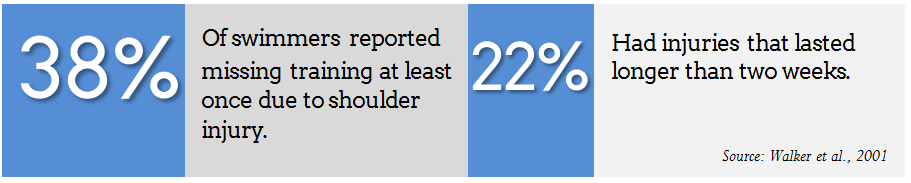 While an injury rate of 0.2 to 0.3 may seem low, the study notes:
No matter how you dice it up those injuries can cause some serious havoc on a team’s program. A separate study done with over 265 Danish swimmers found an injury rate of 0.9% per 1,000 hours of swimming. The shoulder led the way, with the back also commonly cited. Breaststrokers were much more likely to have knee injuries, and the fastest swimmers in the study experienced injury significantly more often (added training, perhaps?).“…a squad of 20 swimmers that trains 50km each week may sustain five SIP [injuries causing missed training time] and three SSI events [injuries causing pain lasting longer than two weeks] during a 16-week training phase.”
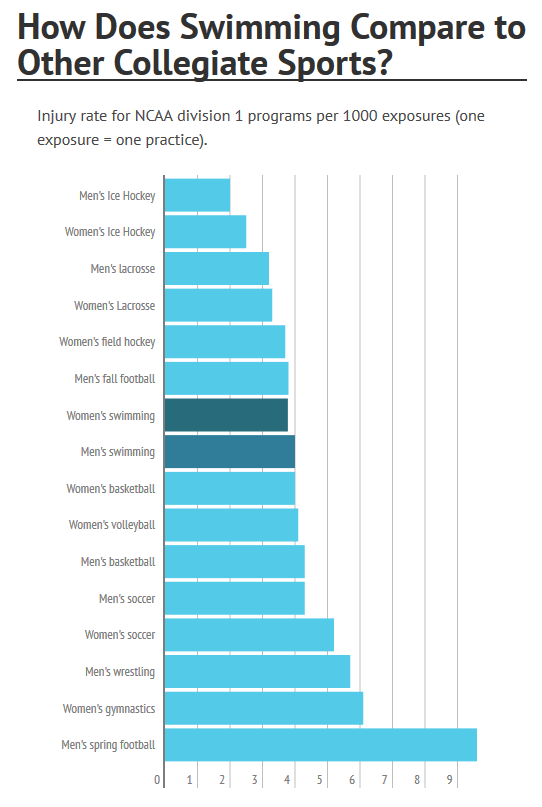 In Summary
How to Prevent Swimmer's Shoulder. A guide we put together recently featuring biomechanists, therapists and chiropractors, and even a space scientist (seriously). Everything you need to know about avoiding swimmer's shoulder.
The 1 Thing Every College Freshman Swimmer Needs to Know. First year swimmers at university are much more likely to be injured over the course of the season than their teammates. This post discusses why, and outlines some solutions for preparing for that freshman year.
The Psychological Toll of Being Injured All of the Time. When injury does happen, the resulting fallout is more than just physical. Feelings of frustration, anger and even depression are common in athletes struggling to get past injury. Here are some ideas for how to make it through your time on the sidelines.
YourSwimBook is a log book and goal setting guide designed specifically for competitive swimmers. It includes a ten month log book, comprehensive goal setting section, monthly evaluations to be filled out with your coach, and more.
Learn 8 more reasons why this tool kicks butt now.
Join the YourSwimBook weekly newsletter and get motivational tips and more straight to your inbox. Sign up for free here.
]]> So this means habitually taking the first step, routinely taking action in the face of apathy and doubt.
Where action goes, motivation follows.
YourSwimBook is a log book and goal setting guide designed specifically for competitive swimmers. It includes a ten month log book, comprehensive goal setting section, monthly evaluations to be filled out with your coach, and more.
Learn 8 more reasons why this tool kicks butt now.
Join the YourSwimBook weekly newsletter and get motivational tips and more straight to your inbox. Sign up for free here.
]]>
So this means habitually taking the first step, routinely taking action in the face of apathy and doubt.
Where action goes, motivation follows.
YourSwimBook is a log book and goal setting guide designed specifically for competitive swimmers. It includes a ten month log book, comprehensive goal setting section, monthly evaluations to be filled out with your coach, and more.
Learn 8 more reasons why this tool kicks butt now.
Join the YourSwimBook weekly newsletter and get motivational tips and more straight to your inbox. Sign up for free here.
]]>

 YourSwimBook is a log book and goal setting guide designed specifically for competitive swimmers. It includes a ten month log book, comprehensive goal setting section, monthly evaluations to be filled out with your coach, and more.
Learn 8 more reasons why this tool kicks butt now.
Join the YourSwimBook weekly newsletter and get motivational tips and more straight to your inbox. Sign up for free here.
]]>
YourSwimBook is a log book and goal setting guide designed specifically for competitive swimmers. It includes a ten month log book, comprehensive goal setting section, monthly evaluations to be filled out with your coach, and more.
Learn 8 more reasons why this tool kicks butt now.
Join the YourSwimBook weekly newsletter and get motivational tips and more straight to your inbox. Sign up for free here.
]]>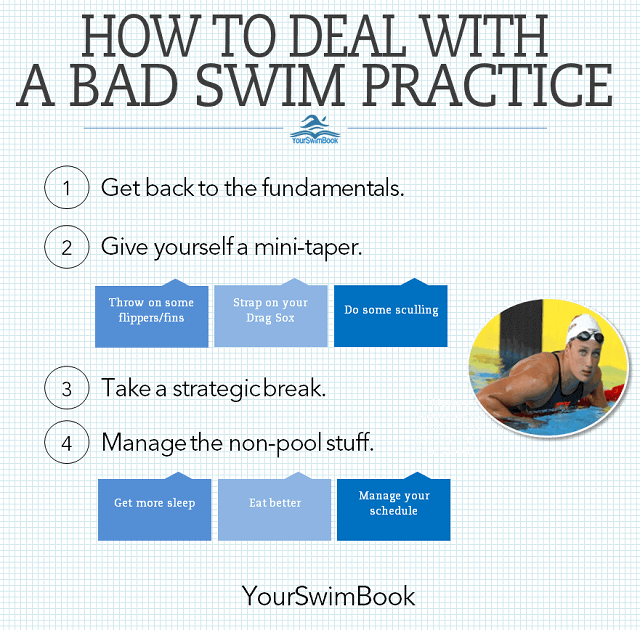 YourSwimBook is a log book and goal setting guide designed specifically for competitive swimmers. It includes a ten month log book, comprehensive goal setting section, monthly evaluations to be filled out with your coach, and more.
Learn 8 more reasons why this tool kicks butt now.
Join the YourSwimBook weekly newsletter and get motivational tips and more straight to your inbox. Sign up for free here.]]>YourSwimBook is a log book and goal setting guide designed specifically for competitive swimmers. It includes a ten month log book, comprehensive goal setting section, monthly evaluations to be filled out with your coach, and more.
Learn 8 more reasons why this tool kicks butt now.
Join the YourSwimBook weekly newsletter and get motivational tips and more straight to your inbox. Sign up for free here.]]>YourSwimBook is a log book and goal setting guide designed specifically for competitive swimmers. It includes a ten month log book, comprehensive goal setting section, monthly evaluations to be filled out with your coach, and more.
Learn 8 more reasons why this tool kicks butt now.
Join the YourSwimBook weekly newsletter and get motivational tips and more straight to your inbox. Sign up for free here.
]]>
YourSwimBook is a log book and goal setting guide designed specifically for competitive swimmers. It includes a ten month log book, comprehensive goal setting section, monthly evaluations to be filled out with your coach, and more.
Learn 8 more reasons why this tool kicks butt now.
Join the YourSwimBook weekly newsletter and get motivational tips and more straight to your inbox. Sign up for free here.]]>YourSwimBook is a log book and goal setting guide designed specifically for competitive swimmers. It includes a ten month log book, comprehensive goal setting section, monthly evaluations to be filled out with your coach, and more.
Learn 8 more reasons why this tool kicks butt now.
Join the YourSwimBook weekly newsletter and get motivational tips and more straight to your inbox. Sign up for free here.]]>YourSwimBook is a log book and goal setting guide designed specifically for competitive swimmers. It includes a ten month log book, comprehensive goal setting section, monthly evaluations to be filled out with your coach, and more.
Learn 8 more reasons why this tool kicks butt now.
Join the YourSwimBook weekly newsletter and get motivational tips and more straight to your inbox. Sign up for free here.
]]>SEE ALSO: How to Prevent Swimmer's Shoulder
At the end of the day, getting a handle on your injury is what is going to get you back to swimming at full capacity the quickest. The first step is to come to terms with the fact that you are banged up. Self-awareness is a very underrated and little-talked about skill among swimmers. With a little bit more self-awareness we would better perceive our limits, understand when to push our bodies and when not to, and even set much better and ultimately attainable goals. (Key distinction: not easier, but more likely to be attained. The difference is subtle but distinct.) When you come to terms with the injury and actually accept it—instead of beating yourself up as being weak, or inferior, or not good enough—you can begin the process of healing both physically and mentally. An athlete who tells themselves they are weak, or not good enough, or a “pussy” will try to push through injury, typically re-aggravating or further aggravating the problem.YourSwimBook is a log book and goal setting guide designed specifically for competitive swimmers. It includes a ten month log book, comprehensive goal setting section, monthly evaluations to be filled out with your coach, and more.
Learn 8 more reasons why this tool kicks butt now.
Join the YourSwimBook weekly newsletter and get motivational tips and more straight to your inbox. Sign up for free here.]]> Look:
Even though it looks exceedingly simple, properly setting goals is not easy.
While writing out a goal on a piece of paper and taping it to the fridge door takes but a moment, learning how you progress, what it takes to be successful, and figuring out how to manipulate your strengths and build on your weaknesses takes experience and patience.
Here are a few reasons why your expectations aren’t being met in the pool:
Look:
Even though it looks exceedingly simple, properly setting goals is not easy.
While writing out a goal on a piece of paper and taping it to the fridge door takes but a moment, learning how you progress, what it takes to be successful, and figuring out how to manipulate your strengths and build on your weaknesses takes experience and patience.
Here are a few reasons why your expectations aren’t being met in the pool:
But, but… I don’t have to work hard. I’m talented!So are a lot of other swimmers out there. A whole lot of other swimmers. And more importantly, they are talented and they are willing to work their butts off. Good luck competing with that. A little harsh? Maybe. But a funny thing happens when we stop believing that the sport owes us success… Or that our talent or genetic ability should magically deliver us results…. We learn to appreciate and be grateful for the things we have. We find greater value and satisfaction in the hard work the confidence it builds. And while the sport doesn’t owe us a thing, it has given us a lot of things. Getting to train with your teammates. An opportunity to test your limits in a safe and enjoyable environment. The physical benefits of being an athlete. Remember: The sport doesn’t owe you anything. But it will give you everything if you choose to appreciate it.
 YourSwimBook is a log book and goal setting guide designed specifically for competitive swimmers. It includes a ten month log book, comprehensive goal setting section, monthly evaluations to be filled out with your coach, and more.
Learn 8 more reasons why this tool kicks butt now.
Join the YourSwimBook weekly newsletter and get motivational tips and more straight to your inbox. Sign up for free here.]]>
YourSwimBook is a log book and goal setting guide designed specifically for competitive swimmers. It includes a ten month log book, comprehensive goal setting section, monthly evaluations to be filled out with your coach, and more.
Learn 8 more reasons why this tool kicks butt now.
Join the YourSwimBook weekly newsletter and get motivational tips and more straight to your inbox. Sign up for free here.]]> This is the point where a few classic mistakes are made:
But, but—I’m a sprinter! I don’t need no stinking aerobic work!Wrong. A strong aerobic system improves recovery between those tough sessions and during those tough sessions. Just how much of a role does aerobic work factor in your sprints? According to this research, your aerobic system is responsible for 13% of the energy in a 10-second sprint, and 27% in a 20-second sprint.
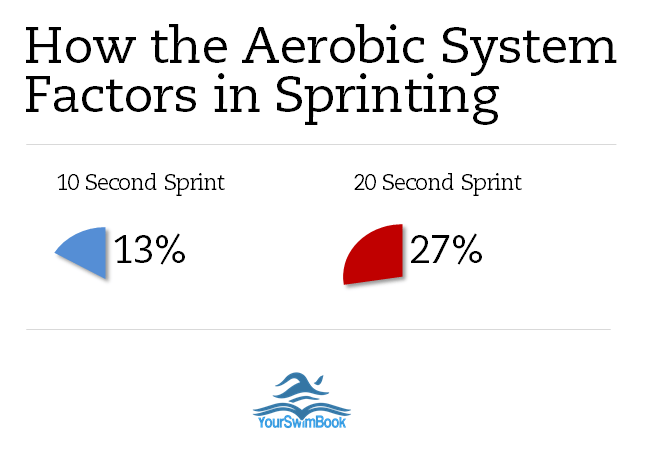 Regardless if you possess a 20-point 50m freestyle like world short course holder Florent Manaudou you still need aerobic work to punish the sprints.
YourSwimBook is a log book and goal setting guide designed specifically for competitive swimmers. It includes a ten month log book, comprehensive goal setting section, monthly evaluations to be filled out with your coach, and more.
Learn 8 more reasons why this tool kicks butt now.
Join the YourSwimBook weekly newsletter and get motivational tips and more straight to your inbox. Sign up for free here.]]>YourSwimBook is a log book and goal setting guide designed specifically for competitive swimmers. It includes a ten month log book, comprehensive goal setting section, monthly evaluations to be filled out with your coach, and more.
Learn 8 more reasons why this tool kicks butt now.
Join the YourSwimBook weekly newsletter and get motivational tips and more straight to your inbox. Sign up for free here.]]>
Regardless if you possess a 20-point 50m freestyle like world short course holder Florent Manaudou you still need aerobic work to punish the sprints.
YourSwimBook is a log book and goal setting guide designed specifically for competitive swimmers. It includes a ten month log book, comprehensive goal setting section, monthly evaluations to be filled out with your coach, and more.
Learn 8 more reasons why this tool kicks butt now.
Join the YourSwimBook weekly newsletter and get motivational tips and more straight to your inbox. Sign up for free here.]]>YourSwimBook is a log book and goal setting guide designed specifically for competitive swimmers. It includes a ten month log book, comprehensive goal setting section, monthly evaluations to be filled out with your coach, and more.
Learn 8 more reasons why this tool kicks butt now.
Join the YourSwimBook weekly newsletter and get motivational tips and more straight to your inbox. Sign up for free here.]]> YourSwimBook is a log book and goal setting guide designed specifically for competitive swimmers. It includes a ten month log book, comprehensive goal setting section, monthly evaluations to be filled out with your coach, and more.
Learn 8 more reasons why this tool kicks butt now.
Join the YourSwimBook weekly newsletter and get motivational tips and more straight to your inbox. Sign up for free here.]]>
YourSwimBook is a log book and goal setting guide designed specifically for competitive swimmers. It includes a ten month log book, comprehensive goal setting section, monthly evaluations to be filled out with your coach, and more.
Learn 8 more reasons why this tool kicks butt now.
Join the YourSwimBook weekly newsletter and get motivational tips and more straight to your inbox. Sign up for free here.]]>
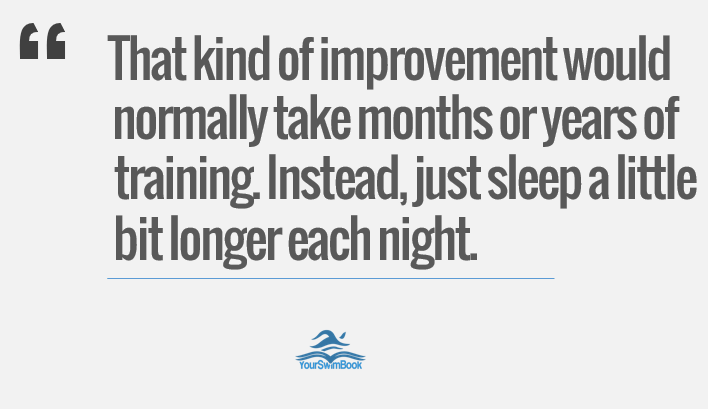 Do what you need to do to make your schedule receptive to getting more Z’s, and do it guilt-free, knowing that you are powering your performance in the water.
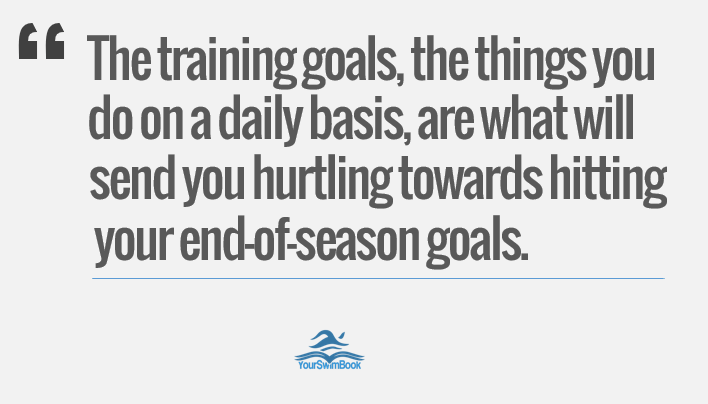 Things like:
YourSwimBook is a log book and goal setting guide designed specifically for competitive swimmers. It includes a ten month log book, comprehensive goal setting section, monthly evaluations to be filled out with your coach, and more.
Learn 8 more reasons why this tool kicks butt now.
Join the YourSwimBook weekly newsletter and get motivational tips and more straight to your inbox. Sign up for free here.]]>YourSwimBook is a log book and goal setting guide designed specifically for competitive swimmers. It includes a ten month log book, comprehensive goal setting section, monthly evaluations to be filled out with your coach, and more.
Learn 8 more reasons why this tool kicks butt now.
Join the YourSwimBook weekly newsletter and get motivational tips and more straight to your inbox. Sign up for free here.
]]>
Things like:
YourSwimBook is a log book and goal setting guide designed specifically for competitive swimmers. It includes a ten month log book, comprehensive goal setting section, monthly evaluations to be filled out with your coach, and more.
Learn 8 more reasons why this tool kicks butt now.
Join the YourSwimBook weekly newsletter and get motivational tips and more straight to your inbox. Sign up for free here.]]>YourSwimBook is a log book and goal setting guide designed specifically for competitive swimmers. It includes a ten month log book, comprehensive goal setting section, monthly evaluations to be filled out with your coach, and more.
Learn 8 more reasons why this tool kicks butt now.
Join the YourSwimBook weekly newsletter and get motivational tips and more straight to your inbox. Sign up for free here.
]]> For most coaches, early morning workouts are simply the way it has always been done. For others it’s the only time they can get good pool space. And for others, mornings are used strictly for skill development.
And while early mornings continue to be a staple of the swimmer’s training regimen, there are coaches out there who are doing away with them completely.
Here is a breakdown of the reasons for and against having early morning practices for swimmers:
For most coaches, early morning workouts are simply the way it has always been done. For others it’s the only time they can get good pool space. And for others, mornings are used strictly for skill development.
And while early mornings continue to be a staple of the swimmer’s training regimen, there are coaches out there who are doing away with them completely.
Here is a breakdown of the reasons for and against having early morning practices for swimmers:
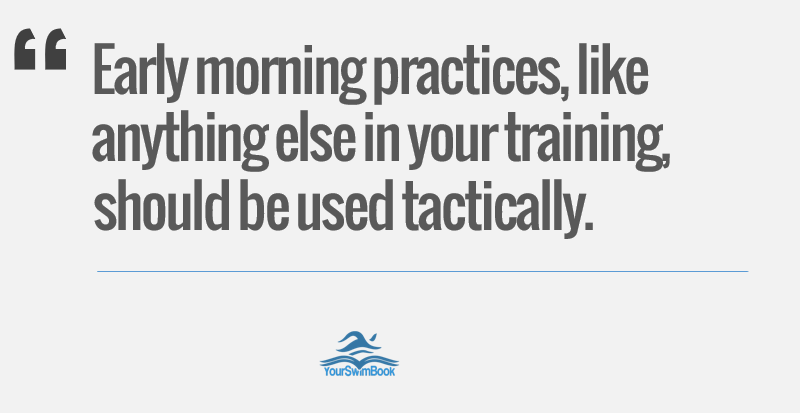
SEE ALSO: 15 Sleep Strategies for High Performance Athletes
YourSwimBook is a log book and goal setting guide designed specifically for competitive swimmers. It includes a ten month log book, comprehensive goal setting section, monthly evaluations to be filled out with your coach, and more.
Learn 8 more reasons why this tool kicks butt now.
Join the YourSwimBook weekly newsletter and get motivational tips and more straight to your inbox. Sign up for free here.]]> YourSwimBook is a log book and goal setting guide designed specifically for competitive swimmers. It includes a ten month log book, comprehensive goal setting section, monthly evaluations to be filled out with your coach, and more.
Learn 8 more reasons why this tool kicks butt now.
Join the YourSwimBook weekly newsletter and get motivational tips and more straight to your inbox. Sign up for free here.]]>
YourSwimBook is a log book and goal setting guide designed specifically for competitive swimmers. It includes a ten month log book, comprehensive goal setting section, monthly evaluations to be filled out with your coach, and more.
Learn 8 more reasons why this tool kicks butt now.
Join the YourSwimBook weekly newsletter and get motivational tips and more straight to your inbox. Sign up for free here.]]>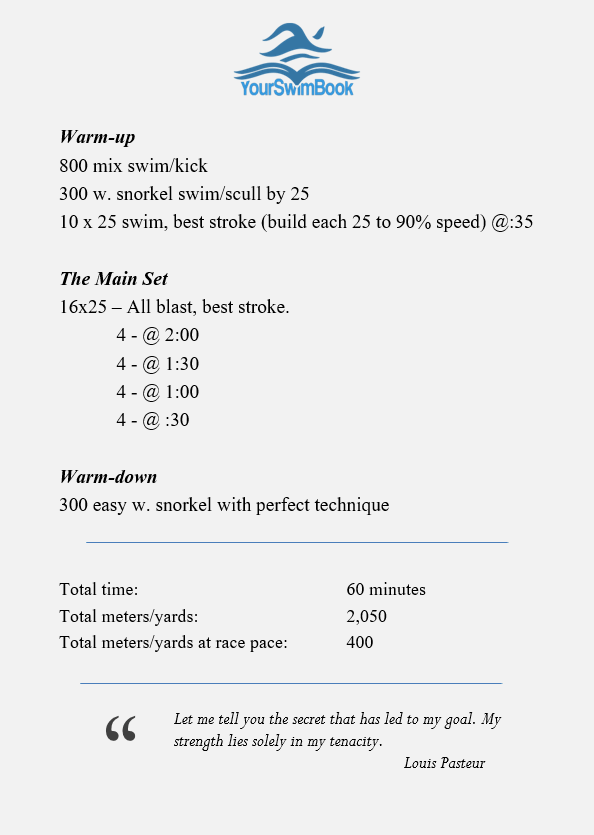
The Other Auburn Sprint Set (Or How I Spent 2 Hours Driving the Local Lap Swimmers Nuts). If you like tough sprint sets, this is your Mt. Everest. 2,500 yards or meters of all out swimming that will take you about 2.5 hours to complete. Not for amateurs or the feint of heart. Have a lot of food and downtime on standby for afterward.
10 Minutes a Day to a Faster Underwater Dolphin Kick. Probably the simplest and quickest set for improving your underwater dolphin kick, a.k.a. the Fifth Stroke, a.k.a. the Phelpsonian Torpedo Kick, a.k.a. up to 60% of your short course races are underwater so it’s important to work ‘em.
Supercharge Your Kick- 4 Sets for Kicking Power and Speed. Coach Baker submitted this collection of sets as well. The sets are designed for big time power in the water, and includes results of one of his charges, Canadian National Team member Evan White.
YourSwimBook is a log book and goal setting guide designed specifically for competitive swimmers. It includes a ten month log book, comprehensive goal setting section, monthly evaluations to be filled out with your coach, and more.
Learn 8 more reasons why this tool kicks butt now.
Join the YourSwimBook weekly newsletter and get motivational tips and more straight to your inbox. Sign up for free here.]]>Here’s a thought for ya…
Whether to yourself or to someone else, how many times have you said, “I have to go to practice”? A lot, I bet... But why do you have to make it to practice? Because coach will be mad if you don’t? Or because you have work to do on your goals, things you desperately want to accomplish? Does the “have to” come from ambition, or does it come from obedience? If going to practice feels like a chore, if it feels more like work than an opportunity for greatness, than you are showing up to practice for the wrong reasons. You show up to your workouts because coach expects it. Your parents expect it. You show up to practice because you’ll get in trouble if you don’t. Not because you expect it. Not because you are invested in your training. And not because there are things you want to achieve in the pool.
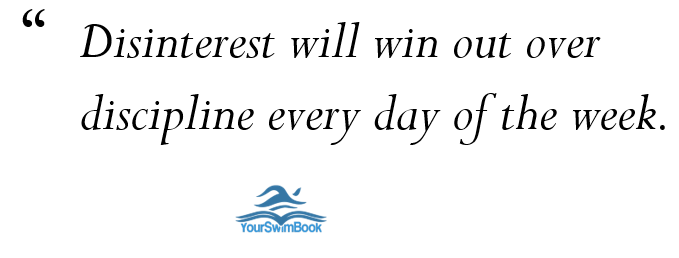 Get serious about what you want to achieve in the water..
Put some thought into what you want to do at the pool.
What do you want to achieve?
What kind of amazingness is chilling dormant within you, just waiting to be ignited?
Will you “have to” be great in the water today?
The featured image for this post was shot by Neil Hodge, a talented photographer based out of Victoria, BC. You can check out his work by visiting his Facebook page by clicking here.
YourSwimBook is a log book and goal setting guide designed specifically for competitive swimmers. It includes a ten month log book, comprehensive goal setting section, monthly evaluations to be filled out with your coach, and more.
Learn 8 more reasons why this tool kicks butt now.
Join the YourSwimBook weekly newsletter and get motivational tips and more straight to your inbox. Sign up for free here.]]>
Get serious about what you want to achieve in the water..
Put some thought into what you want to do at the pool.
What do you want to achieve?
What kind of amazingness is chilling dormant within you, just waiting to be ignited?
Will you “have to” be great in the water today?
The featured image for this post was shot by Neil Hodge, a talented photographer based out of Victoria, BC. You can check out his work by visiting his Facebook page by clicking here.
YourSwimBook is a log book and goal setting guide designed specifically for competitive swimmers. It includes a ten month log book, comprehensive goal setting section, monthly evaluations to be filled out with your coach, and more.
Learn 8 more reasons why this tool kicks butt now.
Join the YourSwimBook weekly newsletter and get motivational tips and more straight to your inbox. Sign up for free here.]]>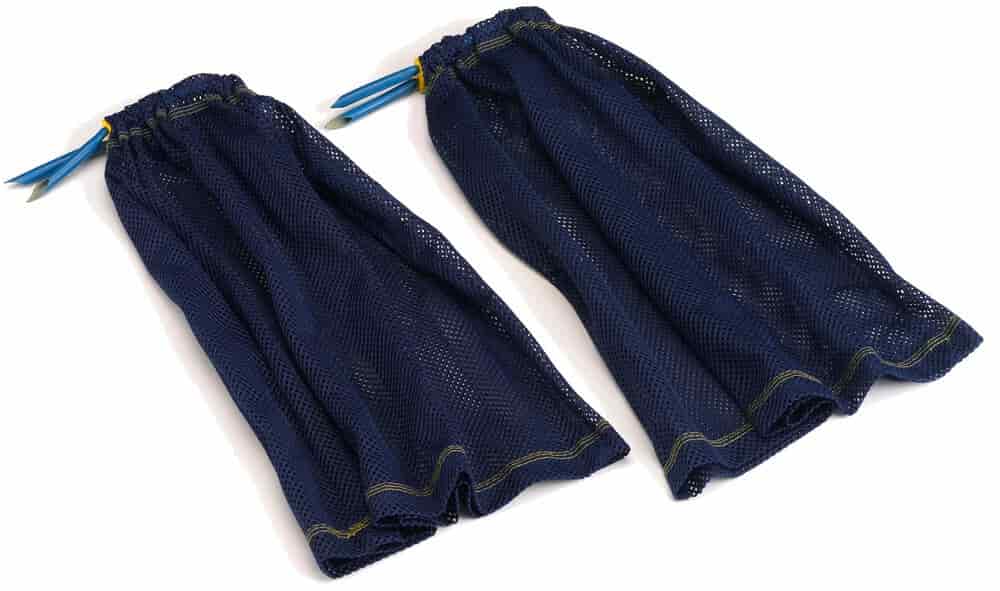 And why would you want to do that?
For a few different reasons my chlorinated homeslice:
And why would you want to do that?
For a few different reasons my chlorinated homeslice:
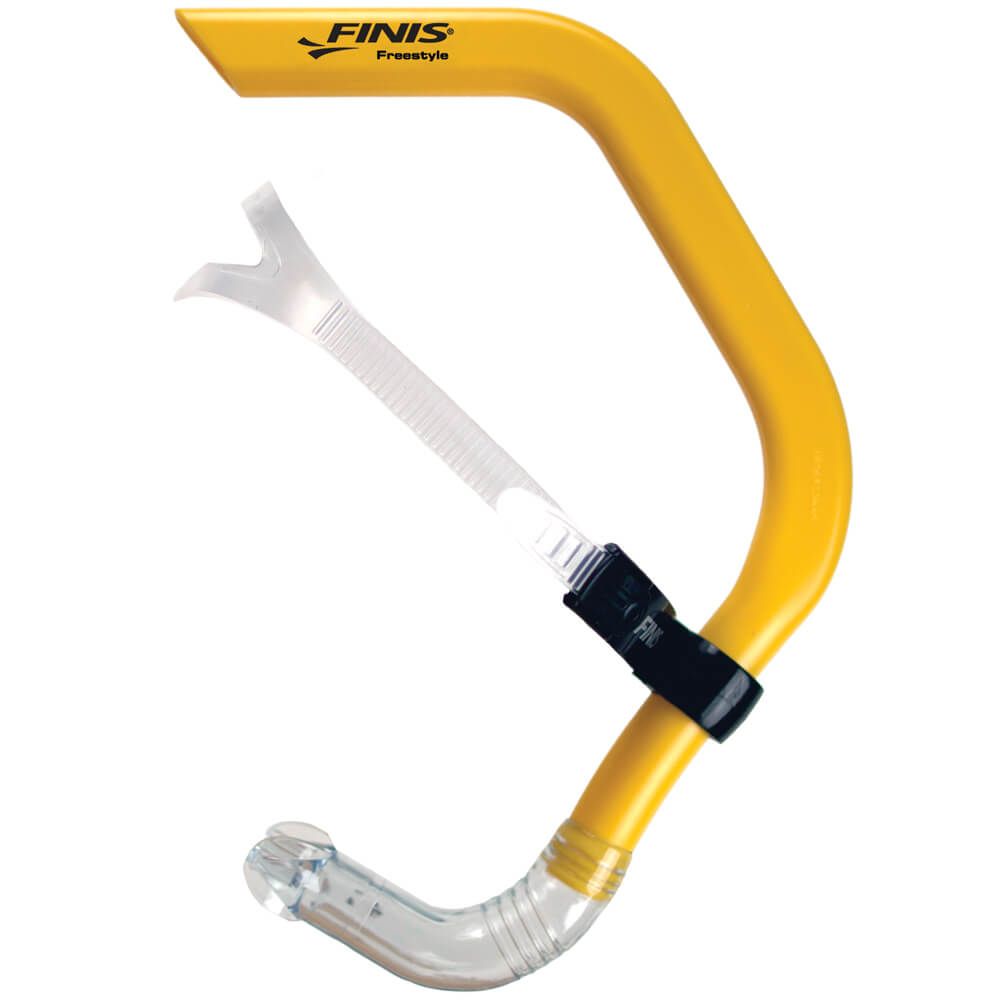
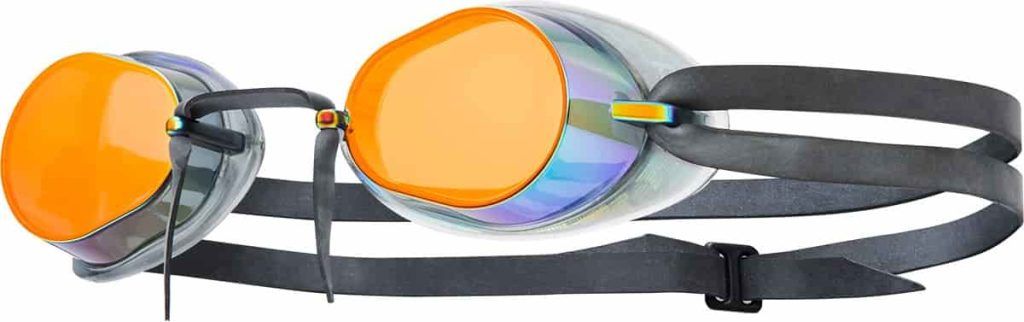 Besides the fact that the name rhymes, the mirrored goggles look certified gangster, and provide a surprisingly clear view from the inside out, something that is key given that I swim at the local Y where the lighting leaves something to be desired.
The goggles come ready to wear right out of the package and they are coated with an anti-leak “Thermo Plastic Rubber” that is surprisingly comfortable, especially during those long workouts when you don’t have a chance to peel your goggles off your face too often.
The indented-goggles-in-the-face look isn’t a particularly appealing one, even for the most ardent of swimmer.
Oh, and they are only about $20.
Pick yourself up a pair over at the TYR website.
Besides the fact that the name rhymes, the mirrored goggles look certified gangster, and provide a surprisingly clear view from the inside out, something that is key given that I swim at the local Y where the lighting leaves something to be desired.
The goggles come ready to wear right out of the package and they are coated with an anti-leak “Thermo Plastic Rubber” that is surprisingly comfortable, especially during those long workouts when you don’t have a chance to peel your goggles off your face too often.
The indented-goggles-in-the-face look isn’t a particularly appealing one, even for the most ardent of swimmer.
Oh, and they are only about $20.
Pick yourself up a pair over at the TYR website.
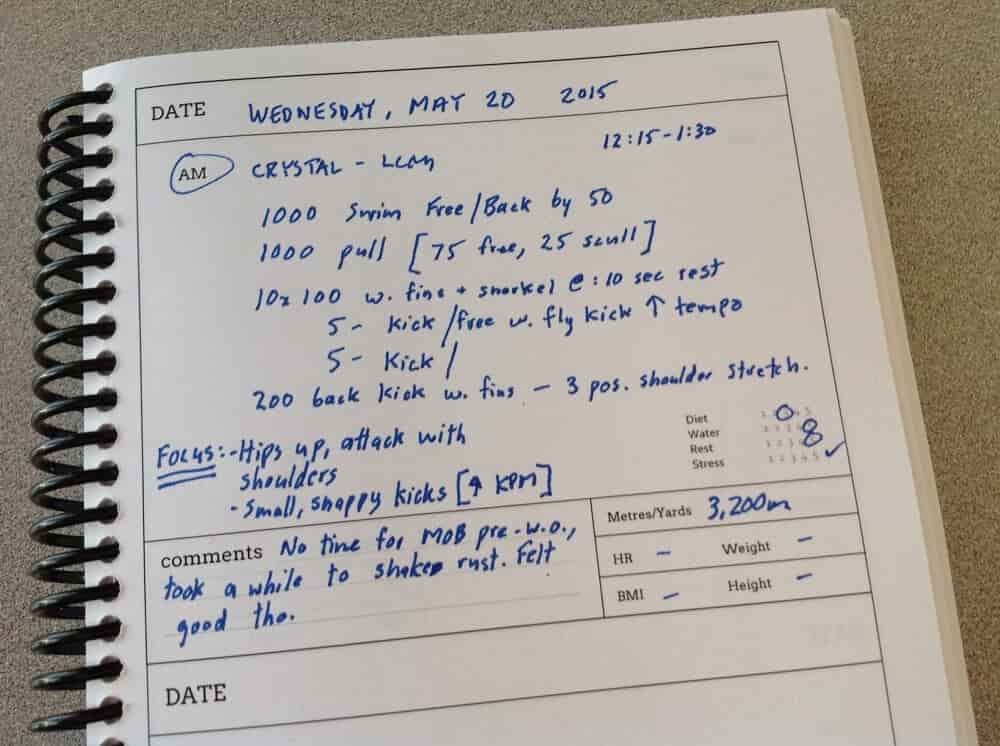 The benefits are pretty simple:
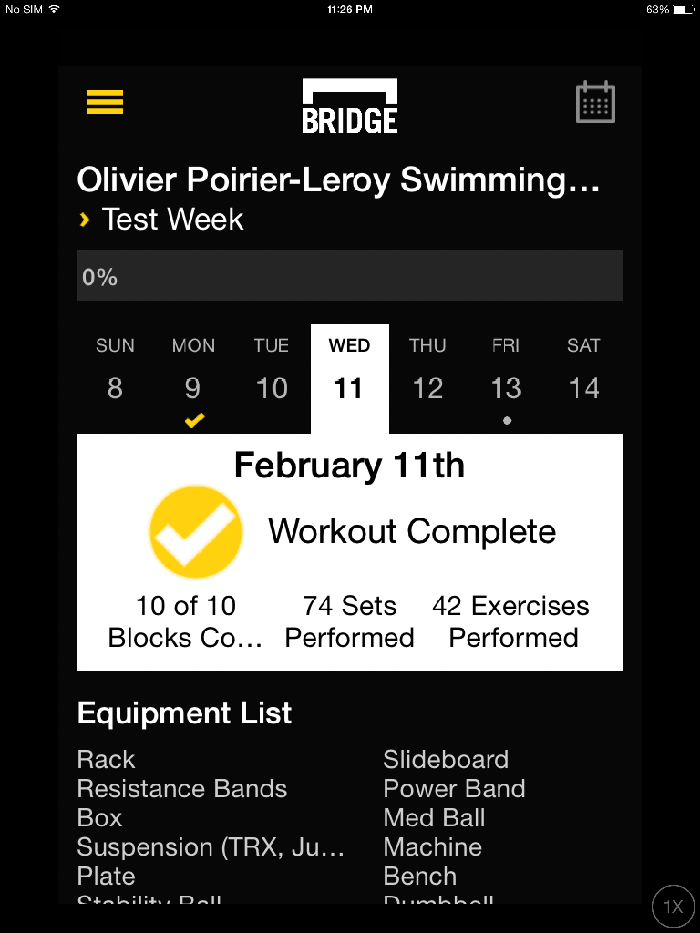 Here is essentially how it works:
 The posters retail for $29 a piece, or you can buy all 5 of them and save yourself 20% (as well as the cumulative cost of shipping for each poster).
See them all in our online shop by clicking here.
YourSwimBook is a log book and goal setting guide designed specifically for competitive swimmers. It includes a ten month log book, comprehensive goal setting section, monthly evaluations to be filled out with your coach, and more.
Learn 8 more reasons why this tool kicks butt now.
Join the YourSwimBook weekly newsletter and get motivational tips and more straight to your inbox. Sign up for free here.]]>
The posters retail for $29 a piece, or you can buy all 5 of them and save yourself 20% (as well as the cumulative cost of shipping for each poster).
See them all in our online shop by clicking here.
YourSwimBook is a log book and goal setting guide designed specifically for competitive swimmers. It includes a ten month log book, comprehensive goal setting section, monthly evaluations to be filled out with your coach, and more.
Learn 8 more reasons why this tool kicks butt now.
Join the YourSwimBook weekly newsletter and get motivational tips and more straight to your inbox. Sign up for free here.]]>
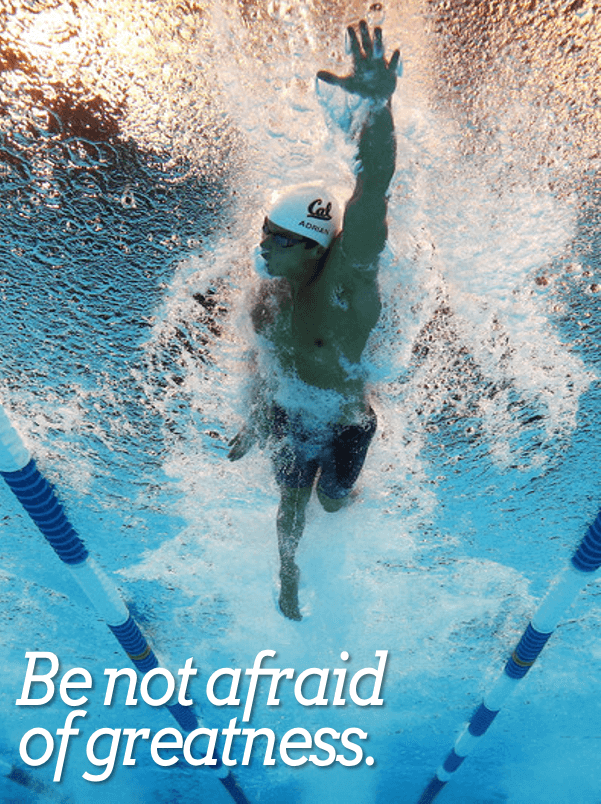


]]> If you are slagging through the motions, swimming along with little regard to focus, solely counting down the laps, it’s a safe assumption that this lack of focus and apathy will extend towards the bread and butter sets later in the workout.
Additionally, if the goal of warming up is to, indeed, warm up, then isn’t it worth asking what good comes from performing a bunch of empty-headed meters at a slow pace in cold water?
Instead of mindlessly warming up, do it with focus today.
After all, focused warm-ups:
If you are slagging through the motions, swimming along with little regard to focus, solely counting down the laps, it’s a safe assumption that this lack of focus and apathy will extend towards the bread and butter sets later in the workout.
Additionally, if the goal of warming up is to, indeed, warm up, then isn’t it worth asking what good comes from performing a bunch of empty-headed meters at a slow pace in cold water?
Instead of mindlessly warming up, do it with focus today.
After all, focused warm-ups:
SEE ALSO: The Swimming Warm-Down: Why It Matters and How Much You Need to Do
With intent. If you’ve ever gone to your local neighborhood gym you know the unfocused type. They walk in, meander from machine to machine, and between gazing at their smartphone will do a few sets and reps here and there, never really giving a complete effort until they decide they’ve had enough and briskly walk out, seemingly satisfied with wasting an hour at the gym performing yet another lackluster workout. In the pool this swimmer hangs out in the corner of the lane, is usually the last to get in, and tends to give uneven, sporadic effort in the water.
If you feel that you aren’t overly focused when you step onto the pool deck, spend a few minutes reviewing your goals.
Why are you at the pool today? What do you want to accomplish with your time in the water?
This focus and intensity shouldn’t just be limited to the main set, but should bleed into the whole practice session.
Not only will you have more consistent, more effective practices from beginning to end, but being on point and having your goals in the back of your mind will help push you through those moments where you are tired, you are sore, and the last thing you want to do is swim another lap.
Get your mind right from the moment you step out on deck, and performing at a high level will become habitual each time you strap on the suit.
In the pool this swimmer hangs out in the corner of the lane, is usually the last to get in, and tends to give uneven, sporadic effort in the water.
If you feel that you aren’t overly focused when you step onto the pool deck, spend a few minutes reviewing your goals.
Why are you at the pool today? What do you want to accomplish with your time in the water?
This focus and intensity shouldn’t just be limited to the main set, but should bleed into the whole practice session.
Not only will you have more consistent, more effective practices from beginning to end, but being on point and having your goals in the back of your mind will help push you through those moments where you are tired, you are sore, and the last thing you want to do is swim another lap.
Get your mind right from the moment you step out on deck, and performing at a high level will become habitual each time you strap on the suit.
 You don’t need to upend the way you train overnight—this type of wholesale change rarely sticks. Instead, make the adjustment so small, so inconceivably easy that it’s impossible not to do.
Sure, it might not look like much in the short term, but over the course of the season it will add up in a very powerful manner.
You don’t need to upend the way you train overnight—this type of wholesale change rarely sticks. Instead, make the adjustment so small, so inconceivably easy that it’s impossible not to do.
Sure, it might not look like much in the short term, but over the course of the season it will add up in a very powerful manner.
SEE ALSO: Swimming Tips: The 7 Fundamentals of Fast Swimming
YourSwimBook is a log book and goal setting guide designed specifically for competitive swimmers. It includes a ten month log book, comprehensive goal setting section, monthly evaluations to be filled out with your coach, and more.
Learn 8 more reasons why this tool kicks butt now.
Join the YourSwimBook weekly newsletter and get motivational tips and more straight to your inbox. Sign up for free here.]]>YourSwimBook is a log book and goal setting guide designed specifically for competitive swimmers. It includes a ten month log book, comprehensive goal setting section, monthly evaluations to be filled out with your coach, and more.
Learn 8 more reasons why this tool kicks butt now.
Join the YourSwimBook weekly newsletter and get motivational tips and more straight to your inbox. Sign up for free here.]]>Should I reward myself for a great practice with five episodes of my favorite show? Should I write out my goals with a sparkle pen and plaster that bad boy on the fridge, above my bed, and as the background on my phone?And while these external rewards and motivators are good, and can act as a band-aid in case of a motivational emergency, there is a better, simpler and less sparkled way to get and stay motivated in the pool. It doesn’t come from trophies, gold medals, or giving yourself a cupcake for having a solid session in the pool. It comes from progress. It comes from seeing with irrefutable certainty that the work you are putting into the pool is paying dividends. From elevating your game, inch by inch, stroke by stroke, lap by lap.
YourSwimBook is a log book and goal setting guide designed specifically for competitive swimmers.
It includes a ten month log book, comprehensive goal setting section, monthly evaluations to be filled out with your coach, and more.
Learn 8 more reasons why this tool kicks butt now.
Join the YourSwimBook weekly newsletter and get motivational tips and more straight to your inbox. Sign up for free here.
]]>
Now that's moving!!#sacnation pic.twitter.com/hE0anqHixe
— Scottsdale Swim (@ScottsdaleSwim) October 7, 2015
How to Develop an Awesome Underwater Dolphin Kick. Our flagship 3,000+ word guide on how to improve your underwater fly kick. Includes tips from Olympic gold medalists, high performance coaches, and even a space scientist. (Seriously.)
10 Minutes a Day to a Faster Underwater Dolphin Kick. A quick and dirty set that will power you to faster underwaters. Simple, powerful and only about ten minutes a day. Boom.
5 Reasons You Should Be Working Your Underwater Fly Kick. Still not sold on the benefits of doing more kick? Here is why you should be hammering your legs regularly.
YourSwimBook is a log book and goal setting guide designed specifically for competitive swimmers. It includes a ten month log book, comprehensive goal setting section, monthly evaluations to be filled out with your coach, and more.
Learn 8 more reasons why this tool kicks butt now.
Join the YourSwimBook weekly newsletter and get motivational tips and more straight to your inbox. Sign up for free here.]]>* * *
Swimming fast requires some tough questions, and some tough answers. Do I have what it takes to excel at the highest levels? Do I have the commitment within me to make the necessary sacrifices to be successful? Am I willing to put myself out there in the name of my goals? Will this be the year that I finally commit to emptying out my swim bag after practice so I can experience having a dry towel the following morning? While I don’t have any answers for those particular questions, I put together a little guide that outlines some things to think about when you are having a rugged time in the pool. Think of this guide as a little compass, chock-full of swimming tips designed to keep you on track when you have had an epically bad day in the water (and out of it too). Coach keeps handing out 1k’s for time like Halloween candy? Read this. Added 5 seconds to your best time at the biggest meet of the year? Read this. Fed up with the antics of the swimmer behind you, endlessly grabbing onto your toes? Read this. Freaked out that you aren’t progressing fast enough? Read this. Getting piled on by fellow swimmers who ridicule you for having big goals? Definitely read this. Annnnd here we go: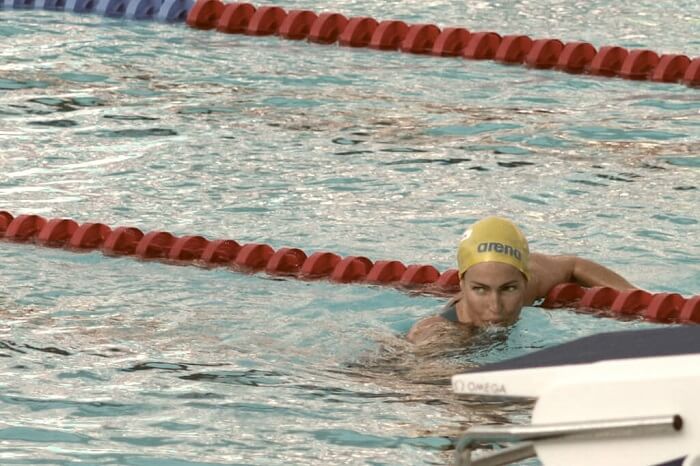
 Don’t mistake loud, aggressive behavior for confidence. Often times this type of bravado masks a very deep insecurity. Show me the swimmer quietly staring blankly down the lane, unshakeably focused and I will show you someone who is about to swim out of their mind.
Confidence shows its true colors through action. Talking about how fast a swimmer you have the potential to be isn’t confidence. It’s hot air. It’s an illusion.
You can be the quietest introvert on the team, but if you are showing up every day and giving your best effort, you will develop true confidence. The type that cannot be faked with some chest-puffing and bluster.
Don’t mistake loud, aggressive behavior for confidence. Often times this type of bravado masks a very deep insecurity. Show me the swimmer quietly staring blankly down the lane, unshakeably focused and I will show you someone who is about to swim out of their mind.
Confidence shows its true colors through action. Talking about how fast a swimmer you have the potential to be isn’t confidence. It’s hot air. It’s an illusion.
You can be the quietest introvert on the team, but if you are showing up every day and giving your best effort, you will develop true confidence. The type that cannot be faked with some chest-puffing and bluster.
 Small scale sacrifices are especially tough because they seem so small (don’t be fooled, they add up big time over the course of a full season), and because the windfall from doing something better (showing up and working hard at practice) doesn’t always manifest itself until much later (the big meet).
* * *
With anything, you can read the above post a hundred times, print it out and tape it to the fridge so you see it each day, but if you don’t focus on applying them to your life it’s just wasted time reading another listicle on the internet. Although success in the pool and in life is never easy, it can be fairly simple when we decide to make it so. Focus on the things that matter. Build a routine. Sacrifice short term gratification for long term glory. Grow confidence by acting. Be courageous enough to face the possibility of failure. And go forth, step poolside and be excellent.YourSwimBook is a log book and goal setting guide designed specifically for competitive swimmers. It includes a ten month log book, comprehensive goal setting section, monthly evaluations to be filled out with your coach, and more.
Learn 8 more reasons why this tool kicks butt now.
Join the YourSwimBook weekly newsletter and get motivational tips and more straight to your inbox. Sign up for free here.]]>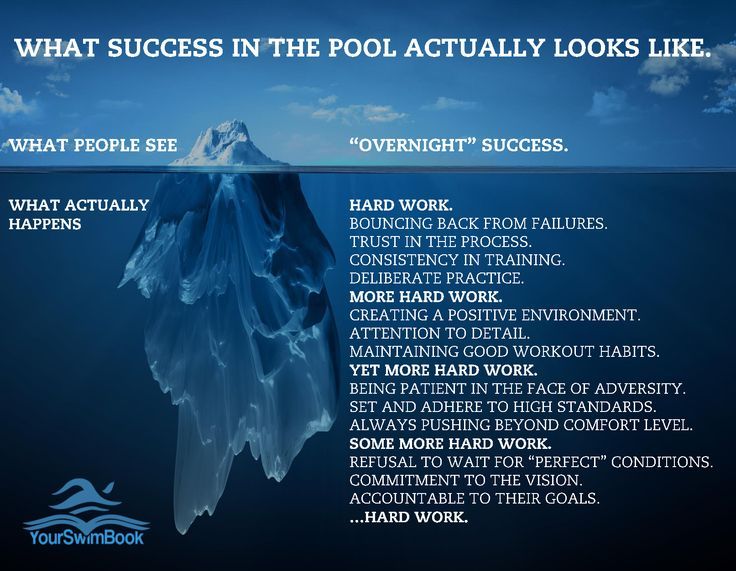 By now you are doing a fair amount of dryland work to compliment the nearly endless number of laps you are doing between the lanes. The best times don’t come so easily at this point.
Where before you were dropping seconds at a time, now the window of improvement has narrowed to sometimes just tenths or hundredths of a second, and yet, the amount of work that goes into it continues to escalate. More work for smaller returns.
You miss out on more than a few social outings, particularly on the weekends, in order to make sure you are properly rested and ready to rock come Saturday morning.
Work hard.
You qualify for your first senior nationals, and compete on the highest stage the sport has to offer in your country. You race against national record holders, Olympians, and world champions. Seeing how they prepare and approach training and racing inspires you to take your training to the next level.
You choose your post-secondary institution based on both the academic and training opportunities. Leaving the confines of your age group team you swim with a full squad of athletes your age who share a common goal.
Work hard.
When you go to your first Olympic Trials you are nervous, but excited. A lot of work has gone into your swimming so far. You come up short in making the team in your best event by just a couple tenths of a second.
Discouraged, you return home debating leaving the sport entirely, whether you can handle another four years of training, sacrifice. After a week away from the water you realize how much you miss it, and how much you would regret not giving it everything you had.
And so you commit to another four years. Sustain numerous shoulder injuries, sprained fingers, and more muscle soreness than you can begin to remember. In your quest to not only make the team next time, but to win gold, you leave no stone unturned. You break down your race and swimming looking for millimeters of improvement.
Start, turns, technique—nothing is left to chance. You take a year off from school and work to completely and utterly focus on your training.
Work hard.
In the weeks prior to Trials you post times in practice that are nearly super-human. At Trials you outpace the competition to qualify for the team.
On the biggest stage you stand up on the blocks, look down the lane, confidant that you have done the work, made the necessary sacrifices, and are ready to unleash the fastest swimming of your life.
As you dive into the water on your way to Olympic gold, on your way to achieve your “overnight” success, you can inwardly smile knowing that you did everything you could to make this moment happen.
So there it is, a super simple and straightforward 3-step plan to becoming an Olympic champion!
YourSwimBook is a log book and goal setting guide designed specifically for competitive swimmers. It includes a ten month log book, comprehensive goal setting section, monthly evaluations to be filled out with your coach, and more.
Learn 8 more reasons why this tool kicks butt now.
Join the YourSwimBook weekly newsletter and get motivational tips and more straight to your inbox. Sign up for free here.]]>YourSwimBook is a log book and goal setting guide designed specifically for competitive swimmers. It includes a ten month log book, comprehensive goal setting section, monthly evaluations to be filled out with your coach, and more.
Learn 8 more reasons why this tool kicks butt now.
Join the YourSwimBook weekly newsletter and get motivational tips and more straight to your inbox. Sign up for free here.]]>YourSwimBook is a log book and goal setting guide designed specifically for competitive swimmers. It includes a ten month log book, comprehensive goal setting section, monthly evaluations to be filled out with your coach, and more.
Learn 8 more reasons why this tool kicks butt now.
Join the YourSwimBook weekly newsletter and get motivational tips and more straight to your inbox. Sign up for free here.]]>
By now you are doing a fair amount of dryland work to compliment the nearly endless number of laps you are doing between the lanes. The best times don’t come so easily at this point.
Where before you were dropping seconds at a time, now the window of improvement has narrowed to sometimes just tenths or hundredths of a second, and yet, the amount of work that goes into it continues to escalate. More work for smaller returns.
You miss out on more than a few social outings, particularly on the weekends, in order to make sure you are properly rested and ready to rock come Saturday morning.
Work hard.
You qualify for your first senior nationals, and compete on the highest stage the sport has to offer in your country. You race against national record holders, Olympians, and world champions. Seeing how they prepare and approach training and racing inspires you to take your training to the next level.
You choose your post-secondary institution based on both the academic and training opportunities. Leaving the confines of your age group team you swim with a full squad of athletes your age who share a common goal.
Work hard.
When you go to your first Olympic Trials you are nervous, but excited. A lot of work has gone into your swimming so far. You come up short in making the team in your best event by just a couple tenths of a second.
Discouraged, you return home debating leaving the sport entirely, whether you can handle another four years of training, sacrifice. After a week away from the water you realize how much you miss it, and how much you would regret not giving it everything you had.
And so you commit to another four years. Sustain numerous shoulder injuries, sprained fingers, and more muscle soreness than you can begin to remember. In your quest to not only make the team next time, but to win gold, you leave no stone unturned. You break down your race and swimming looking for millimeters of improvement.
Start, turns, technique—nothing is left to chance. You take a year off from school and work to completely and utterly focus on your training.
Work hard.
In the weeks prior to Trials you post times in practice that are nearly super-human. At Trials you outpace the competition to qualify for the team.
On the biggest stage you stand up on the blocks, look down the lane, confidant that you have done the work, made the necessary sacrifices, and are ready to unleash the fastest swimming of your life.
As you dive into the water on your way to Olympic gold, on your way to achieve your “overnight” success, you can inwardly smile knowing that you did everything you could to make this moment happen.
So there it is, a super simple and straightforward 3-step plan to becoming an Olympic champion!
YourSwimBook is a log book and goal setting guide designed specifically for competitive swimmers. It includes a ten month log book, comprehensive goal setting section, monthly evaluations to be filled out with your coach, and more.
Learn 8 more reasons why this tool kicks butt now.
Join the YourSwimBook weekly newsletter and get motivational tips and more straight to your inbox. Sign up for free here.]]>YourSwimBook is a log book and goal setting guide designed specifically for competitive swimmers. It includes a ten month log book, comprehensive goal setting section, monthly evaluations to be filled out with your coach, and more.
Learn 8 more reasons why this tool kicks butt now.
Join the YourSwimBook weekly newsletter and get motivational tips and more straight to your inbox. Sign up for free here.]]>YourSwimBook is a log book and goal setting guide designed specifically for competitive swimmers. It includes a ten month log book, comprehensive goal setting section, monthly evaluations to be filled out with your coach, and more.
Learn 8 more reasons why this tool kicks butt now.
Join the YourSwimBook weekly newsletter and get motivational tips and more straight to your inbox. Sign up for free here.]]> YourSwimBook is a log book and goal setting guide designed specifically for competitive swimmers. It includes a ten month log book, comprehensive goal setting section, monthly evaluations to be filled out with your coach, and more.
Learn 8 more reasons why this tool kicks butt now.
Join the YourSwimBook weekly newsletter and get motivational tips and more straight to your inbox. Sign up for free here.]]>
YourSwimBook is a log book and goal setting guide designed specifically for competitive swimmers. It includes a ten month log book, comprehensive goal setting section, monthly evaluations to be filled out with your coach, and more.
Learn 8 more reasons why this tool kicks butt now.
Join the YourSwimBook weekly newsletter and get motivational tips and more straight to your inbox. Sign up for free here.]]>“It is amazing how much can be accomplished if no one cares who gets the credit.”Although swimming is largely competed at an individual level, we train within a collective. When we are supportive and encouraging of the goals of the athletes we train with we help to foster a culture of excellence. One swimmer trying to accomplish great things is powerful. But the wake that is created by a group of athletes all chasing a common goal is nearly unstoppable.
“Don’t let what you don’t have interfere with what you can do.”There will always be someone who has a better set-up than you. A better coach. Nicer facility. Better access to services. And there will always be someone who has it far worse than you. A bad coach. A 15-yard pool. No access. Don’t allow your current circumstances be the defining thing of whether or not you take action today. Don't allow your environment to be the decider when it comes to developing killer training habits in the pool, or having a positive attitude. Make the most of what you have, for it is usually more than enough.
“Seek opportunities to show you care. The smallest gestures often make the biggest difference.”There are many memories that I carry from my age group swimming days. The most potent ones? Where an older swimmer reached out to help me with a technique correction. Or when the swimmer I looked up to most on the team was leading the cheers for my race. These things matter, and they create more impact than you can imagine. Spend time working with the youngsters on your team. Share your knowledge and experience of the sport. You might not think it’s a big deal, but to the kiddos it’s a huge deal.
“If you don’t have time to do it right, when will you have the time to do it over?”It’s tempting to think that we will figure it all out on race day. But the way we swim in competition is a direct reflection of how we train every single day in practice. The way we finish at the end of a close race is how we finished those hundreds of times in practice. The breathing pattern you hold during your repeated sprint efforts in practice is the breathing pattern you are going to hold during the big 50 final at state. And so on. Practice with intention. Practice with focus. Practice “right.”
“Players with fight never lose a game, they just run out of time.”Is there anything more disheartening than watching a swimmer give up in a race? Their shoulders sag, they roll from side to side from breaths, hand entry goes from precision strike to a hand slapping the water. Whether they give up on the final lap of a race, or the final rep of a tough set (or earlier), Giving up is a habit, and not a good one.
“If we magnified blessing as much as we magnify disappointments, we’d be much happier.”Our brains are hardwired to focus on the negative. It’s a survival instinct—“Hey look at that sabre toothed tiger hanging out in the bushes over there!”—that has served us well. But the modern man or woman continues to experience the pull of fear even though there isn’t a 500-pound jungle cat hiding around the corner. Which means that we have to go out of our way to be grateful for the things that we have. Keeping a nightly gratitude list has been shown to help you feel more positive and optimistic, and can also help you fall asleep better at night. There is lots to be positive and optimistic about. It's simply up to you to seek it out.
YourSwimBook is a log book and goal setting guide designed specifically for competitive swimmers. It includes a ten month log book, comprehensive goal setting section, monthly evaluations to be filled out with your coach, and more.
Learn 8 more reasons why this tool kicks butt now.
Join the YourSwimBook weekly newsletter and get motivational tips and more straight to your inbox. Sign up for free here.]]>YourSwimBook is a log book and goal setting guide designed specifically for competitive swimmers. It includes a ten month log book, comprehensive goal setting section, monthly evaluations to be filled out with your coach, and more.
Learn 8 more reasons why this tool kicks butt now.
Join the YourSwimBook weekly newsletter and get motivational tips and more straight to your inbox. Sign up for free here.]]> Arms, ankles, and capped-heads bubbling in the water. Line-ups around the corner to use the blocks. Bodies littered across the walls, lane ropes and everywhere in between.
Whoever said swimming wasn’t a contact sport never tried splitting a 25-yard lane with 35 other swimmers all doing completely different strokes at wildly different speeds.
So some swimmers retreat to the hot tub. Or to do arm swings in the showers. Or hop into the kiddie pool and do a couple minutes of doggie paddle and wall kick.
Arms, ankles, and capped-heads bubbling in the water. Line-ups around the corner to use the blocks. Bodies littered across the walls, lane ropes and everywhere in between.
Whoever said swimming wasn’t a contact sport never tried splitting a 25-yard lane with 35 other swimmers all doing completely different strokes at wildly different speeds.
So some swimmers retreat to the hot tub. Or to do arm swings in the showers. Or hop into the kiddie pool and do a couple minutes of doggie paddle and wall kick.
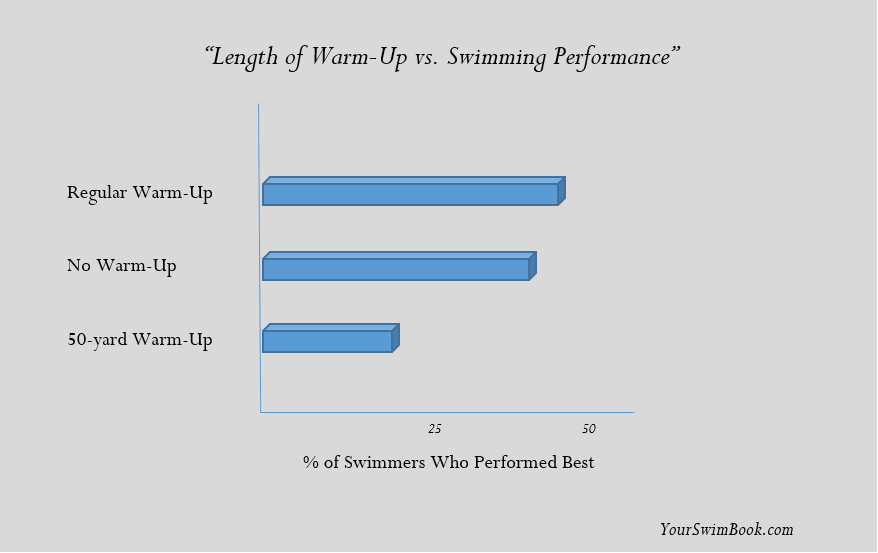 So the takeaway? That you can still bang out a good swim even if you aren’t able to get any warm-up done in the pool.
Further, there was no real difference in reaction time, distance off the blocks, stroke count or perceived rate of exertion among the three types of warm-up.
Does this mean you should dive in with completely cold muscles and perform full blast efforts?
Absolutely not.
One summer, under the thinking that I needed to be able to swim fast no matter what the circumstances, I did a couple arm swings, dove in and blasted out a 50 freestyle, promptly tearing an intercostal muscle in my rib cage.
Any kind of sneezing, coughing and laughing promptly became my proverbial nightmare.
You wouldn’t stomp the gar on your car after it had been sitting in the cold all weekend, so don’t do the same thing with your body.
Loosen and warm yourself up in some form or shape, regardless of how much or how little pool space you have on your hands.
So the takeaway? That you can still bang out a good swim even if you aren’t able to get any warm-up done in the pool.
Further, there was no real difference in reaction time, distance off the blocks, stroke count or perceived rate of exertion among the three types of warm-up.
Does this mean you should dive in with completely cold muscles and perform full blast efforts?
Absolutely not.
One summer, under the thinking that I needed to be able to swim fast no matter what the circumstances, I did a couple arm swings, dove in and blasted out a 50 freestyle, promptly tearing an intercostal muscle in my rib cage.
Any kind of sneezing, coughing and laughing promptly became my proverbial nightmare.
You wouldn’t stomp the gar on your car after it had been sitting in the cold all weekend, so don’t do the same thing with your body.
Loosen and warm yourself up in some form or shape, regardless of how much or how little pool space you have on your hands.
SEE ALSO: How to Warm Up for Fast Swimming in Practice
YourSwimBook is a log book and goal setting guide designed specifically for competitive swimmers. It includes a ten month log book, comprehensive goal setting section, monthly evaluations to be filled out with your coach, and more.
Learn 8 more reasons why this tool kicks butt now.
Join the YourSwimBook weekly newsletter and get motivational tips and more straight to your inbox. Sign up for free here.]]> Note your event and heat numbers.
There is no greater panic in the world than suddenly realizing that your heat is the next one up on the blocks. Instead of asking your coach every five minutes—“When am I up?”—write out your events and keep note of where the other events are at in relation to your races.
Keep surprises in your diet to minimum.
The last thing you want is your stomach doing a backflip in the moments you are standing behind the blocks. This may mean you have to do some planning in advance in terms of meal preparation. Or drinking lots of water. Or passing when your hotel roommate decides to make a late-night candy visit to the convenience store down the street.
Avoid last minute technical changes.
Wanna play around with a new variation of your technique? Great, that’s what practice is for. When you are standing up on the blocks you want to be able to let go, so to speak, and let your body do what it has repeatedly done in practice. (Yet another reason to train like you wanna race.)
Plan your warm-ups properly.
Your swim meet warm-up shouldn’t be too different from the way you warm-up in practice. Why? Because it gives you a sense of the familiar in unfamiliar circumstances. You should have a dryland routine that you can use in the inevitable scenario where the pool is so packed during warm-up that you can’t find a sliver of pool space. (Have your swim meet warm downs in order as well.)
Relax and have fun!
Being nervous is fine, but getting overly stressed and burnt out on anxiety is a performance killer.
Remember, this is supposed to be fun, so if you have to, take a big breath, lean back, smile, and have a great time doing some fast swimming.
YourSwimBook is a log book and goal setting guide designed specifically for competitive swimmers. It includes a ten month log book, comprehensive goal setting section, monthly evaluations to be filled out with your coach, and more.
Learn 8 more reasons why this tool kicks butt now.
Join the YourSwimBook weekly newsletter and get motivational tips and more straight to your inbox. Sign up for free here.]]>
Note your event and heat numbers.
There is no greater panic in the world than suddenly realizing that your heat is the next one up on the blocks. Instead of asking your coach every five minutes—“When am I up?”—write out your events and keep note of where the other events are at in relation to your races.
Keep surprises in your diet to minimum.
The last thing you want is your stomach doing a backflip in the moments you are standing behind the blocks. This may mean you have to do some planning in advance in terms of meal preparation. Or drinking lots of water. Or passing when your hotel roommate decides to make a late-night candy visit to the convenience store down the street.
Avoid last minute technical changes.
Wanna play around with a new variation of your technique? Great, that’s what practice is for. When you are standing up on the blocks you want to be able to let go, so to speak, and let your body do what it has repeatedly done in practice. (Yet another reason to train like you wanna race.)
Plan your warm-ups properly.
Your swim meet warm-up shouldn’t be too different from the way you warm-up in practice. Why? Because it gives you a sense of the familiar in unfamiliar circumstances. You should have a dryland routine that you can use in the inevitable scenario where the pool is so packed during warm-up that you can’t find a sliver of pool space. (Have your swim meet warm downs in order as well.)
Relax and have fun!
Being nervous is fine, but getting overly stressed and burnt out on anxiety is a performance killer.
Remember, this is supposed to be fun, so if you have to, take a big breath, lean back, smile, and have a great time doing some fast swimming.
YourSwimBook is a log book and goal setting guide designed specifically for competitive swimmers. It includes a ten month log book, comprehensive goal setting section, monthly evaluations to be filled out with your coach, and more.
Learn 8 more reasons why this tool kicks butt now.
Join the YourSwimBook weekly newsletter and get motivational tips and more straight to your inbox. Sign up for free here.]]>
“Consequently, to ultimately improve performance, the major challenge during the taper period is to maintain or further enhance the physiological adaptations while allowing the psychological and biological stresses of the overload periods to resolve.”
You want to keep your gains, build on them, and simultaneously recover from all of the hard work you have been doing. Here is what is going down: 1. Late Responders.
For this poor swimmers they initially perform worse than when he or she was being inflicted with max volume. This brief spell of feeling awful in the water, of swimming slower than previous training, is temporary.
This scenario has caused many a panic-driven freak-out in the pool, and experiencing it leads you to thinking that you have only gotten worse in the pool. Awesome!
The accumulated fatigue is slow to disappear, and it takes a while for this athlete to fully recover and achieve that superhuman feeling we all crave during the taper phase.
These “late responders” tend to be older, sprinting dudes who require a longer taper as a result of the added time it takes for them to get rid of the accumulated fatigue.
2. Early Responders.
In the second case, the swimmer has very rapidly adapted without this precipitous drop in performance.
In other words, this swimmer's body has fully embraced the taper and is already feeling the hot sweetness that comes with added rest. (Much to the late responder’s chagrin.)
Younger, female distanceish swimmers tend to fall into this profile, as they are able to respond very quickly and early to added rest.
YourSwimBook is a log book and goal setting guide designed specifically for competitive swimmers. It includes a ten month log book, comprehensive goal setting section, monthly evaluations to be filled out with your coach, and more.
Learn 8 more reasons why this tool kicks butt now.
Join the YourSwimBook weekly newsletter and get motivational tips and more straight to your inbox. Sign up for free here.
1. Late Responders.
For this poor swimmers they initially perform worse than when he or she was being inflicted with max volume. This brief spell of feeling awful in the water, of swimming slower than previous training, is temporary.
This scenario has caused many a panic-driven freak-out in the pool, and experiencing it leads you to thinking that you have only gotten worse in the pool. Awesome!
The accumulated fatigue is slow to disappear, and it takes a while for this athlete to fully recover and achieve that superhuman feeling we all crave during the taper phase.
These “late responders” tend to be older, sprinting dudes who require a longer taper as a result of the added time it takes for them to get rid of the accumulated fatigue.
2. Early Responders.
In the second case, the swimmer has very rapidly adapted without this precipitous drop in performance.
In other words, this swimmer's body has fully embraced the taper and is already feeling the hot sweetness that comes with added rest. (Much to the late responder’s chagrin.)
Younger, female distanceish swimmers tend to fall into this profile, as they are able to respond very quickly and early to added rest.
YourSwimBook is a log book and goal setting guide designed specifically for competitive swimmers. It includes a ten month log book, comprehensive goal setting section, monthly evaluations to be filled out with your coach, and more.
Learn 8 more reasons why this tool kicks butt now.
Join the YourSwimBook weekly newsletter and get motivational tips and more straight to your inbox. Sign up for free here.

Best for: Increasing feel for the water with your forearm. Encouraging high elbow recovery.
As promised, u/w free with a tiger tumble, for hand speed and turn speed development. @YourSwimBook @michelleturek pic.twitter.com/D4nCJqljsA
— Brett Hawke (@BrettHawke) January 26, 2016
Best for: Freestylers who want to improve hand speed in the water.
Another good drill for developing hand speed @YourSwimBook pic.twitter.com/OblnjL3jje
— Brett Hawke (@BrettHawke) January 28, 2016
Take it to the next level by throwing on some paddles to make it even more challenging.
Best for: Improving hand speed, maintaining body line.
Best for: Improving stroke rhythm. Increasing stroke rate.
Best for: Trouble-shooting the weak parts of your stroke.
Best for: Exploding the shoulders out of the water. Proper hand entry.
YourSwimBook is a log book and goal setting guide designed specifically for competitive swimmers. It includes a ten month log book, comprehensive goal setting section, monthly evaluations to be filled out with your coach, and more.
Learn 8 more reasons why this tool kicks butt now.
Join the YourSwimBook weekly newsletter and get motivational tips and more straight to your inbox. Sign up for free here.]]> YourSwimBook is a log book and goal setting guide designed specifically for competitive swimmers. It includes a ten month log book, comprehensive goal setting section, monthly evaluations to be filled out with your coach, and more.
Learn 8 more reasons why this tool kicks butt now.
Join the YourSwimBook weekly newsletter and get motivational tips and more straight to your inbox. Sign up for free here.]]>
YourSwimBook is a log book and goal setting guide designed specifically for competitive swimmers. It includes a ten month log book, comprehensive goal setting section, monthly evaluations to be filled out with your coach, and more.
Learn 8 more reasons why this tool kicks butt now.
Join the YourSwimBook weekly newsletter and get motivational tips and more straight to your inbox. Sign up for free here.]]>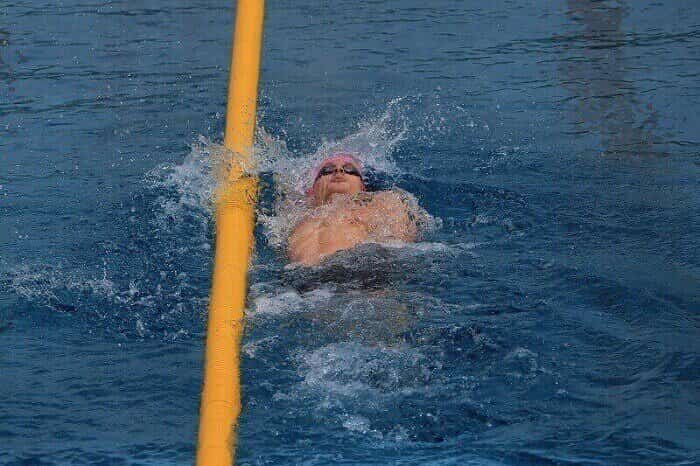 Some of the swim practices I have guinea-pigged on myself, others include sets and workouts from elite swimmers, while others have been submitted by some of the top swim coaches on the planet.
(If you are looking for a particularly gruesome challenge, try out the Auburn sprint set listed below. It's not for the feint of heart.)
YourSwimBook is a log book and goal setting guide designed specifically for competitive swimmers. It includes a ten month log book, comprehensive goal setting section, monthly evaluations to be filled out with your coach, and more.
Learn 8 more reasons why this tool kicks butt now.
Join the YourSwimBook weekly newsletter and get motivational tips and more straight to your inbox. Sign up for free here.]]>
Some of the swim practices I have guinea-pigged on myself, others include sets and workouts from elite swimmers, while others have been submitted by some of the top swim coaches on the planet.
(If you are looking for a particularly gruesome challenge, try out the Auburn sprint set listed below. It's not for the feint of heart.)
YourSwimBook is a log book and goal setting guide designed specifically for competitive swimmers. It includes a ten month log book, comprehensive goal setting section, monthly evaluations to be filled out with your coach, and more.
Learn 8 more reasons why this tool kicks butt now.
Join the YourSwimBook weekly newsletter and get motivational tips and more straight to your inbox. Sign up for free here.]]>Physically it's very specific to the back-end of the race when they haven't got anything even neuro-muscularly as they haven't got any phosphate system running. Neuro-muscularly they've been stuffed. The aerobic system has been screwed because we put them on about :10 seconds of rest before the last 50m.
He was working the fast-twitch fibers with high-force, low-speed contractions in the back squat, and then immediately hitting them with high-force, high-speed contractions in sprinting. It was two mechanically different activities requiring a high degree of neural activity to produce maximal force in a sort of bipolar manner.
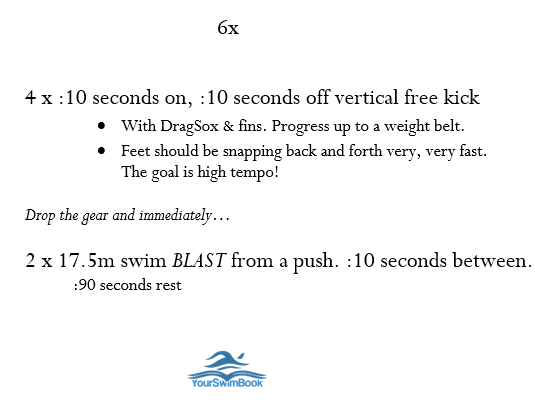 As far as swimming workouts go this one is pretty short, it is intense, it requires focus on the tight intervals, but more importantly it’s fun! The first time you dive into the water or push off it will feel like you got shot out of a cannon, and who doesn't appreciate that?
There are countless variations of this set that you can try out according to the goals you have for each particular athlete.
For instance, if you were looking to develop more powerful starts you could do sets of weighted squat jumps before doing a dive effort. Or if you are lacking in the upper body strength department to series of explosive, clapping push-ups before sprinting off.
And so on!
The options are nearly limitless, so try out the Pop-and-Lock the next time you hop in the water to feed your desire for more speed and power in the pool.
YourSwimBook is a log book and goal setting guide designed specifically for competitive swimmers. It includes a ten month log book, comprehensive goal setting section, monthly evaluations to be filled out with your coach, and more.
Learn 8 more reasons why this tool kicks butt now.
Join the YourSwimBook weekly newsletter and get motivational tips and more straight to your inbox. Sign up for free here.]]>
As far as swimming workouts go this one is pretty short, it is intense, it requires focus on the tight intervals, but more importantly it’s fun! The first time you dive into the water or push off it will feel like you got shot out of a cannon, and who doesn't appreciate that?
There are countless variations of this set that you can try out according to the goals you have for each particular athlete.
For instance, if you were looking to develop more powerful starts you could do sets of weighted squat jumps before doing a dive effort. Or if you are lacking in the upper body strength department to series of explosive, clapping push-ups before sprinting off.
And so on!
The options are nearly limitless, so try out the Pop-and-Lock the next time you hop in the water to feed your desire for more speed and power in the pool.
YourSwimBook is a log book and goal setting guide designed specifically for competitive swimmers. It includes a ten month log book, comprehensive goal setting section, monthly evaluations to be filled out with your coach, and more.
Learn 8 more reasons why this tool kicks butt now.
Join the YourSwimBook weekly newsletter and get motivational tips and more straight to your inbox. Sign up for free here.]]>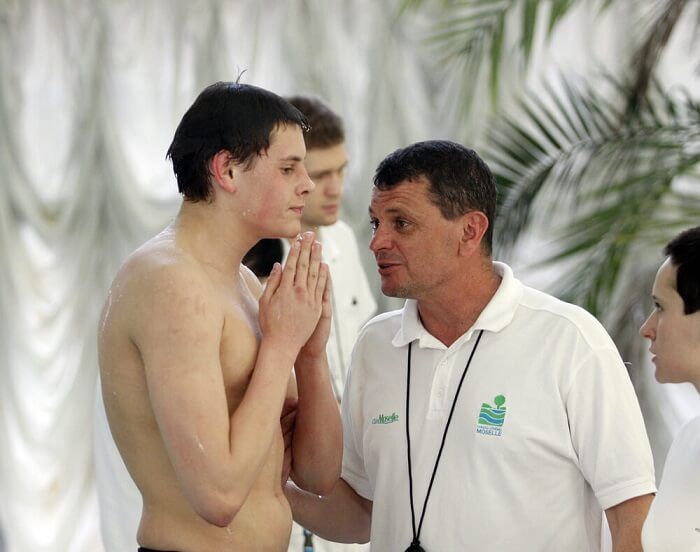 There are a lot of meters and yards ahead of you to be swum, and getting your stroke right before jumping into them is fundamentally important. The further you go down the path of your swimming career the harder it becomes to make adjustments and change course.
Practice, get feedback, apply it, and repeat.
There are a lot of meters and yards ahead of you to be swum, and getting your stroke right before jumping into them is fundamentally important. The further you go down the path of your swimming career the harder it becomes to make adjustments and change course.
Practice, get feedback, apply it, and repeat.
 Focus on the number that matters most to you and work on improving it.
Progression should be the ultimate goal from week to week in the pool. After all, progression acts as a motivational IV-drip, providing a steady and consistent sense of momentum that will keep you focused and inspired to work hard at the pool.
Whether it is doing more meters at race pace, knocking out more 100’s at a specific interval, or holding a particular stroke count for longer and longer distances, there are countless ways to measure and progress your swimming.
YourSwimBook is a log book and goal setting guide designed specifically for competitive swimmers. It includes a ten month log book, comprehensive goal setting section, monthly evaluations to be filled out with your coach, and more.
Learn 8 more reasons why this tool kicks butt now.
Join the YourSwimBook weekly newsletter and get motivational tips and more straight to your inbox. Sign up for free here.]]>
Focus on the number that matters most to you and work on improving it.
Progression should be the ultimate goal from week to week in the pool. After all, progression acts as a motivational IV-drip, providing a steady and consistent sense of momentum that will keep you focused and inspired to work hard at the pool.
Whether it is doing more meters at race pace, knocking out more 100’s at a specific interval, or holding a particular stroke count for longer and longer distances, there are countless ways to measure and progress your swimming.
YourSwimBook is a log book and goal setting guide designed specifically for competitive swimmers. It includes a ten month log book, comprehensive goal setting section, monthly evaluations to be filled out with your coach, and more.
Learn 8 more reasons why this tool kicks butt now.
Join the YourSwimBook weekly newsletter and get motivational tips and more straight to your inbox. Sign up for free here.]]> YourSwimBook is a log book and goal setting guide designed specifically for competitive swimmers. It includes a ten month log book, comprehensive goal setting section, monthly evaluations to be filled out with your coach, and more.
Learn 8 more reasons why this tool kicks butt now.
Join the YourSwimBook weekly newsletter and get motivational tips and more straight to your inbox. Sign up for free here.
]]>
YourSwimBook is a log book and goal setting guide designed specifically for competitive swimmers. It includes a ten month log book, comprehensive goal setting section, monthly evaluations to be filled out with your coach, and more.
Learn 8 more reasons why this tool kicks butt now.
Join the YourSwimBook weekly newsletter and get motivational tips and more straight to your inbox. Sign up for free here.
]]>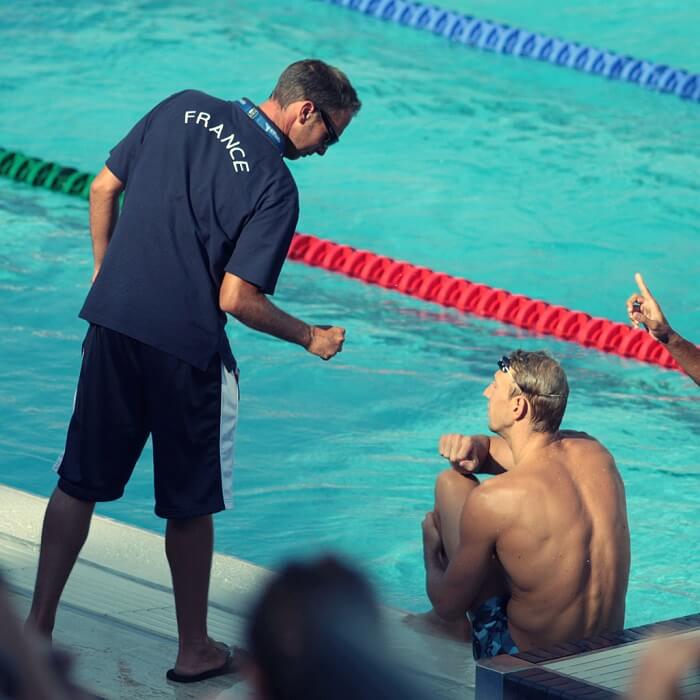
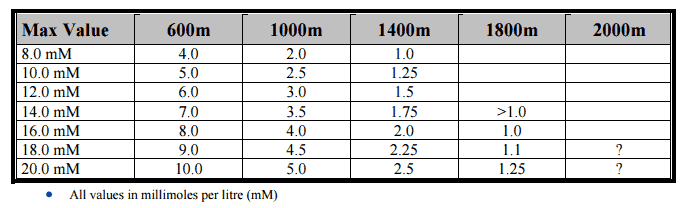 The same paper outlines the amount of time that it takes for active and passive recovery to achieve a desired blood lactate level:
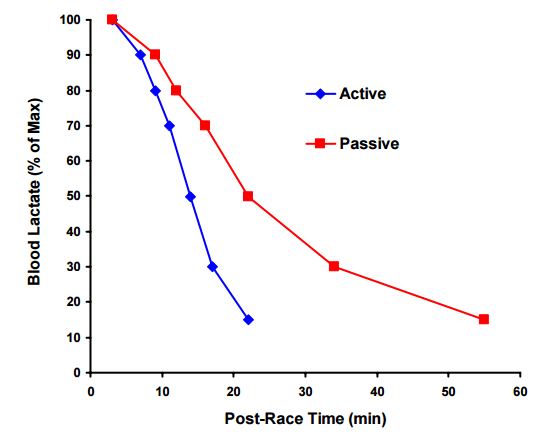 The graph above shows that when the swimmer does nothing, they return to the same blood lactate level after 55 minutes.
So naturally, for swimmers who are only competing once per day, or who have ample time between events, what's the point of warming down at all?
Well, it's possible that we have been ignoring the real reason we need warm-down.
The graph above shows that when the swimmer does nothing, they return to the same blood lactate level after 55 minutes.
So naturally, for swimmers who are only competing once per day, or who have ample time between events, what's the point of warming down at all?
Well, it's possible that we have been ignoring the real reason we need warm-down.
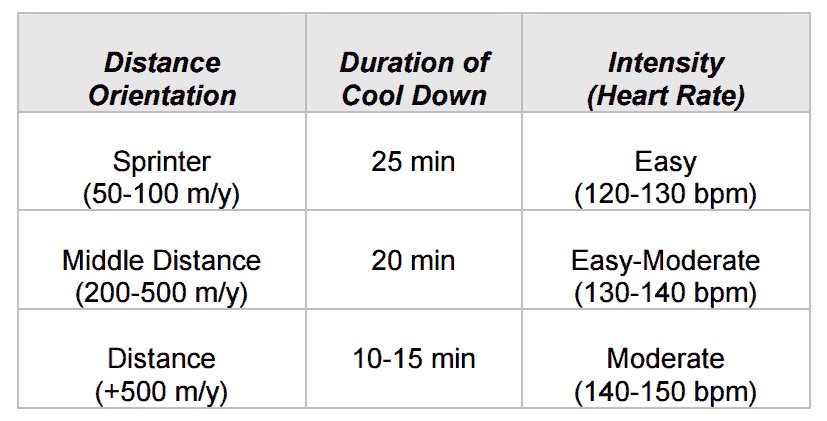 YourSwimBook is a log book and goal setting guide designed specifically for competitive swimmers. It includes a ten month log book, comprehensive goal setting section, monthly evaluations to be filled out with your coach, and more.
Learn 8 more reasons why this tool kicks butt now.
Join the YourSwimBook weekly newsletter and get motivational tips and more straight to your inbox. Sign up for free here.
]]>
YourSwimBook is a log book and goal setting guide designed specifically for competitive swimmers. It includes a ten month log book, comprehensive goal setting section, monthly evaluations to be filled out with your coach, and more.
Learn 8 more reasons why this tool kicks butt now.
Join the YourSwimBook weekly newsletter and get motivational tips and more straight to your inbox. Sign up for free here.
]]>SEE ALSO: Michael Phelps Underwater Dolphin Kick Training [Video]
The following swimming workouts were created by Bob Bowman (with inspiration coming from the late legendary Stanford/Auburn coach Richard Quick for the second set), and are found in the Swim Coaching Bible (Volume 2), who used the sets with Michael Phelps to help develop that legendary back-half.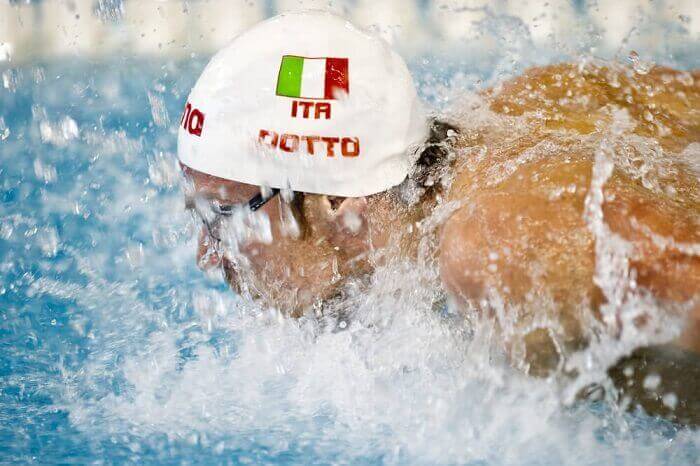 YourSwimBook is a log book and goal setting guide designed specifically for competitive swimmers. It includes a ten month log book, comprehensive goal setting section, monthly evaluations to be filled out with your coach, and more.
Learn 8 more reasons why this tool kicks butt now.
Join the YourSwimBook weekly newsletter and get motivational tips and more straight to your inbox. Sign up for free here.]]>
YourSwimBook is a log book and goal setting guide designed specifically for competitive swimmers. It includes a ten month log book, comprehensive goal setting section, monthly evaluations to be filled out with your coach, and more.
Learn 8 more reasons why this tool kicks butt now.
Join the YourSwimBook weekly newsletter and get motivational tips and more straight to your inbox. Sign up for free here.]]> Here are a couple examples:
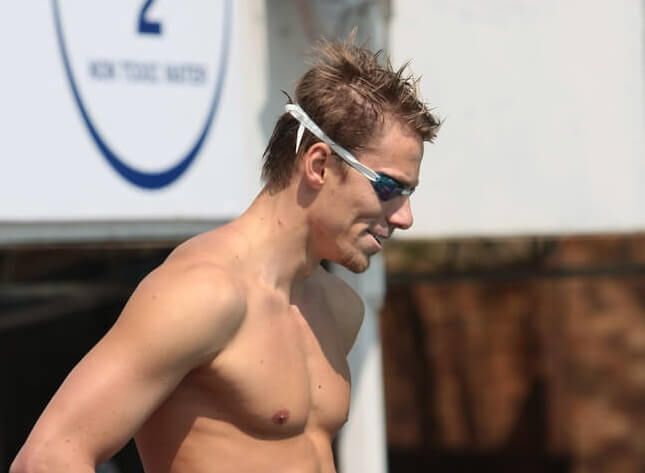 But perhaps the most powerful way to use mental imagery is in the moments before a big rep or a big set.
In the minutes leading up to a big effort mentally rehearse the way you are going to cruise along the surface of the water. How you are going to snap your hips at the end of your stroke. The way your streamline knifes through the water.
Imagine your stroke, exactly the way you want to perform it, and then unleash it.
Track sprinters using this technique performed an average of 87% better doing some quick mental rehearsing the couple minutes before their race, so yes, it works.
This stuff is wildly powerful, and when used regularly in your training can not only improve your performance in the pool, but also lower stress and anxiety levels when it comes time to showing up on race day.
YourSwimBook is a log book and goal setting guide designed specifically for competitive swimmers. It includes a ten month log book, comprehensive goal setting section, monthly evaluations to be filled out with your coach, and more.
Learn 8 more reasons why this tool kicks butt now.
Join the YourSwimBook weekly newsletter and get motivational tips and more straight to your inbox. Sign up for free here.]]>
But perhaps the most powerful way to use mental imagery is in the moments before a big rep or a big set.
In the minutes leading up to a big effort mentally rehearse the way you are going to cruise along the surface of the water. How you are going to snap your hips at the end of your stroke. The way your streamline knifes through the water.
Imagine your stroke, exactly the way you want to perform it, and then unleash it.
Track sprinters using this technique performed an average of 87% better doing some quick mental rehearsing the couple minutes before their race, so yes, it works.
This stuff is wildly powerful, and when used regularly in your training can not only improve your performance in the pool, but also lower stress and anxiety levels when it comes time to showing up on race day.
YourSwimBook is a log book and goal setting guide designed specifically for competitive swimmers. It includes a ten month log book, comprehensive goal setting section, monthly evaluations to be filled out with your coach, and more.
Learn 8 more reasons why this tool kicks butt now.
Join the YourSwimBook weekly newsletter and get motivational tips and more straight to your inbox. Sign up for free here.]]>Here it is, Gator Nation. Caeleb's 18.39 50-Yard freestyle! #GoGatorspic.twitter.com/V5fusP28Mn
— Gator Swimming (@GatorsSwimDv) February 17, 2016
YourSwimBook is a log book and goal setting guide designed specifically for competitive swimmers. It includes a ten month log book, comprehensive goal setting section, monthly evaluations to be filled out with your coach, and more.
Learn 8 more reasons why this tool kicks butt now.
Join the YourSwimBook weekly newsletter and get motivational tips and more straight to your inbox. Sign up for free here.]]>YourSwimBook is a log book and goal setting guide designed specifically for competitive swimmers. It includes a ten month log book, comprehensive goal setting section, monthly evaluations to be filled out with your coach, and more.
Learn 8 more reasons why this tool kicks butt now.
Join the YourSwimBook weekly newsletter and get motivational tips and more straight to your inbox. Sign up for free here.]]> Some of the benefits of incorporating vertical kicking into your swim training include:
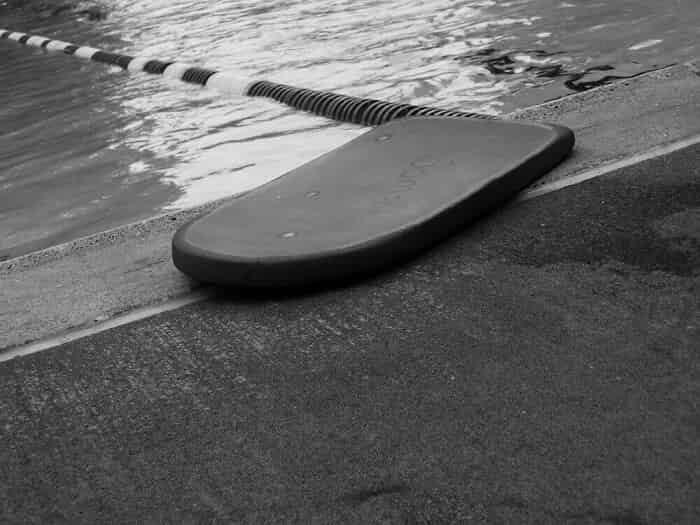 YourSwimBook is a log book and goal setting guide designed specifically for competitive swimmers. It includes a ten month log book, comprehensive goal setting section, monthly evaluations to be filled out with your coach, and more.
Learn 8 more reasons why this tool kicks butt now.
Join the YourSwimBook weekly newsletter and get motivational tips and more straight to your inbox. Sign up for free here.]]>
YourSwimBook is a log book and goal setting guide designed specifically for competitive swimmers. It includes a ten month log book, comprehensive goal setting section, monthly evaluations to be filled out with your coach, and more.
Learn 8 more reasons why this tool kicks butt now.
Join the YourSwimBook weekly newsletter and get motivational tips and more straight to your inbox. Sign up for free here.]]> Swimming with a high stroke rate is taxing, and as such, we can only do so much of it before our form falters and we get tired out. There are a number of different freestyle drills you can do to increase your freestyle stroke rate; from head-up freestyle, the dip-and-kick, and one of my stand-by drills, the old hand drag.
But if you really want to take your freestyle stroke rate to the next level, and get some power and conditioning work in at the same time, the solution is throwing one of these around your ankles:
Swimming with a high stroke rate is taxing, and as such, we can only do so much of it before our form falters and we get tired out. There are a number of different freestyle drills you can do to increase your freestyle stroke rate; from head-up freestyle, the dip-and-kick, and one of my stand-by drills, the old hand drag.
But if you really want to take your freestyle stroke rate to the next level, and get some power and conditioning work in at the same time, the solution is throwing one of these around your ankles:
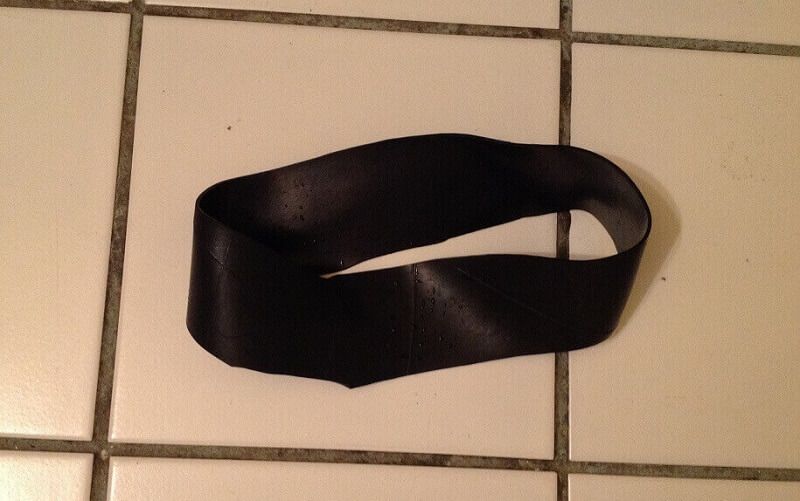 Yup, no secret technical move, no fancy-pants piece of equipment, just a piece of rubber that you can throw around your ankles to prevent you from kicking.
But wait—doesn’t that make things harder?
Well, yes and no.
Granted, without a kick to help you balance in the water and push you forward your shoulders will be taking on all the work.
However, with your oxygen and blood-greedy legs out of the equation, and your kick unable to power you through the rhythm-sapping parts of your stroke, you can hit the high-number stroke rate digits for longer than if you were straight swimming.
YourSwimBook is a log book and goal setting guide designed specifically for competitive swimmers. It includes a ten month log book, comprehensive goal setting section, monthly evaluations to be filled out with your coach, and more.
Learn 8 more reasons why this tool kicks butt now.
Join the YourSwimBook weekly newsletter and get motivational tips and more straight to your inbox. Sign up for free here.
]]>
Yup, no secret technical move, no fancy-pants piece of equipment, just a piece of rubber that you can throw around your ankles to prevent you from kicking.
But wait—doesn’t that make things harder?
Well, yes and no.
Granted, without a kick to help you balance in the water and push you forward your shoulders will be taking on all the work.
However, with your oxygen and blood-greedy legs out of the equation, and your kick unable to power you through the rhythm-sapping parts of your stroke, you can hit the high-number stroke rate digits for longer than if you were straight swimming.
YourSwimBook is a log book and goal setting guide designed specifically for competitive swimmers. It includes a ten month log book, comprehensive goal setting section, monthly evaluations to be filled out with your coach, and more.
Learn 8 more reasons why this tool kicks butt now.
Join the YourSwimBook weekly newsletter and get motivational tips and more straight to your inbox. Sign up for free here.
]]> Under Barry’s tutelage, Davis would rise the ranks quickly. At the age of 17 he would dethrone another Canadian legend in the sport, Graham Smith, in the 100m breaststroke to win his first national title.
While he had made his introduction to the Canadian swimming community, Davis’ high intensity persona was about to explode out onto the international scene the following year in Ecuador.
Under Barry’s tutelage, Davis would rise the ranks quickly. At the age of 17 he would dethrone another Canadian legend in the sport, Graham Smith, in the 100m breaststroke to win his first national title.
While he had made his introduction to the Canadian swimming community, Davis’ high intensity persona was about to explode out onto the international scene the following year in Ecuador.
 In the 200 metre breaststroke Davis would not be denied. At the 100m mark he would break away from the field, including the USSR’s Robertas Zhulpa and American John Moffet.
Davis accelerated into the finish, touching in a time of 2:14.77, shaving close to half a second off of the world record. Zhulpa would touch nearly two seconds back for silver.
For Davis, the record breaking was especially sweet. Scotland’s David Wilkie’s mark of 2:15.11 had stood for 6 years, dating back to the Montreal Games. Davis had plastered Wilkie’s name and time on his bedroom wall since childhood on a list of swimmers he wanted to beat.
He was world champion, and now a world record holder.
But in just a couple short months Davis’ name would echo for reasons that had little to do with his swimming prowess, and more to do with that atypical Canadian brashness.
YourSwimBook is a log book and goal setting guide designed specifically for competitive swimmers. It includes a ten month log book, comprehensive goal setting section, monthly evaluations to be filled out with your coach, and more.
Learn 8 more reasons why this tool kicks butt now.
Join the YourSwimBook weekly newsletter and get motivational tips and more straight to your inbox. Sign up for free here.]]>YourSwimBook is a log book and goal setting guide designed specifically for competitive swimmers. It includes a ten month log book, comprehensive goal setting section, monthly evaluations to be filled out with your coach, and more.
Learn 8 more reasons why this tool kicks butt now.
Join the YourSwimBook weekly newsletter and get motivational tips and more straight to your inbox. Sign up for free here.]]>
In the 200 metre breaststroke Davis would not be denied. At the 100m mark he would break away from the field, including the USSR’s Robertas Zhulpa and American John Moffet.
Davis accelerated into the finish, touching in a time of 2:14.77, shaving close to half a second off of the world record. Zhulpa would touch nearly two seconds back for silver.
For Davis, the record breaking was especially sweet. Scotland’s David Wilkie’s mark of 2:15.11 had stood for 6 years, dating back to the Montreal Games. Davis had plastered Wilkie’s name and time on his bedroom wall since childhood on a list of swimmers he wanted to beat.
He was world champion, and now a world record holder.
But in just a couple short months Davis’ name would echo for reasons that had little to do with his swimming prowess, and more to do with that atypical Canadian brashness.
YourSwimBook is a log book and goal setting guide designed specifically for competitive swimmers. It includes a ten month log book, comprehensive goal setting section, monthly evaluations to be filled out with your coach, and more.
Learn 8 more reasons why this tool kicks butt now.
Join the YourSwimBook weekly newsletter and get motivational tips and more straight to your inbox. Sign up for free here.]]>YourSwimBook is a log book and goal setting guide designed specifically for competitive swimmers. It includes a ten month log book, comprehensive goal setting section, monthly evaluations to be filled out with your coach, and more.
Learn 8 more reasons why this tool kicks butt now.
Join the YourSwimBook weekly newsletter and get motivational tips and more straight to your inbox. Sign up for free here.]]>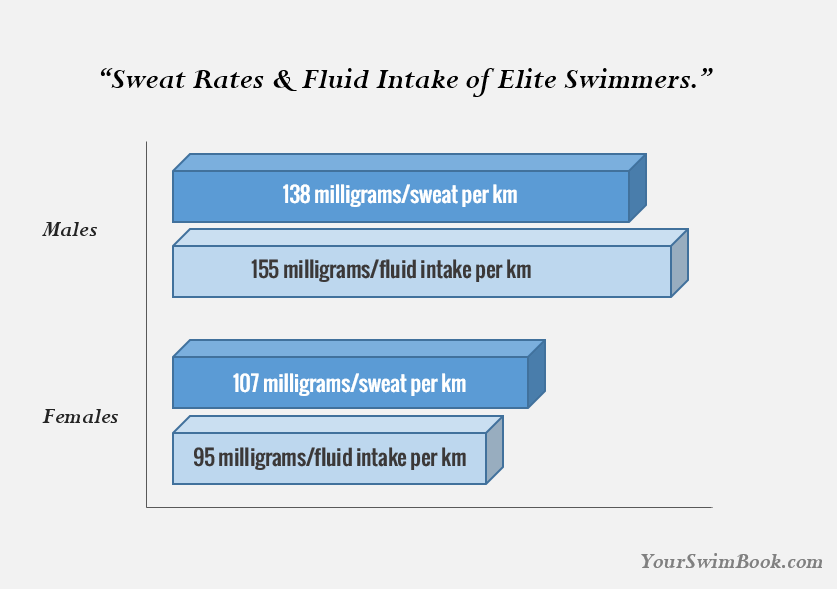 So if you extrapolate those numbers to a 4,000m workout the average male expels 552 milligrams of sweat, while the ladies sweat out 428 milligrams.
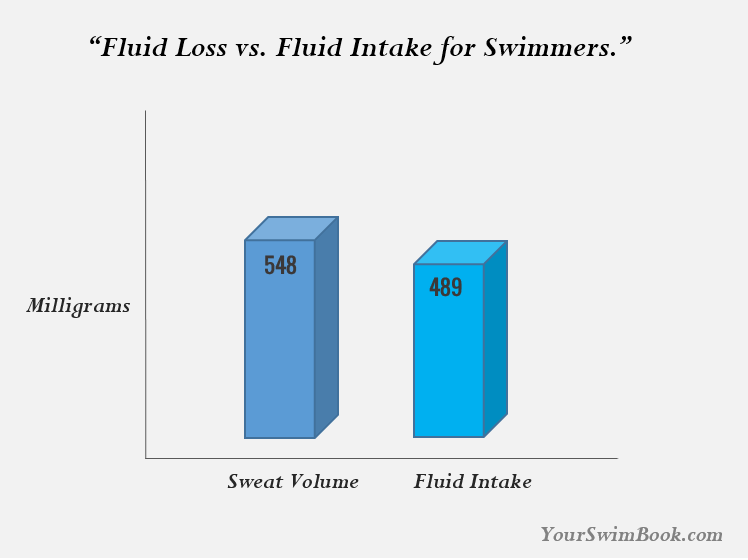 The swimmers in this study would sweat out an average of half a liter of water, with the sweatiest of the bunch losing nearly 800 milligrams of sweat.
YourSwimBook is a log book and goal setting guide designed specifically for competitive swimmers. It includes a ten month log book, comprehensive goal setting section, monthly evaluations to be filled out with your coach, and more.
Learn 8 more reasons why this tool kicks butt now.
Join the YourSwimBook weekly newsletter and get motivational tips and more straight to your inbox. Sign up for free here.]]>
The swimmers in this study would sweat out an average of half a liter of water, with the sweatiest of the bunch losing nearly 800 milligrams of sweat.
YourSwimBook is a log book and goal setting guide designed specifically for competitive swimmers. It includes a ten month log book, comprehensive goal setting section, monthly evaluations to be filled out with your coach, and more.
Learn 8 more reasons why this tool kicks butt now.
Join the YourSwimBook weekly newsletter and get motivational tips and more straight to your inbox. Sign up for free here.]]>
One day I will start doing more core work. When I am up to it I’ll start doing extra dive work after practice. When I feel like it I will start kicking out to the 10m mark on all my push-offs.Instead of wishy-washy goals sit down with your log book and write down when, where and how you are going to do the things you want to do.
YourSwimBook is a log book and goal setting guide designed specifically for competitive swimmers.
It includes a ten month log book, comprehensive goal setting section, monthly evaluations to be filled out with your coach, and more.
Learn 8 more reasons why this tool kicks butt now.
]]>
 YourSwimBook is a log book and goal setting guide designed specifically for competitive swimmers.
It includes a ten month log book, comprehensive goal setting section, monthly evaluations to be filled out with your coach, and more.
Learn 8 more reasons why this tool kicks butt now.]]>
YourSwimBook is a log book and goal setting guide designed specifically for competitive swimmers.
It includes a ten month log book, comprehensive goal setting section, monthly evaluations to be filled out with your coach, and more.
Learn 8 more reasons why this tool kicks butt now.]]>
See Also: 5 Science-Backed Reasons That Tracking Your Workouts Will Make You a Faster Swimmer.
 YourSwimBook is a log book and goal setting guide designed specifically for competitive swimmers.
It includes a ten month log book, comprehensive goal setting section, monthly evaluations to be filled out with your coach, and more.
Learn 8 more reasons why this tool kicks butt now.]]>
YourSwimBook is a log book and goal setting guide designed specifically for competitive swimmers.
It includes a ten month log book, comprehensive goal setting section, monthly evaluations to be filled out with your coach, and more.
Learn 8 more reasons why this tool kicks butt now.]]> In a recent interview that Phelps did with Fox Sports’ Joe Buck for the show "Undeniable" the swimmer shared a goal sheet that he had crafted at the age of just 8 years old:
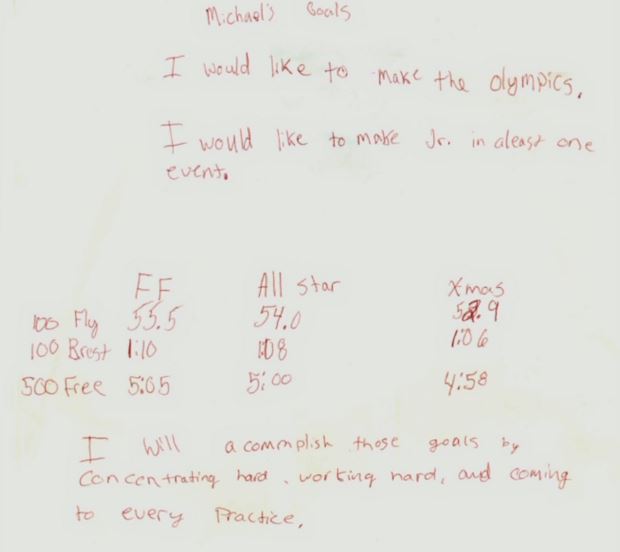 What I like most about the goal sheet is not necessarily the goals, or that he had very specific targets in mind (versus writing something like, “I want to be the fastest!”). The goals were clear, but most importantly they included a plan of action.
Even at that age Phelps seemed to grasp that having a goal isn’t enough, you must also have a vehicle for that change. And in his case it was working hard, and showing up to every practice.
What I like most about the goal sheet is not necessarily the goals, or that he had very specific targets in mind (versus writing something like, “I want to be the fastest!”). The goals were clear, but most importantly they included a plan of action.
Even at that age Phelps seemed to grasp that having a goal isn’t enough, you must also have a vehicle for that change. And in his case it was working hard, and showing up to every practice.
SEE ALSO: Michael Phelps Underwater Dolphin Kick Training (Video)
To give you an idea of how fundamental his goals were to his swimming, and how good he was at it, consider how well he called his shot in his marquee event at the 2008 Olympics, the 200 meter butterfly. In the run-up to Beijing Phelps had goals for each of his individual events. In the 200m butterfly, a race he actually swam blind as a result of a leaky goggle, he swam within a couple tenths of his goal time (goal: 1:51.1, result: 1:51.5), providing a glimpse into the ambitious and yet ultimately realistic manner with which he is able to set himself goals.“I have my goals somewhere I can see them, so when I get out of bed I know I’m waking up to work on what I’m trying to achieve.” – Michael Phelps
YourSwimBook is a log book and goal setting guide designed specifically for competitive swimmers.
It includes a ten month log book, comprehensive goal setting section, monthly evaluations to be filled out with your coach, and more.
Learn 8 more reasons why this tool kicks butt now.]]>He has a great feel for the water. Her feel for the water is what sets her apart.These things are not uncommon to hear on deck, and because we’ve made “feel for the water” into lore it is viewed as something that is purely God-given or inherited. Not so. Even the fastest man to ever swim the 50-yard freestyle developed this feel for the water with intent and focus. He found and built it in pages and pages of his log book where he detailed notes and descriptions of how he felt in the water. How his muscles felt. How each differing movement of his limbs solicited a different reaction in the water. Yes, we are talking about Caeleb Dressel, the same person who earlier in 2016 twice broke the long-standing US Open record in the 50-yard freestyle, ultimately swimming an 18.23 during finals at the SEC Championships at the University of Missouri.
“His entries were definitely at a higher level than I’ve ever seen by a swimmer,” Calanog told the NYT recently. “He’d write pages and pages about how every muscle felt and what he wanted his stroke to feel like.”
SEE ALSO: 5 Science-Backed Ways That Tracking Your Workouts Can Make You a Faster Swimmer
YourSwimBook is a log book and goal setting guide designed specifically for competitive swimmers.
It includes a ten month log book, comprehensive goal setting section, monthly evaluations to be filled out with your coach, and more.
Learn 8 more reasons why this tool kicks butt now.]]>YourSwimBook is a log book and goal setting guide designed specifically for competitive swimmers.
It includes a ten month log book, comprehensive goal setting section, monthly evaluations to be filled out with your coach, and more.
Learn 8 more reasons why this tool kicks butt now.]]>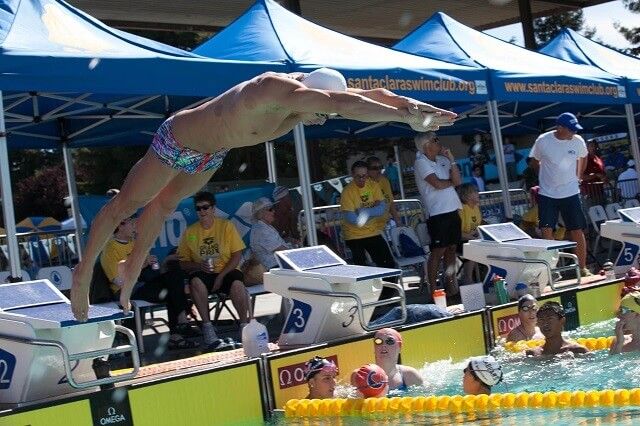 5. She doesn’t like to lose. Competitive swimmers are, well, competitive. Whether this comes down to her out eating you, destroying you at your favorite video game, rooting for her favorite team, or simply dusting you in the pool, prepare to step your game up around your little swimmer crush.
6. When she goes from sweats to dress it’ll floor you, so be prepared. A majority of her time is spent in soggy bottomed sweatpants, her wet hair tied up, no make-up and eyes darting around the room for her water bottle. But when the hair is down, she’s relaxed because she doesn’t have practice in 20 minutes, and she’s decked out in a dress…yowza.
7. She’s got her own thing going on. The best part about dating a swimmer is that they are confidant, motivated and independent. They got their own goals, and see enough in you to squeeze you in between training sessions. The self-assurance and confidence that comes from being a self-motivated athlete is the most attractive thing a woman can bring to the table.
YourSwimBook is a log book and goal setting guide designed specifically for competitive swimmers.
It includes a ten month log book, comprehensive goal setting section, monthly evaluations to be filled out with your coach, and more.
Learn 8 more reasons why this tool kicks butt now.]]>
5. She doesn’t like to lose. Competitive swimmers are, well, competitive. Whether this comes down to her out eating you, destroying you at your favorite video game, rooting for her favorite team, or simply dusting you in the pool, prepare to step your game up around your little swimmer crush.
6. When she goes from sweats to dress it’ll floor you, so be prepared. A majority of her time is spent in soggy bottomed sweatpants, her wet hair tied up, no make-up and eyes darting around the room for her water bottle. But when the hair is down, she’s relaxed because she doesn’t have practice in 20 minutes, and she’s decked out in a dress…yowza.
7. She’s got her own thing going on. The best part about dating a swimmer is that they are confidant, motivated and independent. They got their own goals, and see enough in you to squeeze you in between training sessions. The self-assurance and confidence that comes from being a self-motivated athlete is the most attractive thing a woman can bring to the table.
YourSwimBook is a log book and goal setting guide designed specifically for competitive swimmers.
It includes a ten month log book, comprehensive goal setting section, monthly evaluations to be filled out with your coach, and more.
Learn 8 more reasons why this tool kicks butt now.]]>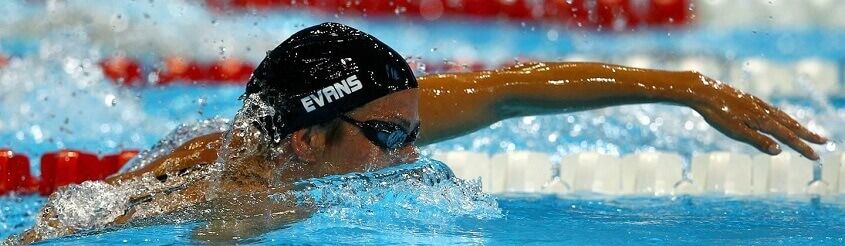 YourSwimBook is a log book and goal setting guide designed specifically for competitive swimmers.
It includes a ten month log book, comprehensive goal setting section, monthly evaluations to be filled out with your coach, and more.
Learn 8 more reasons why this tool kicks butt now.]]>
YourSwimBook is a log book and goal setting guide designed specifically for competitive swimmers.
It includes a ten month log book, comprehensive goal setting section, monthly evaluations to be filled out with your coach, and more.
Learn 8 more reasons why this tool kicks butt now.]]>See Also: Does Swimming Make You Smarter?
YourSwimBook is a log book and goal setting guide designed specifically for competitive swimmers.
It includes a ten month log book, comprehensive goal setting section, monthly evaluations to be filled out with your coach, and more.
Learn 8 more reasons why this tool kicks butt now.]]>